
Non-FictionAI OperatorFinancial AutomationAudit Analytics
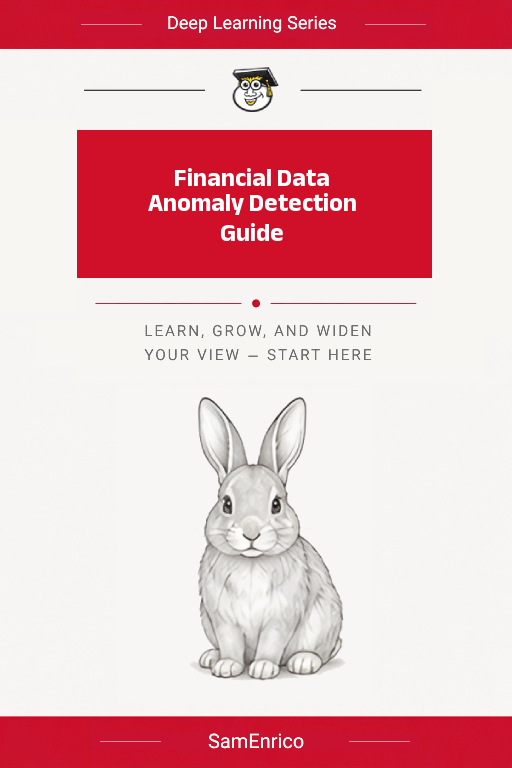
Financial Data Anomaly Detection Guide eBook
Build AI prompts that flag duplicate payments, rou
Build AI prompts that flag duplicate payments, rounding errors, and unusual journal entries. Reduce fraud risk and audit findings automatically.
Formats
Free sample
Chapter 1: The Vanishing Margin--–- The CFO stared at the screen, her coffee growing cold. Net profit had missed forecast by 2.1million—again.Threequartersinarow.Operationspointedtoprocurement.Procurementblamedaccountspayable.Accountspayableinsistedeveryinvoicehadbeenapproved.Theexternalauditorshadjustfinishedtheirannualreviewandfoundnothingmaterial.Andyet,twomilliondollarshadevaporatedfromacompanywith2.1 million—again. Three quarters in a row. Operations pointed to procurement. Procurement blamed accounts payable.
Accounts payable insisted every invoice had been approved. The external auditors had just finished their annual review and found nothing material. And yet, two million dollars had evaporated from a company with 2.1million—again.Threequartersinarow.Operationspointedtoprocurement.Procurementblamedaccountspayable.Accountspayableinsistedeveryinvoicehadbeenapproved.Theexternalauditorshadjustfinishedtheirannualreviewandfoundnothingmaterial.Andyet,twomilliondollarshadevaporatedfromacompanywith400 million in revenue. Not enough to trigger a crisis. Just enough to hurt.
Every. Single. Quarter.This is not a story about spectacular fraud. No one embezzled millions in a single wire transfer. No executive cooked the books with fictional revenue.
This is a story about death by a thousand small cuts—a story that plays out in thousands of companies right now, and most of them will never know until the pattern has repeated for years.The fraud that destroyed that CFO's bonus—and nearly her career—was hidden in plain sight. A vendor submitted the same small invoice twice each month, once as "Data Stream Solutions" and once as "Datastream Sol." The invoice amount was 4,847.63.Theduplicatewas4,847.63. The duplicate was 4,847.63.Theduplicatewas4,847.63. The vendor master showed two different entries because the accounts payable clerk who created the second vendor had added a space and abbreviated "Solutions" to "Sol." The company's ERP had no duplicate detection because the vendor names weren't identical. The internal audit team reviewed a statistical sample of 500 transactions per quarter from a population of 45,000.
The odds of catching that specific duplicate in any given quarter were approximately 1.1 percent. Over three years, the probability of detection remained below 5 percent.The fraudster knew this. He had been a vendor master analyst before moving to sales. He understood exactly where the controls had gaps. He exploited the long tail—the massive volume of low-dollar, high-frequency transactions that no human auditor ever reviews in full.This chapter explains why traditional audit sampling is no longer sufficient in the age of big data, how fraud has adapted to exploit the gaps between samples, and why a new approach—continuous control monitoring using the AI Triad—is not optional but necessary.
By the end of this chapter, you will understand the statistical blind spots that cost companies an estimated 5 to 7 percent of annual revenue, according to the Association of Certified Fraud Examiners. And you will see why the remaining chapters of this book exist.The Hidden 10 Percent Problem Auditing, for most of its history, has been a discipline of compromise. No organization can review every transaction. The cost would be prohibitive. The time would be impossible.
So auditors developed sampling—the art of selecting a small, representative subset of transactions and extrapolating the results to the whole population.This worked reasonably well in the 20th century for three reasons. First, transaction volumes were smaller. A typical mid-sized company processed thousands of invoices per year, not hundreds of thousands. Second, fraud was often material in a single transaction—a 50,000phantomvendorora50,000 phantom vendor or a 50,000phantomvendorora100,000 inflated invoice. Third, the regulatory environment accepted sampling as sufficient.
Generally Accepted Auditing Standards (GAAS) explicitly permit sampling as long as the sample is representative and the sampling risk is understood.The problem is that fraud has evolved. Sampling has not.The 90/10 Rule of Audit Sampling In practice, most internal audit departments follow an unwritten rule: review 100 percent of transactions above a materiality threshold (typically 10,000to10,000 to 10,000to50,000 depending on company size), and take a random sample of the remaining transactions below that threshold. The high-value transactions might represent 10 percent of total volume but 90 percent of total dollar value. The low-value transactions represent 90 percent of volume but only 10 percent of dollar value.This seems rational. Why spend time reviewing a 47invoicewhenyouhave47 invoice when you have 47invoicewhenyouhave470,000 invoices to check?
The answer is that fraudsters have learned to hide in the long tail. They know that a 50,000anomalytriggersimmediatereview.A50,000 anomaly triggers immediate review. A 50,000anomalytriggersimmediatereview.A4,999 anomaly does not. So they break large frauds into small pieces.Consider a typical procurement fraud scheme. A buyer wants to steer 200,000toashellcompany.Insteadofsubmittingasingle200,000 to a shell company.
Instead of submitting a single 200,000toashellcompany.Insteadofsubmittingasingle200,000 invoice, she submits forty invoices of $4,999 each over eight months. Each invoice is below the approval threshold that requires a manager's signature. Each invoice uses a slightly different vendor name (ABC Consulting, ABC Consultants, A.B.C. Consulting). Each invoice is for a different cost center.
No single transaction appears suspicious. No sample of 500 transactions has a high probability of catching all forty pieces. The fraud continues until the shell company's bank account is eventually traced—often years later.This is not theoretical. The Association of Certified Fraud Examiners' 2024 Report to the Nations analyzed 2,504 occupational fraud cases from 133 countries. The median loss per case was 145,000.Butthemedianlossforfraudsthatlastedmorethan24monthsexceeded145,000.
But the median loss for frauds that lasted more than 24 months exceeded 145,000.Butthemedianlossforfraudsthatlastedmorethan24monthsexceeded1 million. And the most common method of concealing fraud was the creation of fraudulent physical documents—invoices, purchase orders, receiving reports—each individually below review thresholds.The statistical term for this is "population stratification with incomplete coverage." The practical term is "the hidden 10 percent problem." And it is getting worse because transaction volumes are growing exponentially while audit budgets are flat.Low and Slow: The Most Dangerous Fraud You Aren't Finding If splitting a large fraud into many small pieces is dangerous, microscopic fraud across massive volumes is catastrophic. And it is almost invisible to traditional detection methods.The Penny Skimming Example A large financial services company processes 2.5 million interest payments annually to customer accounts. Each calculation involves a fractional interest rate—say 3.4167 percent on a daily balance. The system rounds to two decimal places.
A clever attacker inserts a small rounding override: instead of rounding 0.4167 cents up to 0.42 cents, the attacker rounds down to 0.41 cents and diverts the 0.01 cent difference to a holding account. The diversion per transaction is imperceptible. The customer receives 99.99 percent of the correct interest. No one complains about a fraction of a penny.But across 2.5 million transactions, that 0.01 cent per transaction aggregates to 250,000annually.Overfiveyears,250,000 annually. Over five years, 250,000annually.Overfiveyears,1.25 million disappears.
And because each transaction is individually immaterial, no auditor ever reviews the rounding logic. The fraud is discovered only when the attacker retires and the rounding suddenly corrects itself—or when a forensic accountant thinks to aggregate fractional differences across the entire population.This is called "salami slicing" or "penny skimming." It is as old as computing, but it has become more dangerous with the scale of modern systems. A single employee cannot process millions of transactions manually. A script running on a server can.Why Traditional Filters Miss It Rule-based anomaly detection systems—the kind built into most ERPs—are designed to catch outliers. They look for transactions that deviate from a norm.
A 1millionpaymenttoanewvendorisanoutlier.A1 million payment to a new vendor is an outlier. A 1millionpaymenttoanewvendorisanoutlier.A47.63 payment is not. A round-dollar journal entry of exactly 10,000issuspicious.Ajournalentryfor10,000 is suspicious. A journal entry for 10,000issuspicious.Ajournalentryfor10,000.01 is not.Penny skimming exploits this exactly. The attacker stays within normal ranges.
The rounding error is mathematically tiny. The only way to detect it is to analyze the entire population in aggregate—to…
This is the end of the free sample. Get the eBook to keep going. Buy now
About this book
Details
- Author
- Jacques Marcy
- Publisher
- SamEnrico
- Language
- English
- Genre
- Non-Fiction, AI Operator, Financial Automation, Audit Analytics
- Released
- 2026-06-01
- Pages (approx.)
- 147
- Available as
- eBook, Audiobook

Read better in the ZLOADR app
Your eBooks on your phone or tablet. Sign in with your SamEnrico account and start reading.
More by Jacques Marcy
 Intermittent Fasting for WomenJacques Marcy$11.99
 Collaborative Legacy CanvasJacques Marcy$11.99
 Combat Veteran Nightmare GuideJacques Marcy$11.99
 Teacher and Educator Stress GuideJacques Marcy$11.99
 Lean Startup Validation MethodsJacques Marcy$11.99
 Bipolar Creativity Management GuideJacques Marcy$11.99
 UAE Green Tax IncentivesJacques Marcy$11.99
 TM for ScientistsJacques Marcy$11.99
 HGH Prescription GuideJacques Marcy$11.99
 The Last Emperor of the West: The Rise and Fall of MaxentiusJacques Marcy$11.99
 Silk & Spies: The Secret War of Parisian CoutureJacques Marcy$11.99
 Pharaoh's Shadow: The Lost Tomb of the Forgotten QueenJacques Marcy$11.99
You may also like
 Hong Kong Handover 1997Dunn Johnnie$11.99
 Zumba For Postnatal Recovery CourseNeal Christian$11.99
 Zumba for BeginnersLadner Nikia$11.99
 YouTube Comment Mining GuideHumes Pandora$12.99
 Worry Box MeditationCarlin Rudy$11.99
 Workplace Stress MeditationNguyen Lynn$11.99
 Workplace Stress and Sleep RepairHawley Ivory$11.99
 Workplace Perfectionism CureDelaney Jeffry$11.99
 Workplace Injustice Anger GuideWallen Isabelle$11.99
 Work Addiction and Burnout LinkGreenwood Ester$11.99
 Women in Yoga and WellnessBeattie Galina$11.99
 Women in Stand Up ComedyChun Evangeline$11.99