
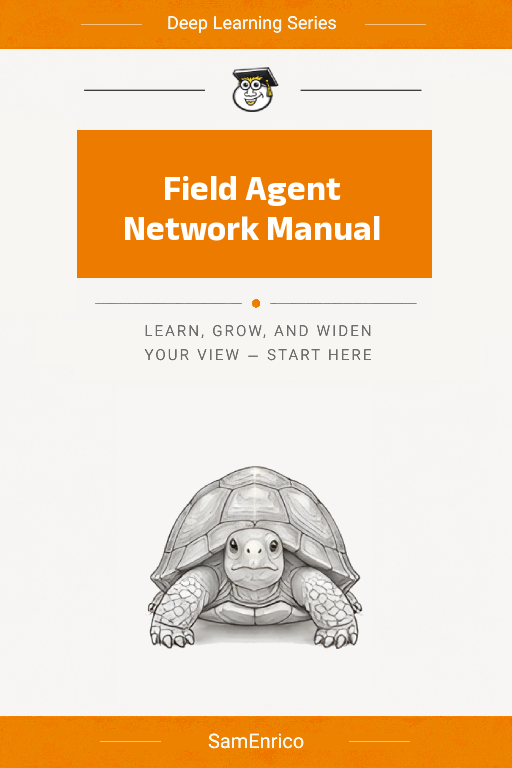
Non-FictionStartup GuideLast Mile Distribution
Field Agent Network Manual eBook
Recruit and manage local brand ambassadors who dem
Recruit and manage local brand ambassadors who demonstrate products, collect orders, and handle cash payments in villages with no mobile reception.
Formats
Free sample
Chapter 1: The Digital Trap...--–- The village of Ndomo, in eastern Democratic Republic of Congo, had no electricity, no running water, and no mobile reception for thirty kilometers in any direction. And yet, every Thursday afternoon, a woman named Fatima walked six kilometers down a red dirt road carrying a cardboard box filled with thirty solar lamps, a stack of carbon paper receipts, and a locked metal cashbox that weighed nearly four kilograms. She had no smartphone, no GPS, no digital dashboard, and no way to call for help. Over the course of twelve months, Fatima sold 1,240 lamps, handled over $18,000 in cash, and never lost a single transaction to theft, fraud, or error. Her secret was not technology.
It was a system.That same year, a well-funded agritech startup launched a similar project in western Kenya. They gave each agent a smartphone with a custom app, real-time inventory tracking, and mobile money integration. They built a dashboard that showed live sales data, agent locations, and cash flow. Six months later, the project collapsed. The phones were stolen or broken.
The app crashed during the rainy season when cloud cover killed the signal. Agents complained that the digital system required them to charge phones daily—impossible in villages without electricity. And when the inevitable discrepancies appeared between digital records and physical cash, no one could explain where the money had gone.The startup had spent 240,000onsoftwaredevelopmentandhardware.Fatima′soperationcostlessthan240,000 on software development and hardware. Fatima's operation cost less than 240,000onsoftwaredevelopmentandhardware.Fatima′soperationcostlessthan2,000 to launch. The difference was not competence or capital.
The difference was a fundamental misunderstanding of where value actually lives in a low-connectivity environment. The startup had built for the world they wished existed. Fatima built for the world that did.This book is for everyone who has tried to launch a field agent network in rural areas, disaster zones, or any environment where the internet is a rumor and cell towers are a distant dream. It is for social entrepreneurs, distribution managers, nonprofit field officers, and corporate rebels who have been told that "digital transformation" is the only path forward. It is for anyone who has ever watched a carefully designed mobile app fail because the user could not charge their phone, could not remember their password, or could not afford the data plan.The argument of this chapter—and of this entire book—is simple and contrarian: The absence of mobile reception is not a weakness.
It is a strategic advantage.When your competitors are locked into fragile digital systems that require connectivity, real-time data, and constant technical support, you can build something they cannot easily copy: a human network that works in the dark, the dust, and the downpour. This chapter will explain why digital systems fail in low-connectivity environments, how analog systems create psychological ownership that apps cannot replicate, and why the "no-signal" constraint forces the kind of operational discipline that makes your network more resilient, honest, and profitable over the long term.The Myth of the Fragile Dashboard Let us begin with a confession: I have built digital dashboards. I have written the specifications, hired the developers, and watched the real-time sales data flow across a screen in a headquarters office three hundred kilometers away from the field. And I have watched those dashboards lie.The problem is not bad software. The problem is that digital systems create an illusion of control that does not survive contact with physical reality.
A dashboard shows you inventory levels that were accurate three hours ago—before the agent sold twelve units and forgot to update the app because a customer was waiting. A dashboard shows you cash flow that assumes every transaction was entered correctly—which it was not, because the agent was working in the rain and the touchscreen stopped responding. A dashboard shows you agent locations that assume the phone has battery—which it does not, because the village has no electricity and the agent has been walking for six hours.These are not edge cases. They are the daily reality of field operations in low-connectivity environments. The digital transformation industry has sold a beautiful dream: that every transaction can be captured in real time, that every asset can be tracked, that every decision can be data-driven.
But that dream requires three things that are almost never present in the villages where field agent networks actually operate: reliable power, consistent connectivity, and literate users with time to type.When you remove those three assumptions, the digital dream becomes a digital nightmare. Agents waste hours trying to sync data that will not upload. Managers receive reports that are incomplete or falsified because there is no way to verify them. And headquarters makes decisions based on dashboards that show green indicators for networks that have already collapsed.The alternative is not to reject technology entirely. It is to recognize that in a no-signal environment, physical artifacts are more reliable than digital data.
A paper receipt cannot be deleted. A cash box cannot be hacked. A thumbprint on a contract cannot be faked with a screenshot. These are not primitive workarounds. They are superior tools for the environment they inhabit.The Trust Ledger: Why Physical Transactions Create Psychological Ownership One of the most consistent findings in behavioral economics is that people value things differently when they have touched them, paid for them with physical currency, or received a physical receipt.
This is called the endowment effect—the tendency for people to overvalue something they own simply because they own it. But the endowment effect is dramatically stronger when ownership is established through physical interaction.Consider a simple experiment conducted across multiple field studies. Two groups of customers were offered the same product—a water filter that cost $15. The first group was shown the filter, given a brochure, and told they could pay by mobile money. The second group was handed the filter, asked to hold it, and given a paper receipt after paying with cash.
The first group showed a purchase rate of 12 percent. The second group showed a purchase rate of 38 percent. And among those who purchased, the second group was three times more likely to use the filter correctly after six months.Why? Because the physical transaction created what this book calls The Trust Ledger. Every time a customer hands cash to an agent, they are making a tangible sacrifice.
Every time they receive a paper receipt, they have a physical reminder of that sacrifice. And every time they see that receipt pinned to their wall or tucked into their pocket, they are reminded that they made a commitment. Digital transactions, by contrast, feel weightless. A mobile money notification is easy to ignore. A paper receipt is not.The Trust Ledger works for agents as well.
When an agent counts cash at the end of the day and sees the physical accumulation of their labor, they experience a different psychological state than when they look at a number on a screen. The cash is heavy. It smells like the market. It carries the fingerprints of the customers who handed it over. That physicality creates a sense of responsibility that digital numbers cannot match.This is not nostalgia.…
This is the end of the free sample. Get the eBook to keep going. Buy now
About this book
Details
- Author
- Huber September
- Publisher
- SamEnrico
- Language
- English
- Genre
- Non-Fiction, Startup Guide, Last Mile Distribution
- Released
- 2026-06-01
- Pages (approx.)
- 114
- Available as
- eBook, Audiobook

Read better in the ZLOADR app
Your eBooks on your phone or tablet. Sign in with your SamEnrico account and start reading.
More by Huber September
 PMS Anger VulnerabilityHuber September$11.99
 Delta Force Selection GuideHuber September$11.99
 The Workaholic's Nature TherapyHuber September$11.99
 Women In Science Royal Society Barriers CourseHuber September$11.99
 Assumption Reversal Team GameHuber September$11.99
 The Ghosts of Ebola: How One Nurse Defied the OutbreakHuber September$11.99
 The Silk Road's Shadow: How a 13th-Century Merchant Empire Laundered Wealth Through Spices and SecretsHuber September$11.99
 PPT Lesson Planning GuideHuber September$12.99
 Understanding Fugue StateHuber September$17.99
 Bench ScientistHuber September$11.99
 How to Become a Job PrinterHuber September$11.99
You may also like
 Hong Kong Handover 1997Dunn Johnnie$11.99
 Zumba For Postnatal Recovery CourseNeal Christian$11.99
 Zumba for BeginnersLadner Nikia$11.99
 YouTube Comment Mining GuideHumes Pandora$12.99
 Worry Box MeditationCarlin Rudy$11.99
 Workplace Stress MeditationNguyen Lynn$11.99
 Workplace Stress and Sleep RepairHawley Ivory$11.99
 Workplace Perfectionism CureDelaney Jeffry$11.99
 Workplace Injustice Anger GuideWallen Isabelle$11.99
 Work Addiction and Burnout LinkGreenwood Ester$11.99
 Women in Yoga and WellnessBeattie Galina$11.99
 Women in Stand Up ComedyChun Evangeline$11.99