

Non-FictionHealth & WellnessFermentation
Fermented Foods Longevity eBook
Eat miso kimchi sauerkraut or tempeh for gut micro
Eat miso kimchi sauerkraut or tempeh for gut microbiome.
Formats
Free sample
Chapter 1: The 90% Reality...–- You are outnumbered. Not by enemies, not by competitors, not by the billions of people who share this planet, but by organisms so small that a single drop of water could hold a million of them. Inside your body, right now, as you read these words, roughly 38 trillion bacteria are living, eating, reproducing, and dying. That number is not a typo. Thirty-eight trillion.
To put that in perspective, if each of those bacteria were a dollar bill, you could stack them into a column that would reach the moon and back—twice. More startling still, those 38 trillion microbial cells outnumber your own human cells by a ratio of ten to one. You are, by the numbers, only 10% human. The other 90% is something else entirely.This is not a metaphor. This is not a wellness influencer’s exaggeration.
This is the cold, hard conclusion of decades of microbiome research, confirmed by the Human Microbiome Project and thousands of subsequent studies. You are a walking ecosystem. And for most of human history, you have been neglecting the vast majority of your own biology.The gut microbiome—the collective term for the trillions of bacteria, fungi, viruses, and archaea that inhabit your digestive tract—is not a passive passenger. It is not a random collection of hitchhikers that happened to take up residence in your intestines. It is an organ.
A functional, active, deeply integrated organ that weighs between two and five pounds, roughly the same as your brain. And like your brain, it communicates, remembers, and influences nearly every aspect of your physical and mental existence.Yet unlike your heart, your lungs, or your liver, this organ has been almost entirely ignored by modern medicine until the last two decades. Doctors have spent centuries learning to repair valves, bypass arteries, transplant kidneys, and remove tumors. But very few have ever asked a patient about the health of their microbiome. Very few have ever prescribed a fermented food.
Very few have understood that the single most powerful lever for long-term health might not be a drug, a surgery, or a restrictive diet—but a jar of kimchi sitting on a refrigerator shelf.This book is about changing that. It is about understanding that the path to longevity does not run through a pharmacy. It runs through a farmer’s market, a fermentation crock, and a kitchen counter lined with bubbling jars. The foods that have kept the world’s longest-lived people healthy for centuries—miso, kimchi, sauerkraut, tempeh, kefir—are not quaint cultural traditions. They are sophisticated biological tools.
And they work in ways that modern science is only beginning to fully appreciate.Before we can understand why fermented foods hold the key to a longer, healthier life, we must first understand the organ they are designed to feed. We must understand the gut microbiome: what it is, what it does, and why its collapse is one of the most underappreciated health crises of our time.The Invisible Organ: Your Internal Rainforest Imagine, for a moment, that you could shrink yourself down to the size of a single bacterium and travel through the human digestive tract. You would begin in the mouth, a warm, moist cavern teeming with hundreds of species adapted to break down carbohydrates. You would slide down the esophagus into the stomach, a churning vat of hydrochloric acid with a p H low enough to dissolve metal—a hostile environment that kills most microbes instantly. But if you survived that journey, you would emerge into the small intestine, a winding tube nearly twenty feet long, lined with finger-like projections called villi that absorb nutrients into the bloodstream.
And finally, you would arrive in the large intestine, or colon: a dark, anaerobic world with little oxygen, plenty of moisture, and an endless buffet of undigested fiber.This is where the magic happens. The colon is not a waste-processing facility, as many people assume. It is a rainforest. A dense, biodiverse, competitive ecosystem where hundreds of trillions of microbes vie for space and resources. The average healthy human colon contains between 300 and 500 distinct species of bacteria, along with uncounted strains and subspecies.
Some are friendly. Some are neutral. Some, kept in check by the majority, are potentially dangerous. And all of them are constantly interacting—competing for food, producing chemical signals, and communicating with your immune system, your nervous system, and your endocrine system.This is the gut microbiome. And for most of human evolutionary history, it was extraordinarily diverse.Our ancestors ate a diet rich in fiber, resistant starch, and fermented foods.
They drank water from streams that contained environmental bacteria. They lived in close contact with soil, animals, and each other. Their microbiomes were constantly seeded with new species, challenged by novel pathogens, and maintained by a steady flow of prebiotic fiber. The result was a gut ecosystem of staggering complexity—one that scientists can only reconstruct by studying the few remaining hunter-gatherer populations on Earth, such as the Hadza of Tanzania or the Yanomami of the Amazon.These populations have microbiomes that are two to three times more diverse than the average Westerner’s. They harbor species of bacteria that have never even been cataloged in Western research subjects.
And they suffer from virtually none of the chronic diseases—obesity, diabetes, heart disease, autoimmune disorders, depression, dementia—that define modern aging.The contrast could not be starker. The average person living in a industrialized country has a gut microbiome that is depleted, simplified, and impoverished. It is not a rainforest anymore. It is a lawn. A few hardy species—the bacterial equivalent of crabgrass and dandelions—have taken over, crowding out the delicate, specialized organisms that once kept the ecosystem in balance.
And this collapse is happening faster than almost anyone realizes.What Your Microbes Actually Do For You It is tempting to think of gut bacteria as simply “helpers” that assist with digestion. This is like calling the Amazon rainforest a “carbon storage facility.” It is technically true, but it misses almost everything that matters.Your gut microbes perform hundreds of functions that your own human cells cannot. Let’s walk through the most important ones.Digestion of fiber. Human beings cannot digest dietary fiber. We lack the enzymes necessary to break down cellulose, hemicellulose, pectin, and the other complex carbohydrates that make up plant cell walls.
But our gut bacteria can. They ferment fiber into short-chain fatty acids—primarily acetate, propionate, and butyrate—which then enter our bloodstream and serve as fuel for our own cells. Butyrate, in particular, is the preferred energy source for the cells lining your colon. Without it, those cells starve, the gut barrier weakens, and the stage is set for inflammation and disease.Vitamin synthesis. Your microbes produce vitamins that your body cannot make on its own.
Vitamin K, essential for blood clotting, is synthesized by gut bacteria. Most of the B vitamins—including B1 (thiamine), B2 (riboflavin), B3 (niacin), B6 (pyridoxine), B9 (folate), and B12 (cobalamin)—are also produced by microbial metabolism. This is not a minor supplement. For much of human history, people who ate a diverse, fiber-rich diet likely met a significant portion of their vitamin needs…
This is the end of the free sample. Get the eBook to keep going. Buy now
About this book
Details
- Author
- Tijerina Kenneth
- Publisher
- SamEnrico
- Language
- English
- Genre
- Non-Fiction, Health & Wellness, Fermentation
- Released
- 2026-06-06
- Pages (approx.)
- 147
- Available as
- eBook, Audiobook

Read better in the ZLOADR app
Your eBooks on your phone or tablet. Sign in with your SamEnrico account and start reading.
More by Tijerina Kenneth
 Talent Migration Patterns for ConstructionTijerina Kenneth$11.99
 Suicide Loss for VeteransTijerina Kenneth$11.99
 Bill Gates Philanthropy PivotTijerina Kenneth$11.99
 The Meredith Kercher Fund LegacyTijerina Kenneth$11.99
 The Klondike Gold Heist: The Untold Story of William OgilvieTijerina Kenneth$11.99
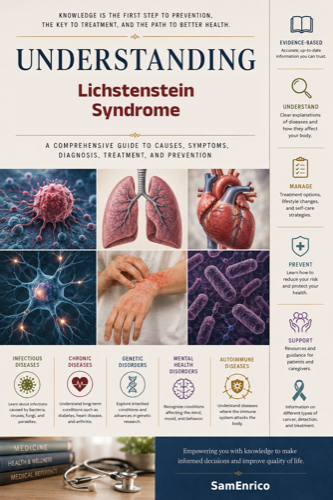 Understanding Lichstenstein SyndromeTijerina Kenneth$17.99
 Mobile Money Cross Border PaymentsTijerina Kenneth$12.99
 Cross Border Trade FacilitationTijerina Kenneth$12.99
 Digital Content ManagerTijerina Kenneth$11.99
 How to Start a Charter Flights (freight) Business (Beginners Guide)Tijerina Kenneth$11.99
You may also like
 Hong Kong Handover 1997Dunn Johnnie$11.99
 Zumba For Postnatal Recovery CourseNeal Christian$11.99
 Zumba for BeginnersLadner Nikia$11.99
 YouTube Comment Mining GuideHumes Pandora$12.99
 Worry Box MeditationCarlin Rudy$11.99
 Workplace Stress MeditationNguyen Lynn$11.99
 Workplace Stress and Sleep RepairHawley Ivory$11.99
 Workplace Perfectionism CureDelaney Jeffry$11.99
 Workplace Injustice Anger GuideWallen Isabelle$11.99
 Work Addiction and Burnout LinkGreenwood Ester$11.99
 Women in Yoga and WellnessBeattie Galina$11.99
 Women in Stand Up ComedyChun Evangeline$11.99