
Non-FictionHealth & WellnessHarm Reduction
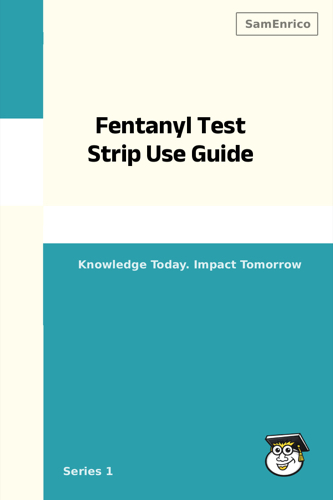
Fentanyl Test Strip Use Guide eBook
Check street drugs for fentanyl contamination to p
Check street drugs for fentanyl contamination to prevent accidental overdose.
Formats
Free sample
Chapter 1: The Poisoned Pickup--The baggie looked innocent enough. White powder, maybe a gram, folded into a corner of plastic and tied with a singed knot. To someone who didn't know better, it could have been baby powder or crushed aspirin. But to the person holding it—let's call him Marcus—it was survival. Marcus had been using heroin for seven years, ever since a back injury at a warehouse job led to Oxy Contin prescriptions, which led to the street when the prescriptions ran out.
He knew his tolerance. He knew his dose. He knew the ritual. What he didn't know was that this particular baggie, bought from a dealer he had used a dozen times before, contained a substance fifty times more potent than the heroin he expected. The dealer didn't know either.
The person who sold it to the dealer didn't know. Somewhere up the supply chain, someone had decided to add fentanyl to increase potency and stretch profits, and that decision rippled down through layers of distribution until it landed in Marcus's hand on a Tuesday evening in Columbus, Ohio.Marcus did his usual test shot—a tiny amount, what he called a "taste," to check the strength. That taste killed him within ninety seconds. His roommate found him blue-faced and unresponsive on the bathroom floor. Paramedics revived him with two doses of Naloxone, but not before anoxia had damaged his short-term memory.
He survived, but he would never be quite the same.This is not an unusual story. It is not even remarkable. In the United States today, more than 100,000 people die from drug overdoses every year, and the majority of those deaths involve synthetic opioids like fentanyl. What makes Marcus's story worth telling is what happened next. When he got out of the hospital, a harm reduction worker gave him a small plastic pouch containing five fentanyl test strips.
"Next time," she said, "check your shit before you put it in your arm." Marcus shrugged, pocketed the strips, and forgot about them for two weeks. Then he bought another baggie, and on a whim, he tested it. The strip showed two lines. Negative. He used his normal dose and felt the familiar rush—nothing more.
The next baggie he bought, he tested again. One line. Positive. Fentanyl. He threw that baggie in the trash.Marcus is alive today because of a ninety-nine-cent strip of paper with antibodies printed on it.
This book exists to make sure you have the same chance.The Drug Supply Has Been Weaponized For most of the twentieth century, the illicit drug market operated on a relatively predictable logic. Heroin came from poppies grown primarily in Southeast Asia, Southwest Asia, or Latin America. Cocaine came from coca leaves grown in the Andes. Methamphetamine was cooked in makeshift labs using precursor chemicals that could be tracked and restricted. The potency varied, but the fundamental nature of the drugs was stable.
A bag of heroin in 1995 was recognizably similar to a bag of heroin in 1985. Users could develop tolerance and gauge doses with reasonable accuracy. Overdoses happened, certainly, but they were typically the result of misjudgment, tolerance breaks, or unexpected purity spikes.That world no longer exists.The shift began in the early 2010s, when Mexican cartels discovered that they could manufacture fentanyl—a synthetic opioid originally developed for surgical anesthesia and cancer pain—in clandestine labs using precursor chemicals sourced from China. Unlike heroin, which requires vast poppy fields and lengthy processing times, fentanyl can be produced in a matter of days using relatively small equipment. One kilogram of fentanyl costs roughly $3,000 to manufacture and has the lethal potential of 50 kilograms of heroin.
For cartels, the economics are irresistible. For users, the consequences have been catastrophic.Today, fentanyl is not just in heroin. It is in cocaine. It is in methamphetamine. It is in counterfeit pills pressed to look like Xanax, Percocet, Oxy Contin, Adderall, and even Vicodin.
It is in MDMA (ecstasy or molly). It is in ketamine. It has been found in marijuana edibles, though less commonly. The Drug Enforcement Administration reports that in 2023, nearly sixty percent of all counterfeit prescription pills tested contained a lethal dose of fentanyl. Think about that number.
Six out of ten pills that look exactly like the ones from a pharmacy are actually bombs.This is not a war on drugs anymore. It is a poisoned supply.The "Chocolate Chip Cookie" Effect One of the most dangerous misconceptions about fentanyl contamination is that it is evenly distributed. People imagine that if a dealer adds fentanyl to a batch of cocaine, the fentanyl mixes thoroughly, like sugar into flour. This is wrong. Fentanyl is potent at microscopic levels.
A lethal dose for a person without tolerance is approximately two milligrams—roughly the size of a grain of salt. To contaminate a kilogram of cocaine to a uniform level of one percent fentanyl, the dealer would need to add ten grams of fentanyl and mix it with industrial equipment. Street-level dealers do not have industrial mixers. They have baggies and their hands.The result is what harm reduction workers call the "chocolate chip cookie" effect. Imagine baking a batch of chocolate chip cookies.
The chocolate chips are not evenly distributed. Some cookies have three or four chips; some have none; some have a single chip right in the center. Now imagine that each chocolate chip is a potentially lethal dose of fentanyl. A user who buys a baggie from a batch may get a sample from a "chip" area and die. Another user who buys from the same batch may get a sample from a "no chip" area and feel nothing unusual.
Both users bought from the same dealer on the same day. One is dead. The other is confused about why his friends are dying.This uneven distribution has profound implications for drug checking. If you test a small sample from a baggie and get a negative result, you only know that the specific particles you tested did not contain fentanyl. You do not know that the rest of the baggie is safe.
The chocolate chip may be sitting one centimeter away from the sample you dissolved. This is why harm reduction organizations recommend testing multiple samples from different parts of a batch—and why even the most careful testing cannot guarantee safety with absolute certainty.The chocolate chip cookie effect also explains why some people survive using fentanyl-contaminated drugs for months or years before overdosing. They were lucky. They kept pulling chocolate chip cookies from the batch that had no chips. Their luck ran out when they finally grabbed a cookie with a chip.
Fentanyl testing strips are a way to peek inside each cookie before you take a bite.What Are We Actually Testing For?To understand how to test for fentanyl, you first need to understand what fentanyl is and how it kills. Fentanyl is a synthetic opioid, meaning it binds to the same mu-opioid receptors in the brain as heroin, morphine, and prescription painkillers. The difference is potency. Fentanyl is approximately fifty times more potent than heroin and one hundred times more potent than morphine. This means that a dose that would produce…
This is the end of the free sample. Get the eBook to keep going. Buy now
About this book
Details
- Author
- Whipple Douglass
- Publisher
- SamEnrico
- Language
- English
- Genre
- Non-Fiction, Health & Wellness, Harm Reduction
- Released
- 2026-06-09
- Pages (approx.)
- 133
- Available as
- eBook, Audiobook

Read better in the ZLOADR app
Your eBooks on your phone or tablet. Sign in with your SamEnrico account and start reading.
More by Whipple Douglass
 DIY Essential Oil ExtractionWhipple Douglass$11.99
 Bill of Lading Customs GuideWhipple Douglass$11.99
 Async Incident Postmortem GuideWhipple Douglass$11.99
 Cocaine Recovery Dating Boundaries GuideWhipple Douglass$11.99
 Into the Abyss: The Pioneers of Atlantic Underwater Caves (1950s-1960s)Whipple Douglass$11.99
 The Afflicted: Voices from Salem's ShadowsWhipple Douglass$11.99
 Understanding Corpus Callosum AgenesisWhipple Douglass$17.99
 How to Start a Felt Tipped Pen Business (Beginners Guide)Whipple Douglass$11.99
 Cash App Money ManagementWhipple Douglass$11.99
 Meta Lead Ads PolicyWhipple Douglass$12.99
 Legal Policies Free GuideWhipple Douglass$12.99
You may also like
 Hong Kong Handover 1997Dunn Johnnie$11.99
 Zumba For Postnatal Recovery CourseNeal Christian$11.99
 Zumba for BeginnersLadner Nikia$11.99
 YouTube Comment Mining GuideHumes Pandora$12.99
 Worry Box MeditationCarlin Rudy$11.99
 Workplace Stress MeditationNguyen Lynn$11.99
 Workplace Stress and Sleep RepairHawley Ivory$11.99
 Workplace Perfectionism CureDelaney Jeffry$11.99
 Workplace Injustice Anger GuideWallen Isabelle$11.99
 Work Addiction and Burnout LinkGreenwood Ester$11.99
 Women in Yoga and WellnessBeattie Galina$11.99
 Women in Stand Up ComedyChun Evangeline$11.99