
Non-FictionSelf-HelpEmotional Intelligence
Feelings Vs Thoughts Workbook
Distinguish genuine emotional vocabulary from judg
Distinguish genuine emotional vocabulary from judgmental pseudo feelings in speech.
Formats
About this book
Free sample
Chapter 1: The Vocabulary Trap--–- Most people believe they are fluent in emotion. They are not. If you ask the average adult to describe what they are feeling in a moment of conflict, they will reach for one of three words: happy, sad, or angry. Occasionally, "fine" makes an appearance, though "fine" is not an emotion at all—it is a withdrawal of information disguised as a status update. This three-word vocabulary is the linguistic equivalent of owning a violin and playing only static noise.
It is not that the capacity for nuance is absent. It is that the words have been lost, replaced by a shorthand that flattens the rich, chaotic, biologically complex reality of human emotion into crude, unusable categories.This chapter introduces the single most important skill you will learn in this entire workbook: emotional granularity. Without it, the rest of the book will feel like learning calculus without knowing arithmetic. With it, every subsequent exercise—identifying pseudo-feelings, pausing through the amygdala hijack, translating blame into vulnerability—becomes not just possible but intuitive. Granularity is the foundation.
Build it poorly, and the house collapses. Build it well, and you will never again mistake irritation for rage, melancholy for depression, or disappointment for betrayal.The Three-Word Prison Let us begin with a simple experiment. Imagine the following scenario: You are sitting in a meeting at work. A colleague interrupts you mid-sentence, finishes your thought incorrectly, and receives credit for the idea from your boss. Later that day, your partner forgets a commitment you reminded them about twice.
Then a friend cancels dinner plans thirty minutes before the reservation, citing "something came up." At the end of this day, someone asks you: "How do you feel?"Most people will answer: "Bad." Or "Frustrated." Or if they are feeling expansive, "Annoyed."None of these answers is wrong. But every one of them is incomplete to the point of uselessness. The word "frustrated" could describe the colleague interruption, the forgotten commitment, or the canceled dinner—but each of those experiences generates a distinct physiological and psychological state. The colleague interruption might produce indignation mixed…
This is the end of the free sample. Get the eBook to keep going. Buy now
Contents
- Chapter 1
- Chapter 2
- Chapter 3
- Chapter 4
- Chapter 5
- Chapter 6
- Chapter 7
- Chapter 8
- Chapter 9
- Chapter 10
- Chapter 11
- Chapter 12
Details
- Author
- Mclaughlin Greg
- Publisher
- SamEnrico
- Language
- English
- Genre
- Non-Fiction, Self-Help, Emotional Intelligence
- Released
- 2026-06-08
- Pages (approx.)
- 150
- Available as
- eBook, Audiobook

Read better in the ZLOADR app
Your eBooks on your phone or tablet. Sign in with your SamEnrico account and start reading.
More by Mclaughlin Greg
 Assertiveness for NeurodivergentMclaughlin Greg$11.99
 Franchising Your Local Brand Across Borders Holiday SchedulesMclaughlin Greg$11.99
 Visual Memory StrategiesMclaughlin Greg$11.99
 The Assumption Check GuideMclaughlin Greg$11.99
 Cocaine Anonymous GuideMclaughlin Greg$11.99
 Varicocele Treatment GuideMclaughlin Greg$11.99
 Missing Experienced HikersMclaughlin Greg$11.99
 The Celestial Architects of Nubia: How Ancient Africa Mapped the StarsMclaughlin Greg$11.99
 Frederick the Great: The Iron Crown of PrussiaMclaughlin Greg$11.99
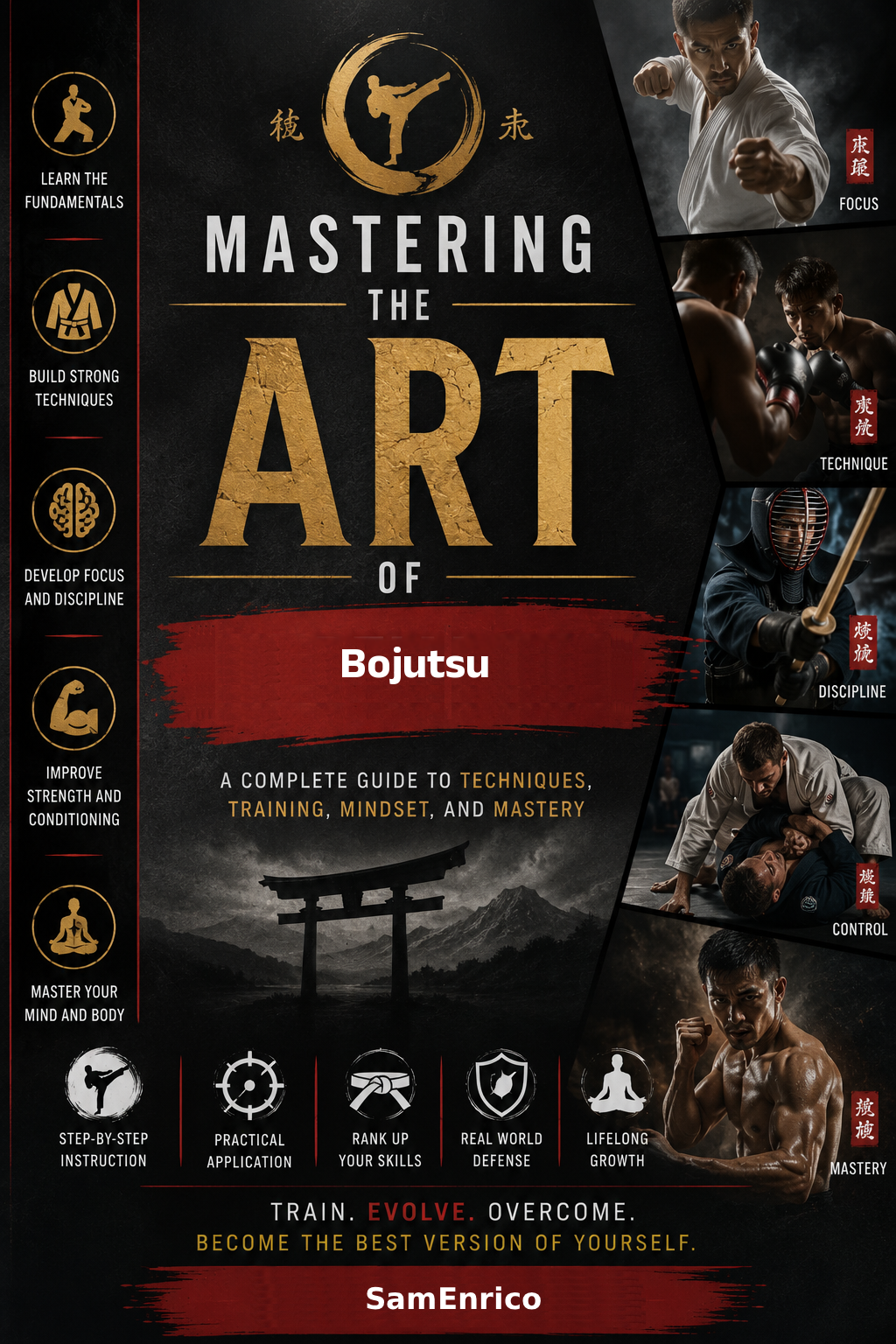 Mastering The Art of Bōjutsu (棒術)Mclaughlin Greg$11.99
 How to Produce Grass and Weed Control ProductsMclaughlin Greg$11.99
 LIBOR to SOFR Transition ImpactsMclaughlin Greg$12.99
You may also like
 Hong Kong Handover 1997Dunn Johnnie$11.99
 Zumba For Postnatal Recovery CourseNeal Christian$11.99
 Zumba for BeginnersLadner Nikia$11.99
 YouTube Comment Mining GuideHumes Pandora$12.99
 Worry Box MeditationCarlin Rudy$11.99
 Workplace Stress MeditationNguyen Lynn$11.99
 Workplace Stress and Sleep RepairHawley Ivory$11.99
 Workplace Perfectionism CureDelaney Jeffry$11.99
 Workplace Injustice Anger GuideWallen Isabelle$11.99
 Work Addiction and Burnout LinkGreenwood Ester$11.99
 Women in Yoga and WellnessBeattie Galina$11.99
 Women in Stand Up ComedyChun Evangeline$11.99