
Fear Failure Resilience eBook
Take risks without being paralyzed by potential se
by Bowie Vivien
Take risks without being paralyzed by potential setbacks.
Formats
Free sample
Chapter 1: The Safety Trap--The most dangerous place in the world is not a war zone, a collapsing building, or a speeding car. It is the middle of the road—the place where you are neither moving forward nor backward, where you are exposed to traffic from all directions, where you have convinced yourself that standing still is the same as being safe.Let me tell you about David.David was forty-seven years old when he was laid off from a manufacturing company where he had worked for twenty-three years. He had never missed a deadline. He had never been written up. He had never failed at anything visible.
In fact, David had perfected the art of invisibility so completely that when the restructuring committee made their list of who to keep and who to cut, the conversation about David lasted less than ninety seconds."What has he actually done?" the new VP asked.No one could answer.Not because David was lazy. He worked sixty-hour weeks. He stayed late. He answered emails on weekends. But every time a stretch assignment came up, David found a reason to decline.
Every time a risky project needed a volunteer, David's hand stayed down. Every time there was a difficult conversation to be had, David was suddenly very busy with something else.David thought he was being smart. He thought he was protecting his career by avoiding visible failure. He was wrong. He was not protecting anything.
He was erasing himself.Twenty-three years of playing it safe, and the only thing he had to show for it was a severance check and the dawning horror that he had become completely replaceable—not because he made mistakes, but because he had never done anything worth remembering.The Illusion of Zero Failure We live in a culture that worships the absence of failure. From elementary school report cards to corporate performance reviews, the message is consistent: don't mess up. Keep your head down. Color inside the lines. A zero-failure record is the golden ticket.But here is the truth that no performance review will tell you: zero failure is not success.
Zero failure is zero growth.Think about the last time you learned something genuinely new. Not a fact you memorized for a trivia night, but a skill you acquired—riding a bike, cooking a new recipe, learning a software program, navigating a unfamiliar city. How many times did you fail in the process? How many times did you wobble, burn the dish, click the wrong button, or take the wrong turn?That wobbling, burning, clicking, and turning was not evidence of incompetence. It was the mechanism of learning.Now think about the last time you avoided a risk because you might fail.
That pitch you didn't make. That question you didn't ask. That conversation you didn't have. That opportunity you didn't pursue because you weren't "ready" yet.In the moment, that avoidance felt like wisdom. But was it?Or was it the slow, quiet suffocation of your own potential?The Paradox of Risk This chapter introduces a concept that will appear throughout this book: The Paradox of Risk.
It works like this:The risks you avoid are almost always smaller than the risks you take by avoiding them.Let me say that again, because it is counterintuitive and essential:Avoiding a small, public risk (asking a question, pitching an idea, applying for a stretch role) leads to massive, private failures that accumulate silently over time. Regret. Obsolescence. A creeping sense that you have become a background character in your own life. Depression that has no single cause because it is the sum of a thousand tiny no's.The person who asks the stupid question in a meeting risks thirty seconds of embarrassment.
The person who stays silent risks a lifetime of being overlooked.The person who pitches a half-baked idea risks a few minutes of critical feedback. The person who never pitches anything risks becoming irrelevant.The person who applies for a job they are not fully qualified for risks a rejection email. The person who waits until they are "ready" risks watching less qualified but braver people pass them by.The small risk has a small downside. The avoidance of that risk has a massive, compounding downside.This is not optimism. This is arithmetic.The Regret Differential In the 1990s, a palliative care nurse named Bronnie Ware published a list of the top five regrets of the dying.
She had spent years sitting beside people in their final weeks, listening to what haunted them. The list became famous, and for good reason.Do you know what was not on the list?"I wish I had failed less.""I wish I had made fewer mistakes.""I wish I had been more careful."Not one person on their deathbed regretted the failures they experienced. Not one.Here is what was on the list, distilled to its essence:"I wish I had had the courage to live a life true to myself, not the life others expected of me.""I wish I hadn't worked so hard and had instead taken more risks that mattered.""I wish I had had the courage to express my feelings.""I wish I had stayed in touch with my friends.""I wish I had let myself be happier."Every single one of these regrets is about the risks not taken. The words not spoken. The paths not chosen.
The versions of themselves that died unborn because fear of failure was louder than the whisper of possibility.I call this The Regret Differential. It is the gap between how much pain we anticipate from failure and how much pain we actually experience from failure—versus how much pain we do not anticipate from the safety that slowly strangles us.We are exquisitely sensitive to the pain of visible failure. We can feel it coming. We can imagine it vividly. That presentation going wrong.
That rejection letter. That awkward silence after a risky comment. Our brains, designed to keep us safe in a world of predators and famines, treat these social threats as if they are life-threatening.But we are almost completely numb to the pain of invisible failure. The slow erosion of our own potential does not hurt in the moment. It is a thousand paper cuts, not a single wound.
You do not feel yourself becoming obsolete. You do not feel yourself shrinking. You just wake up one day, like David, and realize you have spent twenty-three years becoming replaceable.The Regret Differential is the reason we need this book. Our fear systems are calibrated for a world that no longer exists. They protect us from the wrong things and leave us exposed to the right ones.The Mathematics of Avoidance Let me make this concrete.
I want you to run a small thought experiment.Think of a risk you have been avoiding. It could be anything—asking for a raise, having a difficult conversation, starting a creative project, applying for a new job, ending a relationship that is not working, speaking up in a meeting.Now, answer three questions:Question 1: What is the worst-case scenario if you take this risk? Be specific. Write it…
This is the end of the free sample. Get the eBook to keep going. Buy now
About this book
Details
- Author
- Bowie Vivien
- Publisher
- SamEnrico
- Language
- English
- Genre
- Non-Fiction, Self-Help, Fear
- Released
- 2026-06-09
- Pages (approx.)
- 108
- Available as
- eBook, Audiobook

Read better in the ZLOADR app
Your eBooks on your phone or tablet. Sign in with your SamEnrico account and start reading.
More by Bowie Vivien
 Alpine Lake VisualizationBowie Vivien$11.99
 Quinine and Malaria ConquestBowie Vivien$11.99
 The Context Switching GuideBowie Vivien$11.99
 Mindfulness For GADBowie Vivien$11.99
 GAD And Social PerformanceBowie Vivien$11.99
 Boundaries for WorkaholicsBowie Vivien$11.99
 Like Kind Exchange Real Estate HandbookBowie Vivien$11.99
 The Young Bootleggers of Hamburg: Children of the Rum FleetBowie Vivien$11.99
 The Axumite Goldsmiths: Crafting the Legacy of the Red SeaBowie Vivien$11.99
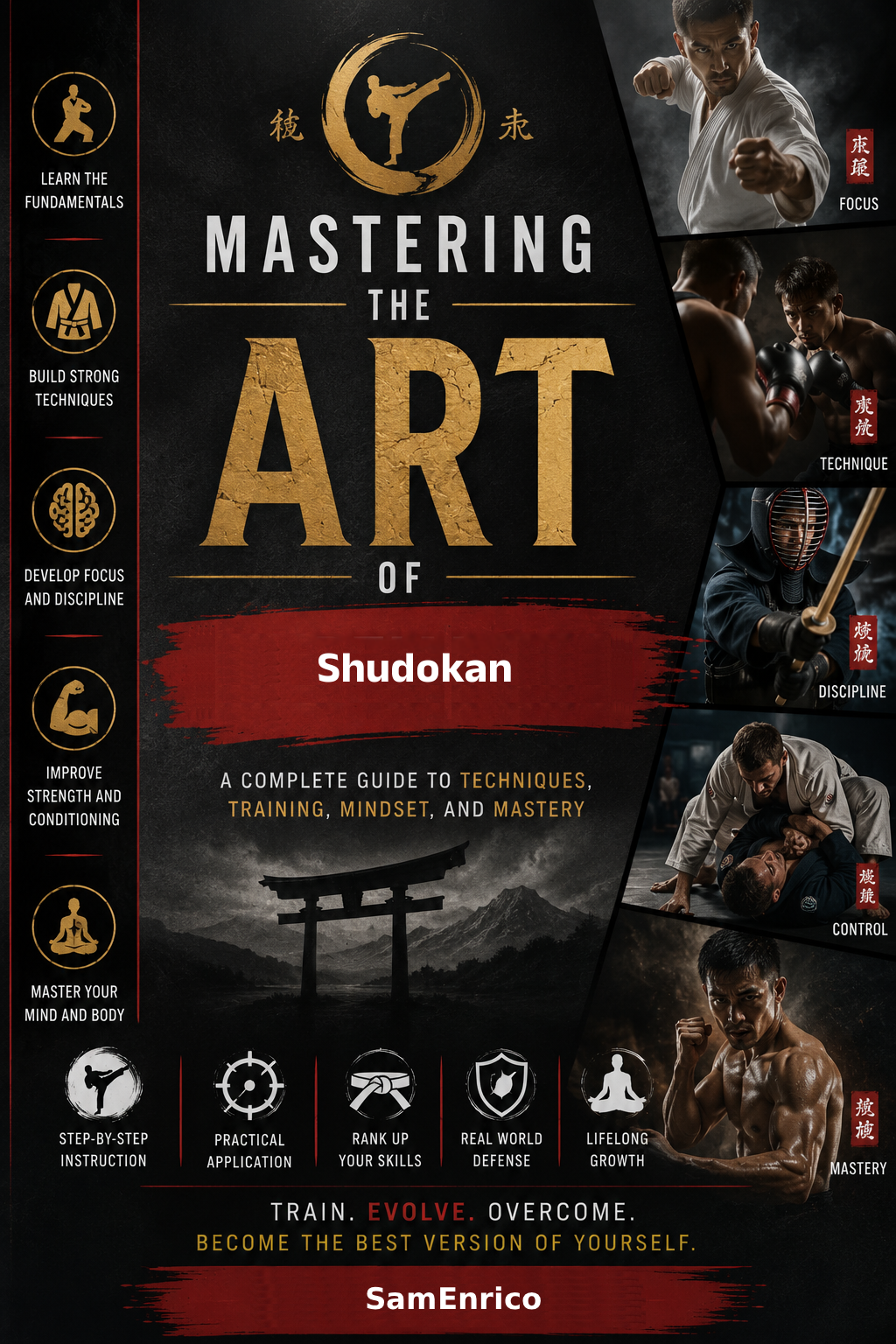 Mastering The Art of Shūdōkan (修道館)Bowie Vivien$11.99
 Vendor Meeting Agenda TemplateBowie Vivien$12.99
 Tugende Asset Finance ExitBowie Vivien$12.99
You may also like
 Hong Kong Handover 1997Dunn Johnnie$11.99
 Zumba For Postnatal Recovery CourseNeal Christian$11.99
 Zumba for BeginnersLadner Nikia$11.99
 YouTube Comment Mining GuideHumes Pandora$12.99
 Worry Box MeditationCarlin Rudy$11.99
 Workplace Stress MeditationNguyen Lynn$11.99
 Workplace Stress and Sleep RepairHawley Ivory$11.99
 Workplace Perfectionism CureDelaney Jeffry$11.99
 Workplace Injustice Anger GuideWallen Isabelle$11.99
 Work Addiction and Burnout LinkGreenwood Ester$11.99
 Women in Yoga and WellnessBeattie Galina$11.99
 Women in Stand Up ComedyChun Evangeline$11.99