
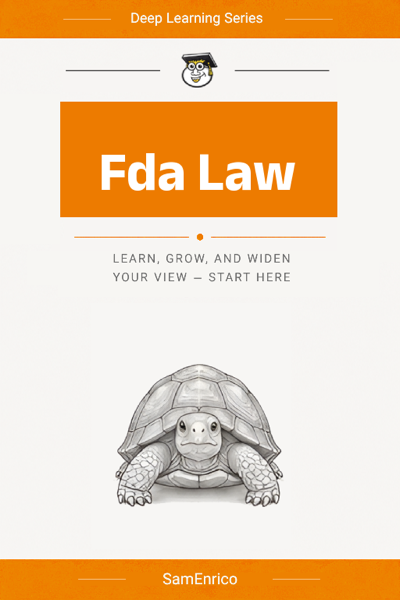
Non-FictionInformativeEducational
Fda Law eBook
A Coursebook on Fda Law
A Coursebook on Fda Law
Formats
Free sample
Chapter 1: The Invisible Empire...--–- On a humid July morning in 2019, a fifty-two-year-old grandmother named Maria Hernandez walked into a CVS pharmacy in Phoenix, Arizona, to pick up her monthly prescription for Losartan, a common blood pressure medication. She had no way of knowing that the bottle she would carry home contained not the lifesaving drug her doctor intended, but a carcinogen called N-nitrosodiethylamine (NDEA)—a probable human carcinogen—at concentrations nearly forty times above the acceptable daily intake limit. She also had no way of knowing that the FDA had known about contaminated Losartan batches from a factory in China for nearly eight months before her prescription was filled. She would continue taking the pills for three weeks, until a pharmacist finally called to say she should stop immediately and return the bottle. By then, the theoretical increase in her lifetime cancer risk had already been locked in.Maria Hernandez is not a famous person.
She did not become a plaintiff in a class-action lawsuit. She did not testify before Congress. She is, however, a perfect symbol of why this book exists. Every day, millions of Americans place their trust in products that have passed through an invisible empire—a sprawling, underfunded, legally constrained agency called the Food and Drug Administration. The FDA regulates twenty-five cents of every consumer dollar spent in the United States.
It oversees more than $2.7 trillion worth of products annually, from the pacemaker in your grandfather's chest to the vaccine in your child's arm to the CBD gummy you bought at a gas station. It employs roughly 18,000 people. The New York City Police Department employs 36,000. The FDA has fewer personnel than the police force of a single American city, yet it is responsible for ensuring the safety of nearly everything you eat, drink, swallow, inject, implant, or rub on your skin.This chapter is about the architecture of that invisible empire. It is about the statutes that give the FDA its power, the centers that execute its mission, and the industries that it regulates—often with one hand tied behind its back.
By the time you finish this chapter, you will understand not just what the FDA does, but why it so often seems to be fighting the last war, why certain products fall through the cracks, and why a grandmother in Phoenix could be handed a bottle of cancer-causing blood pressure medication despite the best efforts of thousands of dedicated public servants.The Scope of FDA Jurisdiction: What the Empire Controls The FDA's jurisdiction is defined not by a single statute but by a patchwork of laws accumulated over more than a century. The core is the Federal Food, Drug, and Cosmetic Act (FFDCA) , originally passed in 1938 and amended dozens of times since. But the FFDCA does not stand alone. It operates alongside the Public Health Service Act (which governs biologics), the Family Smoking Prevention and Tobacco Control Act (which gave the FDA authority over cigarettes, e-cigarettes, and other tobacco products), and several other smaller statutes.Here is what the FDA regulates, in order of economic significance:Drugs (Human and Animal): This is the FDA's largest and most mature regulatory domain. Human drugs include prescription pharmaceuticals, over-the-counter medications, and generic drugs.
Animal drugs include everything from antibiotics for livestock to pain relievers for pets. The FDA does not regulate the practice of medicine—that is left to state medical boards—but it does regulate every drug that enters interstate commerce. Approximately 20,000 prescription drug products are on the US market, with hundreds of new approvals each year.Biologics: This category includes vaccines, blood and blood products, gene therapies, and therapeutic proteins. Biologics are generally more complex than small-molecule drugs and are regulated under a different statutory authority (the Public Health Service Act). Historically, all biologics were housed in the Center for Biologics Evaluation and Research (CBER).
But as we will see in Chapter 5, many therapeutic monoclonal antibodies—drugs like Humira and Keytruda—are now regulated by the Center for Drug Evaluation and Research (CDER). This jurisdictional split is one of the most confusing aspects of FDA law, and we will untangle it carefully.Medical Devices: From tongue depressors to artificial hearts, medical devices span an enormous range of risk. The FDA classifies devices into three categories (Class I, II, and III) based on the level of control needed to ensure safety and effectiveness. Unlike drugs, most devices do not require pre-market approval through clinical trials; they can enter the market through a process called "510(k) clearance" if they are substantially equivalent to a device already on the market. This regulatory asymmetry—drugs are hard to approve, devices are relatively easy—is a recurring theme in FDA law.Foods (excluding most meat and poultry): The FDA regulates all food products except meat, poultry, and certain egg products (which are handled by the US Department of Agriculture).
This includes produce, packaged foods, seafood, dairy, and dietary supplements. The FDA's food safety authority was fundamentally transformed by the Food Safety Modernization Act (FSMA) of 2011 , which shifted the agency from responding to outbreaks to preventing them. However, as we will explore in Chapter 7, the FDA still lacks mandatory recall authority for most foods—a gap that has allowed contaminated products to remain on shelves for weeks.Cosmetics: Lipstick, shampoo, moisturizer, deodorant—these products are regulated by the FDA, but barely. Until the passage of the Modernization of Cosmetics Regulation Act (Mo CRA) of 2022 , cosmetics had no pre-market approval requirement, no mandatory registration of facilities, and no mandatory adverse event reporting. Mo CRA changed that, but only modestly.
Most cosmetics still enter the market without any FDA review.Tobacco Products: Cigarettes, smokeless tobacco, e-cigarettes, and vape products fall under FDA jurisdiction following the 2009 Tobacco Control Act. The FDA can require pre-market review for "new tobacco products" (anything introduced after February 15, 2007), but the burden of proof is unusual: manufacturers must show that the product is "appropriate for the protection of public health"—a standard that considers both benefits to adult smokers (switching from cigarettes) and risks to youth (initiation through flavored products).What the FDA Does NOT Regulate: It is equally important to understand the limits of FDA jurisdiction. The FDA does not regulate the practice of medicine (doctors can prescribe drugs off-label). It does not regulate most alcohol products (the Alcohol and Tobacco Tax and Trade Bureau handles that). It does not regulate advertising for most non-prescription products (the Federal Trade Commission has primary jurisdiction there—a split we will cover in Chapter 9).
It does not regulate meat and poultry (USDA). It does not regulate illegal drugs (the Drug Enforcement Administration handles controlled substances). And crucially, the FDA does not approve dietary supplements before they reach the market—a regulatory gap that has created a multi-billion dollar industry operating on the honor system.The Federal Food, Drug, and Cosmetic Act: The Empire's Constitution The FFDCA is a massive, unwieldy statute that has been amended so many times that even experienced FDA attorneys struggle to navigate it without electronic search tools. But a few sections are so foundational that every student of FDA law must know them by heart.Section 301: Prohibited Acts This is the enforcement engine. Section 301 lists dozens of…
This is the end of the free sample. Get the eBook to keep going. Buy now
About this book
Details
- Author
- Squires Tommy
- Publisher
- SamEnrico
- Language
- English
- Genre
- Non-Fiction, Informative, Educational
- Released
- 2026-05-11
- Pages (approx.)
- 160
- Available as
- eBook, Audiobook

Read better in the ZLOADR app
Your eBooks on your phone or tablet. Sign in with your SamEnrico account and start reading.
More by Squires Tommy
 People Pleasing Childhood Roots WorkbookSquires Tommy$11.99
 The Raven Symone Identity JourneySquires Tommy$11.99
 Twenty Second Speaking ResetSquires Tommy$11.99
 Following Breath In and OutSquires Tommy$11.99
 The Trauma Trigger Relationship Stress GuideSquires Tommy$11.99
 The Baghdad Bank Heist: The Defector Who Blew the Lid on Saddam's GoldSquires Tommy$11.99
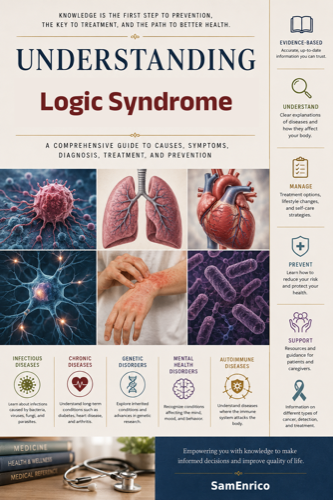 Understanding Logic SyndromeSquires Tommy$17.99
 Non Resident LLC Professional ServicesSquires Tommy$12.99
 Fashion and Apparel ReportSquires Tommy$12.99
 How to Start a Swimming Pools BusinessSquires Tommy$11.99
You may also like
 Hong Kong Handover 1997Dunn Johnnie$11.99
 Zumba For Postnatal Recovery CourseNeal Christian$11.99
 Zumba for BeginnersLadner Nikia$11.99
 YouTube Comment Mining GuideHumes Pandora$12.99
 Worry Box MeditationCarlin Rudy$11.99
 Workplace Stress MeditationNguyen Lynn$11.99
 Workplace Stress and Sleep RepairHawley Ivory$11.99
 Workplace Perfectionism CureDelaney Jeffry$11.99
 Workplace Injustice Anger GuideWallen Isabelle$11.99
 Work Addiction and Burnout LinkGreenwood Ester$11.99
 Women in Yoga and WellnessBeattie Galina$11.99
 Women in Stand Up ComedyChun Evangeline$11.99