
Family First Longevity Plan eBook
Prioritize elder respect and multi-generational li
by Sell Jesica
Prioritize elder respect and multi-generational living as blue zones do for health span.
Formats
Free sample
Chapter 1: The Loneliness Kill Shot--–- You are doing everything right. You eat kale. You wear an Oura ring. You hit ten thousand steps before noon. You take vitamin D, magnesium, and a half-dozen other supplements whose names you can’t pronounce.
You’ve cut alcohol, reduced sugar, and you meditate for twelve minutes every morning using an app that tracks your “mindfulness streak.” By every metric of the modern wellness industry, you are a model human.And yet, you are tired. Not just sleepy—exhausted in a way that sleep doesn’t fix. You have a vague ache in your chest that your cardiologist says is “nothing abnormal.” Your brain feels foggy by 3:00 PM. You’ve gained fifteen pounds despite eating “perfectly.” You scroll social media at night, watching other people laugh at dinner parties you weren’t invited to, and you feel a quiet hum of something you can’t name.Loneliness.The wellness industry has sold you a lie. The lie is this: your body is a machine, and if you just input the right fuel, the right movement, the right supplements, you will live long and die healthy.
But the data tells a different story. A story that the supplement companies, the fitness influencers, and the bio-hacking gurus don’t want you to hear.The single best predictor of a long, healthy life is not your cholesterol level, your resting heart rate, or your genetic profile. It is the number of people you can call at 2:00 AM when you are scared.This chapter is going to upset you. That is the point. Because before you can build a Family First Longevity Plan, you have to admit that your current plan—the one built on individualism, self-optimization, and silent meals eaten over the kitchen sink—is killing you slowly.
And the solution is not another supplement. It is your grandmother.The Contradiction at the Heart of Modern Health Let us begin with a paradox.We live in the most medically advanced era in human history. Lifespan has doubled in the last century. We have vaccines, antibiotics, statins, and surgical techniques that would have seemed like magic to our great-grandparents. We have wearable devices that monitor our heart rhythms, our sleep cycles, and our oxygen saturation in real time.
We spend more on health care per capita than any other nation on earth—nearly $13,000 per person per year.And yet, chronic disease is rising. Depression is epidemic. Anxiety disorders have tripled in the last two decades. Alzheimer’s disease is projected to affect nearly 14 million Americans by 2060. And despite all our technology, all our data, all our optimization, the average American’s healthspan—the number of years lived free of serious disease—has actually declined relative to lifespan.
We are living longer, but we are spending those extra years sick, medicated, and alone.How can this be?The standard explanation, offered by the wellness industry, is that you aren’t trying hard enough. You need a stricter diet. A harder workout. A more expensive supplement stack. A colder plunge.
A hotter sauna. The solution, they say, is more optimization. More individualism. More self.But what if the opposite is true? What if the problem is not that you are failing to optimize yourself, but that you are trying to do it alone?Introducing the Master Villain: The Individualism Industrial Complex Before we go further, we need to name the enemy.
Not to create a conspiracy theory, but to help you see the invisible architecture that shapes your daily choices.Call it the Individualism Industrial Complex.This is not a single company or a secret cabal. It is a web of industries—wellness, senior care, fitness, food, housing, finance—that profit from convincing you that you can and should go it alone. Every time a supplement company tells you that “your health is your responsibility,” they are nudging you toward individualism. Every time a fitness brand sells you a solo workout plan with the tagline “be your own hero,” they are monetizing isolation. Every time a nursing home chain markets itself as “the dignified choice for independent seniors,” they are selling the fiction that separation from family is progress.These industries have a combined annual revenue in the trillions of dollars.
And their business model depends on one thing: your belief that health is an individual project.The Individualism Industrial Complex has convinced you that aging parents are a “burden” to be “managed” rather than a gift to be welcomed. It has convinced you that multi-generational living is “crowded” and “stressful” rather than normal and healthy. It has convinced you that eating alone over the sink is “efficient” rather than biologically disastrous. It has convinced you that movement requires a gym membership and special shoes rather than a walking buddy and a reason to go outside.This book is an act of rebellion against that complex. And Chapter 1 is your declaration of independence.The Blue Zones: Where Loneliness Does Not Exist Now let us travel.
Not literally—your passport can stay in the drawer. But let us visit three places on earth where people live not just longer, but better. Places where dementia is rare, depression is almost unknown, and ninety-year-olds still walk to market, tend gardens, and scold their great-grandchildren.The Blue Zones.The term was coined by National Geographic fellow and researcher Dan Buettner, who led a team of demographers and scientists to identify the world’s longest-lived populations. They found five: Okinawa (Japan), Sardinia (Italy), Nicoya (Costa Rica), Ikaria (Greece), and Loma Linda (California—a community of Seventh-day Adventists).For our purposes, we will focus on three: Okinawa, Sardinia, and Nicoya. These three share a common trait that has nothing to do with diet, exercise, or genes.
They share a total absence of loneliness.Let us walk through each.Okinawa, Japan The island of Okinawa is home to the world’s highest concentration of centenarians—people who live past one hundred. Researchers have studied their diets (plant-based, with small amounts of fish and pork), their movement patterns (daily gardening, walking, and traditional dancing), and their genetics (some protective variants). But one factor stands out above all others: the moai.A moai is a small, committed group of friends who support each other for life. These groups form in childhood and persist into extreme old age. Members share resources, provide emotional support, and—crucially—hold each other accountable for health behaviors.
If someone in your moai notices you skipping your morning walk or eating too much, they will say something. Not out of criticism, but out of love.The moai is the opposite of individualism. It is interdependence made flesh.When Okinawan centenarians are asked the secret to their longevity, they do not say “kale smoothies” or “cold plunges.” They say, “My moai.” They say, “We have always had each other.”Sardinia, Italy In the mountainous highlands of Sardinia, another cluster of centenarians has captured researchers’ attention. Sardinia is unique among Blue Zones for having a high concentration of male centenarians—a rarity in a world where women typically outlive men by five to seven years.What explains this? Partly diet (sheep’s milk cheese, whole grains, and a glass of red wine…
This is the end of the free sample. Get the eBook to keep going. Buy now
About this book
Details
- Author
- Sell Jesica
- Publisher
- SamEnrico
- Language
- English
- Genre
- Non-Fiction, Health & Wellness, Family Health
- Released
- 2026-06-12
- Pages (approx.)
- 147
- Available as
- eBook, Audiobook

Read better in the ZLOADR app
Your eBooks on your phone or tablet. Sign in with your SamEnrico account and start reading.
More by Sell Jesica
 Email Unsubscribe System GuideSell Jesica$11.99
 Self Compassion Eating RecoverySell Jesica$11.99
 The Most Favored Nation GuideSell Jesica$11.99
 Interracial Couple Stress GuideSell Jesica$11.99
 The Bay Bridge: A Bridge to the FutureSell Jesica$11.99
 Talent Acquisition ManagerSell Jesica$11.99
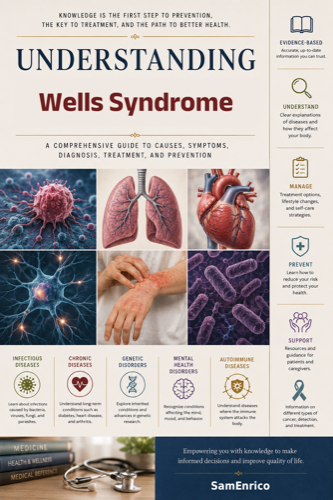 Understanding Wells SyndromeSell Jesica$17.99
 How to Become a Loading-machine AdjusterSell Jesica$11.99
 Ghana Electricity for StartupsSell Jesica$12.99
 Madrid for StartupsSell Jesica$12.99
You may also like
 Family Meal Tradition PlanHitchcock Hailey$11.99Family Meal Tradition PlanHitchcock Hailey$11.99
 Secondhand Smoke Home SolutionsBlodgett Roseanna$11.99
 Pertussis Vaccination For FamiliesFrancis Alvin$11.99
 Blue Zone Family ChecklistSwain Vicenta$11.99
 Family First Longevity PriorityMilliken Awilda$11.99