
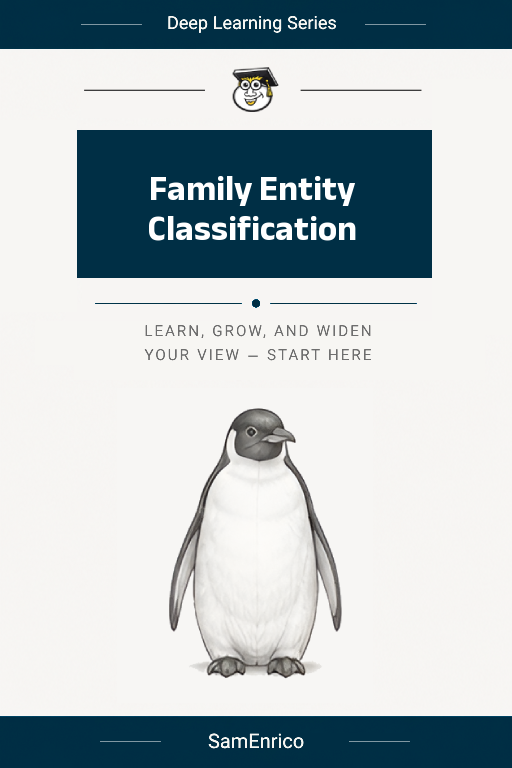
Family Entity Classification
Updates on check-the-box rules and entity classifi
Updates on check-the-box rules and entity classification elections in family business succession.
Formats
About this book
Free sample
Chapter 1: The Flexibility Trap--The summer afternoon sun cast long shadows across the conference room as I watched three generations of the Harrison family stare at a single piece of paper. On it was a simple diagram: their family business, a successful regional manufacturing company, had been operated as a C corporation for forty-seven years. The grandfather, now eighty-two, wanted to transition ownership to his son and four grandchildren. The son wanted to reduce the family's tax burden. The grandchildren wanted to know if they would ever actually own anything or if they would simply be employees with a fancy title.The answer, I explained, hinged entirely on a set of regulations that most of them had never heard of—the Check-the-Box rules.
And that was the problem.The Harrison family had spent decades building wealth, navigating market cycles, surviving three recessions, and outlasting countless competitors. Yet they had never once considered how the Internal Revenue Service would classify their entity for tax purposes. They had simply filed articles of incorporation, paid their taxes, and assumed everything was fine. But when we ran the numbers, the truth emerged: their entity classification was silently costing them nearly 400,000peryearinunnecessarytaxes.Worse,theirsuccessionplan—suchasitexisted—wouldtriggeranadditional400,000 per year in unnecessary taxes. Worse, their succession plan—such as it existed—would trigger an additional 400,000peryearinunnecessarytaxes.Worse,theirsuccessionplan—suchasitexisted—wouldtriggeranadditional2.1 million in transfer taxes when the grandfather passed away, simply because of how their entity was classified.The flexibility trap had caught them completely unaware.This chapter tells the story of how the United States tax system transformed from a rigid, unpredictable mess into a flexible, election-driven regime—and why that flexibility, while powerful, requires careful navigation.
For family businesses, understanding this history is not an academic exercise. It is the foundation upon which every succession plan, every wealth transfer strategy, and every governance structure must be built. Without this foundation, even the most sophisticated planning can collapse under its own weight.The Old Regime: Uncertainty as a Tax Strategy Before 1997, the classification of business entities for federal tax purposes was governed by a set of regulations that…
This is the end of the free sample. Get the eBook to keep going. Buy now
Contents
- Chapter 1
- Chapter 2
- Chapter 3
- Chapter 4
- Chapter 5
- Chapter 6
- Chapter 7
- Chapter 8
- Chapter 9
- Chapter 10
- Chapter 11
- Chapter 12
Details
- Author
- Strand Alverta
- Publisher
- SamEnrico
- Language
- English
- Genre
- Non-Fiction, Annual Checkup, Entity Classification
- Released
- 2026-05-30
- Pages (approx.)
- 158
- Available as
- eBook, Audiobook

Read better in the ZLOADR app
Your eBooks on your phone or tablet. Sign in with your SamEnrico account and start reading.
More by Strand Alverta
 The Calm Leader GuideStrand Alverta$11.99
 Submarine Medical CareStrand Alverta$11.99
 Overcoming Internalized AgeismStrand Alverta$11.99
 The MDD Sleep Disturbance GuideStrand Alverta$11.99
 Business Legacy GuideStrand Alverta$11.99
 Leontyne Price's Shadow: The Rise of South Africa's First Black Opera StarStrand Alverta$11.99
 Climate Insurance ExclusionsStrand Alverta$12.99
 How to Become a Drum CleanerStrand Alverta$11.99
 Understanding Spinocerebellar Degenerescence Book TypeStrand Alverta$17.99
 Wellness NurseStrand Alverta$11.99