
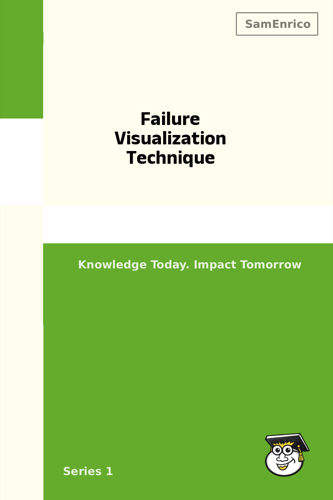
Failure Visualization Technique eBook
Imagine worst outcomes vividly to realize you coul
Imagine worst outcomes vividly to realize you could survive and recover.
Formats
Free sample
Chapter 1: The Suffering We Invent--–- You are reading this because somewhere, buried under the daily noise of notifications and obligations, you are afraid. Not the surface-level fear of a deadline or a difficult conversation, but the deeper dread that whispers: What if I try and fail? What if they see me stumble? What if I lose everything I’ve built? That whisper has been getting louder, hasn’t it?
You’ve tried to ignore it. You’ve tried positive affirmations, vision boards, and the relentless催促 to “just think happy thoughts.” And yet, the whisper remains. This chapter is going to show you why that whisper is not your enemy. It is, in fact, the most misunderstood tool you possess. But first, we have to dismantle everything you think you know about fear.The Great Deception of Modern Anxiety Here is a strange fact that sounds like a paradox but is actually a law of human psychology: as the world becomes safer, our anxiety tends to increase.
Not decrease. Increase. Consider the data. In the last century, lifespans have doubled, poverty has plummeted, and the likelihood of dying from war, famine, or infectious disease is the lowest in human history. Your ancestors faced wolves, starvation, and plagues.
You face an email from your boss and the possibility of an awkward silence at a dinner party.And yet, rates of anxiety, depression, and generalized worry are higher now than in any previous generation. What’s happening?The answer lies in a cognitive quirk called prevalence-induced concept change. It works like this: when a threat becomes rare, your brain doesn’t relax. Instead, it lowers the bar for what it considers a threat. Think of a smoke detector.
If a real fire never happens, the detector doesn’t stop scanning for smoke. It just starts beeping at burnt toast, then at steam from a shower, then at dust particles. Your brain is the same. With no tigers to run from, it invents social tigers: public speaking, rejection, imperfection, the judgment of strangers. You aren’t broken.
You are a smoke detector in a world with no fires, beeping at burnt toast.The ancient Stoic philosopher Seneca understood this two thousand years ago. He wrote: “We suffer more often in imagination than in reality.” Read that line again. Let it land. Seneca was not dismissing fear. He was locating it.
The vast majority of your suffering—the sleepless nights, the clenched jaw, the procrastination, the avoidance—is not caused by actual events. It is caused by your imagination of those events. The event itself, when or if it arrives, is almost always less devastating than the movie you played in your head for weeks beforehand.This chapter is the only place in this book where you will read that Seneca quote. It belongs here, at the beginning, because it is the foundation of everything that follows. Memorize it.
Write it on a sticky note. But do not repeat it to yourself like a mantra. Use it as a scalpel. Every time you feel the whisper of fear, ask yourself: Is this real, or is this imagined? The answer, 90% of the time, will be the latter.The Dichotomy of Control: Your First Mental Weapon The Stoics gave us another tool, one that you will use constantly throughout this 30-day protocol.
It is called the dichotomy of control. It is brutally simple, and brutally difficult to internalize. Here it is:Some things are within your control. Other things are not.That’s it. But the power lies in the details.
Within your control: your judgments, your opinions, your choices, your actions, your responses to events. That’s the entire list. Everything else—your reputation, the weather, the stock market, what other people think of you, whether you get the job, whether your partner stays, whether your body ages—is not within your control.Here is what most people do wrong. They spend 90% of their mental energy worrying about things outside their control (Will they like me? Will I get promoted?
Will the economy crash?) and 10% on the things inside their control (What will I do today? How will I respond to criticism? What is my next action?). And then they wonder why they feel powerless.The dichotomy of control is not an excuse for passivity. It is a tool for focus.
You pour your energy into what you can actually change, and you accept what you cannot. Acceptance is not resignation. It is the recognition that fighting reality is a guaranteed loss. You cannot control the storm. You can only control how you trim the sails.Try this right now.
Take a breath. Think of one fear that has been nagging you. Any fear. Now draw a line down the center of a piece of paper. On the left, write every element of that fear that is within your control.
On the right, write every element that is not. I promise you: the right column will be longer. But the left column is where your power lives. The rest is noise.The Statistics of Survival: Why You Underestimate Yourself There is a second cognitive bias that keeps you trapped in fear, and it is the mirror image of the first. Your brain overestimates threats (prevalence-induced concept change) and underestimates your ability to recover.
Psychologists call this immune neglect. You have a psychological immune system—resilience, social support, problem-solving skills, the ability to adapt—but you consistently forget it exists when you imagine future disasters.Think back to the five worst things that have ever happened to you. I mean the real ones: the breakup, the job loss, the health scare, the financial blow, the public humiliation. Now ask yourself: How did I feel in the week after that event? Probably terrible.
Now ask: How did I feel six months later? Probably much better. Now ask: How do I feel about that event today? For most people, the answer is: It was awful, but I learned something. I survived.
I am different now, maybe even stronger.That is immune neglect in action. When you imagine a future failure, you imagine only the immediate pain. You do not imagine the repair. You do not imagine the friend who will help you. You do not imagine the new opportunity that will emerge from the wreckage.
You freeze the frame at the moment of impact and ignore the six months that follow.This book is going to force you to imagine those six months. Explicitly. In writing. Because once you write down the repair plan, the fear stops being a monster and becomes a logistics problem. And you are very good at logistics problems.
You pay bills, schedule appointments, navigate traffic, cook meals, resolve conflicts. You are a problem-solving machine. Fear just tricks you into forgetting that.The Worst-First Triptych: A Brief Introduction Before we close this chapter, you deserve to know the tool that will carry you through the next 30 days. It is called the Worst-First Triptych. A triptych is a three-panel artwork.
This is a three-page cognitive protocol. It is adapted from ancient Stoic practices and modern cognitive-behavioral techniques, but you do not need to know any…
This is the end of the free sample. Get the eBook to keep going. Buy now
About this book
Details
- Author
- Becerra Glynis
- Publisher
- SamEnrico
- Language
- English
- Genre
- Non-Fiction, Self-Help
- Released
- 2026-06-09
- Pages (approx.)
- 125
- Available as
- eBook, Audiobook

Read better in the ZLOADR app
Your eBooks on your phone or tablet. Sign in with your SamEnrico account and start reading.
More by Becerra Glynis
 Should Statements Anger RestructuringBecerra Glynis$11.99
 The Family CurseBecerra Glynis$11.99
 Neighbor Difficult ConversationsBecerra Glynis$11.99
 Shift Work Sleep Apps ReviewBecerra Glynis$11.99
 Methamphetamine EffectsBecerra Glynis$11.99
 Equestrian Self HypnosisBecerra Glynis$11.99
 Diet Vacation ScienceBecerra Glynis$11.99
 Voices of the Divine: Black Opera’s Golden AgeBecerra Glynis$11.99
 Gears of the Celestial Forge: The Lost Art of the Antikythera MechanismBecerra Glynis$11.99
 The Essential Guide to OrchestralBecerra Glynis$11.99
 Three Platform Pricing Strategy HandbookBecerra Glynis$12.99
 African Continental Free Trade Area GuideBecerra Glynis$12.99
You may also like
 Workplace Stress MeditationNguyen Lynn$11.99
 Volcano Monitoring ScientistCox Alexis$11.99
 The Tech Professional NetAguiar Nevada$11.99
 The Morning Metta RitualCanales Anya$11.99
 The Chunking Memory TechniqueClanton Hyacinth$11.99
 The Beginner Mistake FixAmmons Cassondra$11.99
 Surrendering to What IsGrimm Reatha$11.99
 Self Hypnosis for Fear of FireBillups Eli$11.99
 Road Rage for Professional DriversBrackett Janise$11.99
 Psychiatric Ward Nurse StressDunning Wyatt$11.99
 Observation vs Evaluation NVCTimmons Alda$11.99
 Networking for Nonprofit ProfessionalsPoole Jesse$11.99