
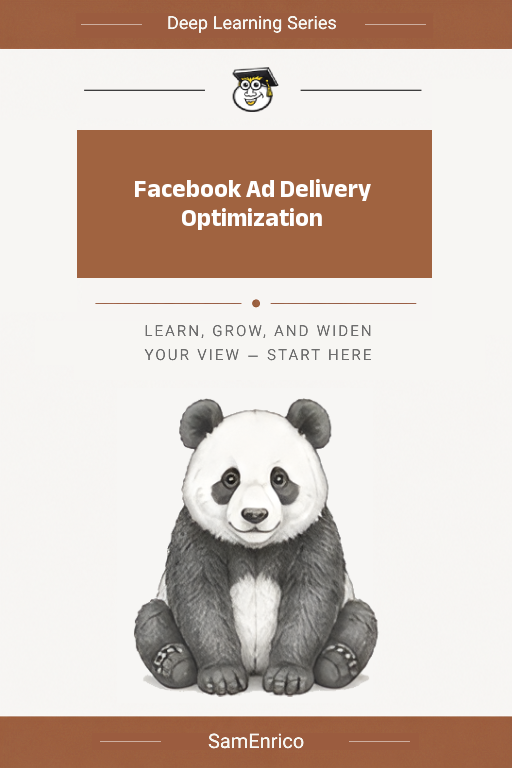
Facebook Ad Delivery Optimization eBook
Choose between link clicks impressions or conversi
Choose between link clicks impressions or conversions as your delivery method.
Formats
Free sample
Chapter 1: The Optimization Echo--The Facebook Ads Manager screen glowed in the darkness of the conference room. Three options stared back at the marketing director: Link Clicks, Impressions, or Conversions. Three different delivery methods. Three different ways to tell the algorithm what to do with her budget. Three potentially disastrous outcomes if she chose wrong.She had spent 15,000lastmonthoptimizingforlinkclicks.Theclickswerecheap—15,000 last month optimizing for link clicks.
The clicks were cheap—15,000lastmonthoptimizingforlinkclicks.Theclickswerecheap—0.25 each. The traffic was abundant—60,000 visitors to her skincare website. The sales were nowhere to be found. Zero. Nothing.
A big, fat goose egg."Everyone talks about Facebook ads," she said to her team, her voice heavy with frustration. "No one talks about how to actually tell Facebook what to optimize for. That's the real secret. That's where campaigns live or die."She was right. And she had just learned the most expensive lesson in Facebook advertising: the algorithm gives you exactly what you ask for.
Ask for clicks, get clicks. Ask for sales, get sales. But ask for the wrong thing, and you will burn your budget learning how to solve the wrong problem.This chapter is about that lesson. It is about the fundamental trilemma that every Facebook advertiser faces when setting up a campaign: Should you optimize for link clicks, impressions, or conversions? The answer determines everything that follows—how Facebook spends your money, who sees your ads, what data the algorithm collects, and ultimately, whether your campaign succeeds or fails.The Three Optimization Types: A High-Level Overview Before we dive deep into the mechanics, let us establish a clear framework.
Facebook offers three primary delivery optimizations, each serving a fundamentally different purpose.Link Clicks Optimization: You tell Facebook to show your ad to people most likely to click on the link in your ad. Facebook's algorithm analyzes user behavior across its platforms—billions of data points about who clicks on what, when, and where—and predicts which users have the highest probability of clicking. Then it delivers your ad to those users. Your budget is spent pursuing clicks. The algorithm becomes extraordinarily efficient at finding "clickers": people who click on ads, often habitually, sometimes indiscriminately.Impressions Optimization: You tell Facebook to show your ad to as many people as possible within your target audience.
The algorithm prioritizes volume of views over any specific action. It does not care whether users click, engage, or convert. It only cares about delivering your ad to unique users. Your budget is spent on reach and frequency. This is the choice for brand awareness campaigns where the goal is to put your message in front of eyeballs, not to generate immediate action.Conversions Optimization: You tell Facebook to show your ad to people most likely to complete a specific action on your website—a purchase, a lead form submission, a sign-up, an add-to-cart.
This optimization type requires the Meta Pixel to be installed on your website and configured to track the specific event you care about. The algorithm then builds a predictive model to find users who resemble past converters. Your budget is spent pursuing outcomes that happen after the click. This is the choice for anyone who wants to make money directly from Facebook ads.The trilemma is this: you cannot optimize for all three simultaneously. You must choose one primary optimization goal.
And that choice will shape every aspect of your campaign's performance, from who sees your ad to how much you pay to whether you make any money at all.Why the Choice Matters More Than You Think Here is the truth that Facebook does not advertise: the platform's ad auction is not a simple matter of who bids the most money. It is a sophisticated prediction engine that uses a formula you must understand to succeed.The auction formula is: Total Value = Advertiser Bid × Estimated Action Rate (EAR) + Ad Quality The Advertiser Bid is what you are willing to pay. You control this directly.The Estimated Action Rate (EAR) is Facebook's prediction of how likely a specific user is to take the action you are optimizing for. If you optimize for conversions, EAR predicts purchase probability. If you optimize for link clicks, EAR predicts click probability.
This is where your optimization choice fundamentally changes the game.Ad Quality is Facebook's assessment of how users will experience your ad. Ads that generate positive engagement, avoid low-quality tactics, and provide relevant experiences receive higher quality scores.When you select a delivery optimization, you are not just choosing a metric to track. You are telling Facebook's algorithm what to predict. The algorithm then spends your money learning how to get better at that prediction.If you optimize for link clicks, the algorithm learns to find clickers. It becomes incredibly efficient at delivering your ad to people who click links.
But those clickers may never buy anything. They may be "professional clickers"—users who click on ads out of curiosity, boredom, or habit, with no intention of purchasing.If you optimize for conversions, the algorithm learns to find buyers. It may take longer and cost more per click. But when someone does click, they are far more likely to purchase. The algorithm is solving the right problem, even if it takes more time and data to get there.The choice is not about which metric is "better" in absolute terms.
It is about which metric aligns with your true business goal.The Most Expensive Mistake in Facebook Advertising Let me tell you about two campaigns. One is fictional but based on dozens of real cases I have analyzed. The other is a composite of common errors.Campaign A: The Skincare Brand A direct-to-consumer skincare brand wanted more sales. Their product was good. Their pricing was competitive.
Their website was optimized. But their Facebook results were dismal.They set their campaign objective to Traffic. They optimized for link clicks. They got cheap clicks—0.25perclick.Theycelebrated.Theirclick−throughratewas3percent,wellaboveindustryaverage.Theircostperclickwasbelowtarget.Theyspent0.25 per click. They celebrated.
Their click-through rate was 3 percent, well above industry average. Their cost per click was below target. They spent 0.25perclick.Theycelebrated.Theirclick−throughratewas3percent,wellaboveindustryaverage.Theircostperclickwasbelowtarget.Theyspent15,000 and got 60,000 clicks.Then they looked at their Shopify dashboard. Zero sales. Not one.
Sixty thousand people clicked on their ads, and not a single one bought anything.What happened? Facebook did exactly what they asked. It found people who click links. It did not find people who buy skincare products. Those are different populations.
The algorithm became exceptionally efficient at finding "professional clickers"—users who click on ads for the dopamine hit of novelty, then bounce immediately.They spent $15,000 learning how to get cheap clicks. They did not spend a single dollar learning how to get sales. The algorithm learned the wrong thing because they asked it to solve the wrong problem.Campaign B: The Political Candidate A political candidate wanted to maximize reach for a new ad announcing their candidacy. They had a small budget and needed to get their name in front of as many voters as possible.They set their campaign objective to Conversions. They optimized for donations.
Facebook's algorithm, confused by the lack of donation data from a cold audience, struggled to find anyone to show the…
This is the end of the free sample. Get the eBook to keep going. Buy now
About this book
Details
- Author
- Horner Erlene
- Publisher
- SamEnrico
- Language
- English
- Genre
- Non-Fiction, First 30 Days
- Released
- 2026-06-01
- Pages (approx.)
- 128
- Available as
- eBook, Audiobook

Read better in the ZLOADR app
Your eBooks on your phone or tablet. Sign in with your SamEnrico account and start reading.
More by Horner Erlene
 Housing Insecurity Sleep GuideHorner Erlene$11.99
 Manager Burnout PreventionHorner Erlene$11.99
 Workaholism in PharmacyHorner Erlene$11.99
 Emergency Oxygen and CPR KitHorner Erlene$11.99
 Deep Sea Cave Escape ManualHorner Erlene$11.99
 Aster A24 HorrorHorner Erlene$11.99
 Anger Management for Temp WorkersHorner Erlene$11.99
 Red Pyramid GuideHorner Erlene$11.99
 Seniors Memory PalaceHorner Erlene$11.99
 Prometheus Unbound: The Titan’s Last DefianceHorner Erlene$11.99
 Pillars of Power: The Untold Story of Eli Lilly’s Rise to DominanceHorner Erlene$11.99
 Crowns & Crosses: The Scandal That Split a DynastyHorner Erlene$11.99
You may also like
 Hong Kong Handover 1997Dunn Johnnie$11.99
 Zumba For Postnatal Recovery CourseNeal Christian$11.99
 Zumba for BeginnersLadner Nikia$11.99
 YouTube Comment Mining GuideHumes Pandora$12.99
 Worry Box MeditationCarlin Rudy$11.99
 Workplace Stress MeditationNguyen Lynn$11.99
 Workplace Stress and Sleep RepairHawley Ivory$11.99
 Workplace Perfectionism CureDelaney Jeffry$11.99
 Workplace Injustice Anger GuideWallen Isabelle$11.99
 Work Addiction and Burnout LinkGreenwood Ester$11.99
 Women in Yoga and WellnessBeattie Galina$11.99
 Women in Stand Up ComedyChun Evangeline$11.99