
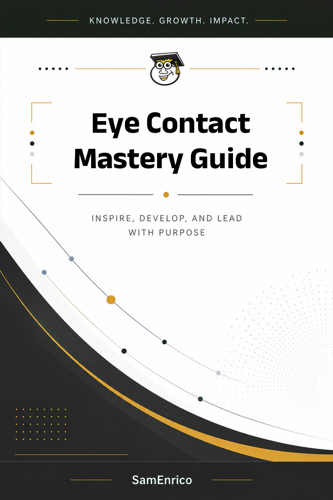
Non-FictionSelf-HelpNonverbal Skills
Eye Contact Mastery Guide eBook
Teaches appropriate duration, intensity, and cultu
by Ralston Cori
Teaches appropriate duration, intensity, and cultural variations of eye contact.
Formats
Free sample
Chapter 1: The Silent Superpower–- Every great connection begins in silence. Before a single word is spoken, before a hand is extended, before a name is exchanged, something far more ancient and powerful has already occurred. Two pairs of eyes have met, and in that flicker of mutual recognition, a decision has been made—trust or suspicion, attraction or rejection, dominance or submission, friend or foe. This judgment happens not in seconds but in milliseconds. It happens before your conscious mind can form a sentence.
And it happens whether you want it to or not.This is the silent superpower you already possess but have never been taught to wield. It is eye contact, and it is the most potent nonverbal tool in the human arsenal—more influential than body language, more revealing than tone of voice, and more trustworthy than any string of carefully chosen words.Consider this startling fact: research spanning four decades has consistently shown that the single strongest predictor of social attraction, professional credibility, and even courtroom conviction rates is not what people say but how they use their eyes. In one landmark study, psychologists found that job candidates who maintained optimal eye contact during interviews were rated as 30 percent more intelligent, 40 percent more confident, and 50 percent more hirable than identical candidates who looked away too frequently—even when their answers were word-for-word the same. The eyes did not just communicate; they overrode the actual content of the speech.Yet for all its power, eye contact remains the most misunderstood and underutilized communication skill in the modern world. We spend years learning vocabulary, grammar, public speaking, and writing.
We buy books on body language, persuasion, and emotional intelligence. But almost no one ever teaches us how to look at another human being in a way that builds trust, signals competence, or ignites attraction. We are, in effect, fluent in the language of words and illiterate in the language of the eyes.This book exists to change that.The Anatomy of a Glance Before we can master eye contact, we must understand what actually happens when two people lock eyes. The process is far more complex and biologically ancient than most imagine.When your gaze meets another person's, light enters their eyes, strikes the retina, and triggers an electrochemical signal that travels along the optic nerve to their brain. But here is where the magic begins: that signal does not first go to the visual cortex, where conscious seeing occurs.
Instead, it detours directly to the limbic system—the brain's emotional and survival center, which evolved hundreds of millions of years before the neocortex, the seat of language and rational thought.This means that before the other person consciously registers that you are looking at them, their brain has already made a series of instantaneous judgments: Are you a threat? Are you a potential mate? Are you friend or foe? Are you higher or lower in status? These judgments are not reasoned conclusions; they are raw, visceral reactions that flood the body with hormones and neurotransmitters.If the gaze is interpreted as safe and warm—characterized by soft focus, relaxed facial muscles, and appropriate duration—the brain releases oxytocin, often called the "bonding hormone" or "love drug." Oxytocin lowers defensive barriers, increases feelings of trust, and creates the neurological foundation for rapport.
This is why a single good conversation with someone who holds eye contact well can feel more connecting than a hundred text messages with someone who does not.But if the gaze is interpreted as threatening—rigid, unblinking, too long or too short, accompanied by tense facial expressions—the brain releases cortisol and adrenaline. Heart rate increases. Pupils constrict. The body prepares for defense. The person you are looking at will feel vaguely uncomfortable, perhaps without knowing why, and will begin looking for an escape from the interaction.
They may not remember your name, but their amygdala will remember you as someone to avoid.This biological response is not a weakness or a quirk. It is an evolutionary inheritance from our primate ancestors, for whom eye contact was a matter of life and death. Among chimpanzees, direct staring is an unambiguous threat signal, often preceding physical attack. Among baboons, subordinates who make eye contact with a dominant male can be violently punished. Among humans, we have layered culture and language over this ancient system, but the hardware remains unchanged.
Your eyes are not just windows to your soul; they are weapons and gifts, threats and invitations, all at once.The Eye Contact Effect in Action Let me give you a concrete example of how this plays out in everyday life. Imagine you walk into a coffee shop and approach the counter. The barista looks up, meets your eyes for a full three seconds, smiles slightly, and says, "Good morning, what can I get for you?" In that brief moment, several things have happened subconsciously. First, you have registered that you are seen—not just as an order to be processed but as a person. Second, the duration of the gaze (three seconds) has signaled confidence and attentiveness without crossing into aggression.
Third, the smile has disarmed the primal threat response, telling your amygdala that this person is safe. You will likely leave that interaction feeling slightly more positive than when you arrived, and you may even tip more generously without realizing why.Now imagine a different scenario. The same barista looks at you for less than one second, then drops their gaze to the cash register, mumbles the same words, and never looks back. You have been seen but not looked at. The difference is palpable.
You may feel dismissed, unimportant, or even suspicious. Your brain registers the lack of eye contact as either disinterest or dishonesty—a signal that something is wrong. You will leave feeling slightly worse, and you may attribute it to "bad service" when the real issue was the absence of connection through the eyes.This is the Eye Contact Effect, and it operates in every human interaction you will ever have. Job interviews, first dates, negotiations, parent-child conversations, doctor-patient consultations, courtroom testimonies, classroom teaching, sales presentations—all of these are shaped, often decisively, by how people use their eyes. And the most frustrating part is that almost everyone is doing it wrong.Seeing Versus Looking: The Crucial Distinction One of the most important concepts in this entire book is the distinction between seeing and looking.
These two verbs seem synonymous in everyday language, but they describe fundamentally different neurological and social processes.Seeing is passive. Seeing is what happens when your eyes are open and light falls on your retina. You see thousands of faces every day—on the street, in the subway, in meetings, on screens. But you do not truly look at most of them. You register their presence as you would register a chair or a lamppost: as an object to be navigated around, not a person to be connected with.
Seeing costs nothing and creates nothing.Looking is active. Looking is a conscious choice to direct your attention toward another human being and to receive their attention in return. Looking requires vulnerability because when you truly look…
This is the end of the free sample. Get the eBook to keep going. Buy now
About this book
Details
- Author
- Ralston Cori
- Publisher
- SamEnrico
- Language
- English
- Genre
- Non-Fiction, Self-Help, Nonverbal Skills
- Released
- 2026-06-09
- Pages (approx.)
- 149
- Available as
- eBook, Audiobook

Read better in the ZLOADR app
Your eBooks on your phone or tablet. Sign in with your SamEnrico account and start reading.
More by Ralston Cori
 Hoffa Case Federal Judge Unsealed FilesRalston Cori$11.99
 Atomic Habits For FocusRalston Cori$11.99
 Trello Member Mention StrategiesRalston Cori$11.99
 Tourniquet Application StepsRalston Cori$11.99
 Remote Work Focus MusicRalston Cori$11.99
 Relaxation TrainingRalston Cori$11.99
 The Last Pharaoh's Gambit: Cleopatra's Forgotten HeirRalston Cori$11.99
 Reddit Karma Whoring AnalysisRalston Cori$11.99
 The Unstoppable Will of Antonio Pettigrew: The 1996 Atlanta Olympics' Hidden HeroRalston Cori$11.99
 How to Produce Trade Show ServicesRalston Cori$11.99
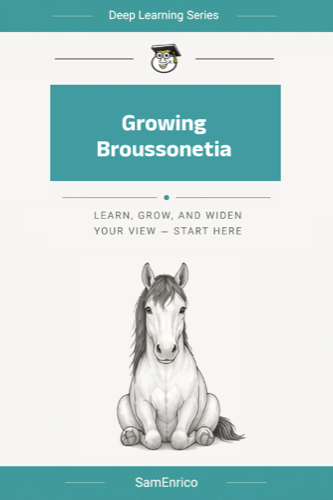 Growing BroussonetiaRalston Cori$11.99
 EU VAT Grouping Rules GuideRalston Cori$12.99
You may also like
 Hong Kong Handover 1997Dunn Johnnie$11.99
 Zumba For Postnatal Recovery CourseNeal Christian$11.99
 Zumba for BeginnersLadner Nikia$11.99
 YouTube Comment Mining GuideHumes Pandora$12.99
 Worry Box MeditationCarlin Rudy$11.99
 Workplace Stress MeditationNguyen Lynn$11.99
 Workplace Stress and Sleep RepairHawley Ivory$11.99
 Workplace Perfectionism CureDelaney Jeffry$11.99
 Workplace Injustice Anger GuideWallen Isabelle$11.99
 Work Addiction and Burnout LinkGreenwood Ester$11.99
 Women in Yoga and WellnessBeattie Galina$11.99
 Women in Stand Up ComedyChun Evangeline$11.99