
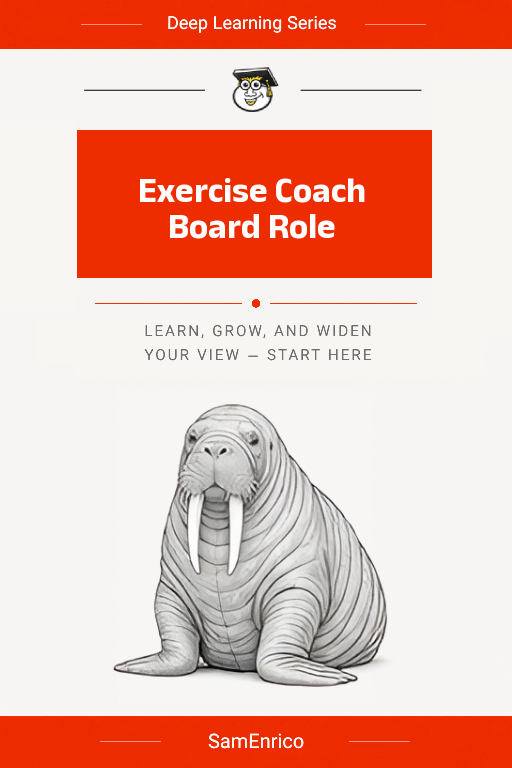
Non-FictionMental WealthExercise Therapy
Exercise Coach Board Role eBook
Partner with fitness professionals who design move
by Matos Gil
Partner with fitness professionals who design movement plans supporting anxiety reduction and mood regulation.
Formats
Free sample
Chapter 1: The Broken Thermostat--–- Maria had done everything right. At thirty-four, she was a senior marketing director at a respected firm, owned a modest but comfortable home, and had a therapist she saw every Tuesday at 2:00 PM without fail. She had tried three different antidepressants over the past five years, each one adjusted, increased, or swapped out when the first lost its effectiveness. She had meditated—really tried—for forty-seven consecutive days before the app’s notification became just another source of guilt. She had cut back on alcohol, improved her sleep hygiene, and even bought one of those sunrise alarm clocks that promises to fix your circadian rhythm.None of it stopped the 3:00 AM wake-up.Every night, like clockwork, Maria’s eyes would snap open in the pitch dark.
Her heart would already be racing, her palms slick with sweat, her mind immediately flooded with a cascade of catastrophic thoughts: You forgot to respond to that email. Your boss thinks you’re unreliable. You’re going to get fired. You won’t find another job. You’ll lose the house.
You’ll end up alone.By 3:15 AM, she would be sitting upright in bed, breathing in short, shallow gasps, convinced that something terrible was about to happen—even though she could never name exactly what. By 4:00 AM, exhausted but unable to fall back asleep, she would give up and start her day. By 10:00 AM, running on coffee and cortisol, she would look perfectly functional to everyone around her. No one knew that inside, her nervous system was screaming.Her therapist, a kind and competent cognitive behavioral therapist named Dr. Reeves, had helped her identify her cognitive distortions, challenge her automatic negative thoughts, and develop a safety plan for panic attacks.
Maria had learned to say, “This is just anxiety. It will pass.” And intellectually, she believed it. But knowing something in your mind and feeling it in your body are two entirely different things. The 3:00 AM wake-ups continued.Dr. Reeves eventually suggested a medication adjustment.
The psychiatrist added a low-dose benzodiazepine for acute anxiety. It helped—for about two weeks. Then the tolerance built, and Maria found herself needing more to achieve the same effect, which terrified her. She stopped taking them.It was only when a friend, who happened to be an exercise coach specializing in mental health, asked her a question no doctor or therapist had ever asked that something shifted.“Maria,” her friend said, “what happens in your body right before the panic starts? Not your thoughts.
Your body.”Maria paused. “My chest gets tight. My heart starts pounding. I feel like I can’t catch my breath.”“And what do you do when that happens?”“I try to breathe slowly. I tell myself it’s just anxiety.
I wait for it to pass.”“Have you ever tried moving?”Maria looked confused. “Moving? Like, exercise? In the middle of the night?”“Not in the middle of the night,” her friend said. “But during the day.
Deliberately. Intentionally raising your heart rate so that your brain learns that a fast heartbeat isn’t dangerous.”That conversation changed everything. Within three months of working with an exercise coach who understood the neuroscience of anxiety, Maria’s 3:00 AM wake-ups dropped from every night to once or twice a week. Within six months, they were rare. Her therapist was stunned.
“You’ve made more progress in the last six months than in the previous two years,” Dr. Reeves told her. “What changed?”“I stopped trying to think my way out of a body problem,” Maria said.The Uncomfortable Truth This book opens with Maria’s story because it illustrates a uncomfortable truth that the mental health establishment has been slow to acknowledge: despite record numbers of people in therapy and on medication, anxiety and depression rates continue to rise. Not just holding steady—rising.Consider the data. According to the World Health Organization, anxiety disorders affect an estimated 301 million people globally.
Depression affects another 280 million. In the United States alone, the National Institute of Mental Health reports that nearly one in five adults lives with a mental illness. Among adolescents, the numbers are even more alarming—nearly one in three will experience an anxiety disorder by age eighteen.And yet, despite billions of dollars spent on psychiatric medications and therapy, the curve keeps trending upward. Jonathan Haidt’s The Anxious Generation makes a compelling case that smartphones and social media are major drivers of this epidemic, particularly among young people. But even Haidt acknowledges that technology alone cannot explain the full scope of the crisis.
Something deeper is happening.Here is the argument this book will make, and it is an argument that Maria’s story illustrates perfectly: we have focused almost exclusively on treating the mind—cognition, thoughts, beliefs, trauma narratives—while largely ignoring the body. We have acted as if the brain floats somewhere above the neck, untouched by the 60,000 miles of blood vessels, the 650 skeletal muscles, and the electrochemical chaos of the nervous system that lives below.But the brain is not a disembodied computer running software. The brain is an organ. It is a biological, chemical, electrical system that is constantly shaped by the input it receives—including input from the body. And no input is more powerful, more immediate, or more accessible than movement.This is not speculation.
This is neuroscience.The Biology of Despair: What Anxiety Does to Your Brain To understand why movement is so effective at regulating mood and reducing anxiety, you first need to understand what chronic anxiety does to the brain. And the short answer is: it changes the brain’s physical structure.The amygdala is a small, almond-shaped cluster of nuclei located deep within the temporal lobe. Its job is to detect threats. When your ancestors saw a rustle in the tall grass, the amygdala fired, sending a cascade of stress hormones (cortisol, adrenaline) through the body, preparing it to fight or flee. This is the sympathetic nervous system in action—the gas pedal of your autonomic nervous system.In a healthy brain, the amygdala fires only when there is an actual threat.
And when the threat passes, the prefrontal cortex (the brain’s rational, executive center) sends a signal to the amygdala to stand down. The parasympathetic nervous system—the brake pedal—kicks in, releasing calming neurotransmitters and bringing the body back to baseline.But chronic anxiety changes this system. When the amygdala is repeatedly activated by stress, it physically enlarges. It becomes more sensitive, more reactive, and quicker to fire. Meanwhile, the prefrontal cortex—the part of the brain that would normally tell the amygdala to calm down—actually shrinks.
The gas pedal gets bigger and more powerful. The brake pedal gets smaller and weaker.This is not a metaphor. This is measurable brain atrophy. Neuroimaging studies have consistently shown that individuals with chronic anxiety have reduced gray matter volume in the prefrontal cortex and increased volume in the amygdala. The brain has literally been remodeled by stress.But here is the crucial point: the brain is plastic.
Neuroplasticity means that the brain can change—for better or worse—throughout the lifespan. And nothing stimulates neuroplasticity more powerfully than aerobic…
This is the end of the free sample. Get the eBook to keep going. Buy now
About this book
Details
- Author
- Matos Gil
- Publisher
- SamEnrico
- Language
- English
- Genre
- Non-Fiction, Mental Wealth, Exercise Therapy
- Released
- 2026-05-28
- Pages (approx.)
- 157
- Available as
- eBook, Audiobook

Read better in the ZLOADR app
Your eBooks on your phone or tablet. Sign in with your SamEnrico account and start reading.
More by Matos Gil
 55 Plus Community Buy In WorkbookMatos Gil$11.99
 The Late Night Roommate TalkMatos Gil$11.99
 Sleep Talk TechniqueMatos Gil$11.99
 Deep Work Environment DesignMatos Gil$11.99
 Digital Planner Pinterest Traffic CourseMatos Gil$11.99
 Wings of Defiance: The Tuskegee Airmen's Secret Mission Over BerlinMatos Gil$11.99
 The Lehman Trilateral: How Three Brothers Built—and Broke—a Wall Street EmpireMatos Gil$11.99
 Understanding CholestasisMatos Gil$17.99
 Legal Executive AssistantMatos Gil$11.99
 Global Holiday CommunicationMatos Gil$12.99
 Ultimate Handbook Guide to Pimpri Chinchwad : (India) Travel GuideMatos Gil$11.99
You may also like
 Hong Kong Handover 1997Dunn Johnnie$11.99
 Zumba For Postnatal Recovery CourseNeal Christian$11.99
 Zumba for BeginnersLadner Nikia$11.99
 YouTube Comment Mining GuideHumes Pandora$12.99
 Worry Box MeditationCarlin Rudy$11.99
 Workplace Stress MeditationNguyen Lynn$11.99
 Workplace Stress and Sleep RepairHawley Ivory$11.99
 Workplace Perfectionism CureDelaney Jeffry$11.99
 Workplace Injustice Anger GuideWallen Isabelle$11.99
 Work Addiction and Burnout LinkGreenwood Ester$11.99
 Women in Yoga and WellnessBeattie Galina$11.99
 Women in Stand Up ComedyChun Evangeline$11.99