
Non-FictionSelf-HelpExercise Therapy
Exercise as a Cessation Tool eBook
Use physical activity to reduce cravings, manage w
Use physical activity to reduce cravings, manage withdrawal, and repair lung function.
Formats
Free sample
Chapter 1: The Pleasure Steal--The cigarette is already burning before you realize you lit it.You are standing in the cold, maybe in a parking lot or a back porch, and there it is—a thin column of smoke rising from your fingers. You do not remember reaching for the pack. You do not remember putting it to your lips. Your mind was somewhere else—work, a fight, a bill, a memory—and your body just went ahead and performed the ritual without your permission.This is not weakness. This is not a character flaw.
This is your brain executing a program that has been written so deeply into its circuitry that it now runs on autopilot, like breathing or blinking.And here is the question that will determine whether you finish this book or throw it across the room: Do you actually want to be smoking that cigarette?If you are honest, the answer is no. You hate the taste. You hate the smell that follows you into elevators. You hate the way your chest feels tight in the morning. You hate the money.
You hate the way your children look at you when you reach for the pack. You hate the quiet shame of buying another carton from the same convenience store clerk who has stopped asking how your day is going because he already knows the answer.And yet.And yet you light another one.The Paradox That Keeps You Trapped This is the central paradox of every addiction: you are doing something you do not want to do, repeatedly, often while actively hating it. The smoking cessation literature calls this "cognitive dissonance." Neuroscience calls it the "dopamine deception." And the bestselling books—from Allen Carr's Easy Way to Stop Smoking to Anna Lembke's Dopamine Nation—all circle the same terrifying conclusion: Your brain has been hijacked by a chemical that no longer serves you, and your conscious mind has lost the keys.Let us be precise about what is happening inside your skull right now, because precision is the enemy of shame.Your brain contains a reward pathway called the mesolimbic system. It evolved over millions of years to keep you alive. When you eat food, you get a small squirt of dopamine—a neurotransmitter that feels like satisfaction.
When you have sex, you get a larger squirt. When you drink water after being thirsty, you get a squirt. This system is why you bother to get out of bed in the morning. It is the biological basis of motivation itself.Nicotine does not just tickle this system. It kicks it in the teeth.Within ten seconds of inhaling cigarette smoke, nicotine crosses the blood-brain barrier and binds to nicotinic acetylcholine receptors.
This triggers a flood of dopamine that is two to three times larger than natural rewards. Your brain, which is designed to maintain balance, looks at this tsunami of dopamine and thinks: Something is wrong. I need to compensate.So it does. Your brain begins to downregulate its own dopamine production. It removes receptors.
It changes the sensitivity of the remaining ones. It essentially says: "Well, if this massive flood is the new normal, I will just produce less on my own."This is the pleasure steal.What felt like pleasure was never pleasure at all. It was a loan. And the interest rate is ruinous.The Pain-Pleasure Balance: Why You Smoke to Feel Normal Anna Lembke, in her bestselling Dopamine Nation, describes this as the "pain-pleasure balance." Imagine a seesaw. On one side sits pleasure.
On the other side sits pain. When you do something pleasurable—eat good food, listen to music, fall in love—the seesaw tips toward pleasure. But the brain, that tireless accountant, keeps a ledger. For every tip toward pleasure, there is an equal and opposite tip toward pain.This is why the pleasure of a great meal is followed by the pain of wanting another one. This is why the joy of a vacation is followed by the depression of returning to work.
The seesaw always returns to level. It cannot stay tipped.Nicotine cheats. It tips the seesaw so hard and so fast that the brain panics and throws sandbags on the pain side. Those sandbags are your withdrawal symptoms: anxiety, irritability, restlessness, difficulty concentrating, increased appetite, insomnia, and the crushing sense that something is missing.Here is the deception that keeps you smoking: after a few hours without nicotine, the pain side of the seesaw is so heavy that you feel genuinely terrible. Then you light a cigarette.
The nicotine floods your system. The seesaw tips back toward pleasure—not to the pleasure side, but merely back to level. You feel the relief of returning to normal.And your brain labels that relief as "pleasure."You are not smoking to feel good. You are smoking to stop feeling bad. The bad feeling was created by the last cigarette.
This is the trap. This is the cage. And you have been inside it for so long that you cannot see the bars anymore.Why Cold Turkey Fails (And Why You Are Not Weak)Every smoker has tried cold turkey. Every smoker has failed. And every smoker has concluded, somewhere in the quiet hours of the night, that the failure means something about their character.It does not.Cold turkey fails because withdrawal is not a test of willpower.
It is a biological event, like a fever or a broken bone. When you stop smoking, your brain is suddenly deprived of the nicotine it has rewired itself to expect. The downregulated dopamine receptors do not magically upregulate overnight. The seesaw does not instantly level itself. Instead, you experience the full weight of those sandbags.The symptoms are real.
They are measurable in f MRI scans. They are observable in PET scans of the brain's metabolic activity. They are documented in every clinical trial of smoking cessation ever conducted. The irritability is not a moral failing. The insomnia is not a lack of discipline.
The anxiety is not a sign that you are "too weak" to quit.They are the sound of your brain screaming for the chemical it has been trained to expect.And here is the cruelest part of the cold turkey approach: it asks you to use the very thing that addiction has damaged. Willpower is an executive function governed by the prefrontal cortex. Addiction shrinks the prefrontal cortex. Multiple longitudinal studies have shown that chronic nicotine use reduces gray matter density in the prefrontal cortex by 5-10 percent compared to non-smokers. You are being asked to run a marathon on a broken ankle, and then being told that your failure to finish means you didn't want it badly enough.This is not science.
This is cruelty disguised as toughness.The Runner's High: Your Biological Off-Ramp Now for the good news. The same brain that was hijacked by nicotine can be repaired by movement.You have heard of the "runner's high." You may have dismissed it as something that happens to other people—the fit, the young, the genetically blessed. But the runner's high is not a mystical experience. It is a biochemical event, and it is available to anyone…
This is the end of the free sample. Get the eBook to keep going. Buy now
About this book
Details
- Author
- Tanner Christopher
- Publisher
- SamEnrico
- Language
- English
- Genre
- Non-Fiction, Self-Help, Exercise Therapy
- Released
- 2026-06-11
- Pages (approx.)
- 149
- Available as
- eBook, Audiobook

Read better in the ZLOADR app
Your eBooks on your phone or tablet. Sign in with your SamEnrico account and start reading.
More by Tanner Christopher
 Meeting Recurrence Audit GuideTanner Christopher$11.99
 Navigating Virtual Difficult TalksTanner Christopher$11.99
 Burnout Prevention for FreelancersTanner Christopher$11.99
 The Reality Testing GuideTanner Christopher$11.99
 Understanding X-linked DominanceTanner Christopher$17.99
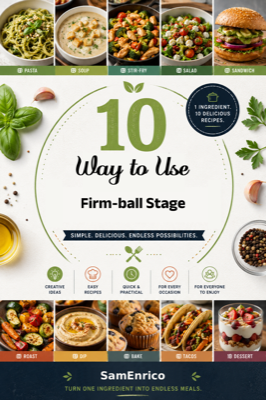 10 Ways to Use Firm-ball Stage (Recipe Book)Tanner Christopher$11.99
 User Testing Niche SpecializationTanner Christopher$12.99
 Consultant CAC PlaybookTanner Christopher$12.99
 Silent MajorityTanner Christopher$11.99
You may also like
 Hong Kong Handover 1997Dunn Johnnie$11.99
 Zumba For Postnatal Recovery CourseNeal Christian$11.99
 Zumba for BeginnersLadner Nikia$11.99
 YouTube Comment Mining GuideHumes Pandora$12.99
 Worry Box MeditationCarlin Rudy$11.99
 Workplace Stress MeditationNguyen Lynn$11.99
 Workplace Stress and Sleep RepairHawley Ivory$11.99
 Workplace Perfectionism CureDelaney Jeffry$11.99
 Workplace Injustice Anger GuideWallen Isabelle$11.99
 Work Addiction and Burnout LinkGreenwood Ester$11.99
 Women in Yoga and WellnessBeattie Galina$11.99
 Women in Stand Up ComedyChun Evangeline$11.99