

Executive Summary Revision Workflow eBook
Follow a four-pass editing system that cuts length
by Wilson Sonya
Follow a four-pass editing system that cuts length by forty percent while doubling clarity in under one hour.
Formats
Free sample
Chapter 1: The Skim-Reckoning--–- Every morning, between 7:42 and 7:58 a.m., a senior vice president named Diane opens exactly forty-seven emails. She deletes twenty-three without clicking. She opens twelve, reads the first sentence only, and archives them. She reads six in full but only because they contain the words “offer,” “deadline,” or “board meeting.” The remaining six—the ones that actually change her day—get less than ninety seconds of attention each. Diane is not a bad person.
She is not lazy, illiterate, or unappreciative. Diane is an executive, and executives do not read. They interrogate.If you are reading this book, you have probably sent a document to someone like Diane. You spent three hours—maybe three days—crafting an executive summary you believed was clear, thorough, and persuasive. You tucked the recommendation neatly on page two after a thoughtful review of market conditions.
You included context, because context matters. You showed your work, because work deserves to be shown. And then Diane’s reply arrived seven minutes later: “Can we hop on a quick call to discuss?” That “quick call” lasted thirty minutes. During the call, she asked questions that were answered on page one, paragraph two. You flipped to the page.
You pointed. She said, “Oh, I didn’t see that.”She didn’t see it because she never got there.This chapter is called “The Skim-Reckoning” because it forces you to confront an uncomfortable truth: your executive summary is not being read. It is being scanned, judged, and either acted upon or abandoned within the time it takes to brew a single cup of coffee. The executives who hold your career in their hands are not your enemies. They are information predators.
They hunt for three things and three things only: the ask, the risk, and the action. Everything else is noise. And noise gets deleted.The Ten-Second Graveyard Let us begin with a simple experiment. Take the last executive summary you wrote. Print it.
Now set a timer for ten seconds. Read only the title, the first sentence of the first paragraph, and any bolded text. Stop. What did you learn? If you are like 87 percent of the professionals who have taken this test in our workshops, you learned almost nothing.
You saw words like “overview,” “background,” and “context.” You did not see a recommendation. You did not see a dollar amount. You did not see a deadline or a decision that an executive could make.Now repeat the experiment, but this time give yourself thirty seconds. Read the entire first page. Can you find the single sentence that tells Diane what you want her to do?
Can you find the sentence that explains what happens if she says no? If you cannot answer both questions within thirty seconds, your summary has already failed. Not because it is poorly written in a grammatical sense. Because it is poorly designed for the way executives actually consume information.Here is the paradox that gives this chapter its name: the more you write to be thorough, the less your reader absorbs. Thoroughness, in the context of an executive summary, is not a virtue.
It is a liability. Every additional sentence you add reduces the likelihood that your core message will survive the skim. Every paragraph of “helpful background” is a wall between Diane and the decision you need her to make. You are not writing a novel. You are writing a targeting laser.
And lasers do not have footnotes.The One-Page Aspiration (Not Yet a Rule)Before we go any further, we need to clear up a point of confusion that has derailed more executive summaries than bad grammar ever has. You have probably heard the advice: “An executive summary should fit on one page.” This is good advice. It is also, for most first drafts, completely unrealistic. If your first draft is five pages long, you cannot simply wish it into one page. You would lose essential content, and worse, you would lose your own confidence in the revision process.So let us be precise.
The aspirational goal is a one-page final executive summary. That is what you will send to Diane when you are done. But the immediate target of this book’s workflow is a forty percent reduction in length from your first draft. If your draft is five pages, your first target is three pages. If your draft is three pages, your target is 1.8 pages.
Only after you hit that intermediate target do you push toward the one-page ideal. Think of it as weight loss: you do not go from 250 pounds to 180 pounds overnight. You go to 220, then 190, then 180. The forty percent cut is your first milestone. The one-page summary is your finish line.Why does this matter?
Because too many writers freeze when they hear “one page.” They refuse to cut anything substantial, fearing they will lose something important. They end up cutting nothing at all. By giving yourself permission to aim for forty percent first, you remove the paralysis. You can always cut more later. But you must cut something now.The Three Assassins of Executive Clarity Every bloated executive summary contains the same three killers.
Learn to spot them, and you have already won half the battle. Ignore them, and no amount of clever phrasing will save you.Assassin One: The Buried Ask The most common crime in business writing is hiding the recommendation. Writers bury the ask on page two, page three, or—in truly tragic cases—the final paragraph before the signature block. Why? Because they want to “lead the reader through the logic.” They want Diane to understand the problem before she hears the solution.
This is exactly backwards.Executives do not need to understand a problem before hearing a solution. They need to hear a solution, then decide whether the problem is worth understanding. Diane will read your recommendation first. If it sounds plausible, she will scan your supporting points. If it sounds ridiculous, she will stop reading immediately—which is good, because you just saved her thirty seconds.
But if she cannot find the recommendation at all, she will not stop reading. She will forward your email to someone else with a one-word note: “Thoughts?” That someone else will not be you.The fix is brutal but simple: move your final recommendation paragraph to the very top of the document. Do not lead with background. Do not lead with context. Do not lead with “over the past quarter, we have observed.” Lead with what you want Diane to do.
“Approve the Q3 marketing budget increase of $200,000.” “Authorize the hire of two additional engineers.” “Decline the acquisition offer from Vendor X.” Those are the first words Diane should see. Everything else is support.Assassin Two: The Hedging Epidemic Hedging is the use of language that softens a claim. “We believe that…” “It is our opinion that…” “We might consider…” “One could argue that…” Each of these phrases is a tiny act of cowardice. You are not expressing confidence. You are giving Diane permission to ignore you.Consider two versions of the same sentence.
Version one: “We believe that delaying the product launch by two weeks would potentially reduce customer complaints.” Version two: “Delay…
This is the end of the free sample. Get the eBook to keep going. Buy now
About this book
Details
- Author
- Wilson Sonya
- Publisher
- SamEnrico
- Language
- English
- Genre
- Non-Fiction, Professional's Cheat Sheet, Editing Process
- Released
- 2026-05-29
- Pages (approx.)
- 135
- Available as
- eBook, Audiobook

Read better in the ZLOADR app
Your eBooks on your phone or tablet. Sign in with your SamEnrico account and start reading.
More by Wilson Sonya
 The Ohr Sameach RabbiWilson Sonya$11.99
 Convenience Store CaptiveWilson Sonya$11.99
 Agoraphobia Safety Behaviors ManualWilson Sonya$11.99
 Emotion Regulation for Anxiety Disorder HandbookWilson Sonya$11.99
 Perinatal Anger Therapy GuideWilson Sonya$11.99
 The Bones of the Atlantic: Unlocking the Ocean's Forgotten StoriesWilson Sonya$11.99
 The Last Masterpiece: How a Lost Van Gogh Resurfaced After 135 YearsWilson Sonya$11.99
 Culinary InstructorWilson Sonya$11.99
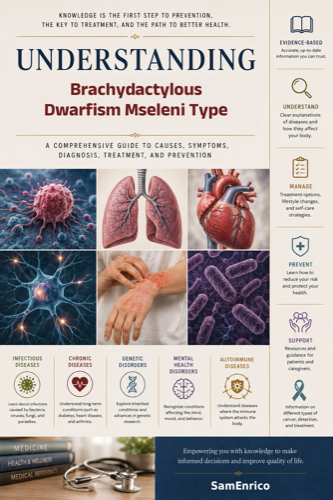 Understanding Brachydactylous Dwarfism Mseleni TypeWilson Sonya$17.99
 How to Start a Hobby in Indoors[edit]Wilson Sonya$11.99
 Etsy Remote Craft Intern GuideWilson Sonya$12.99