
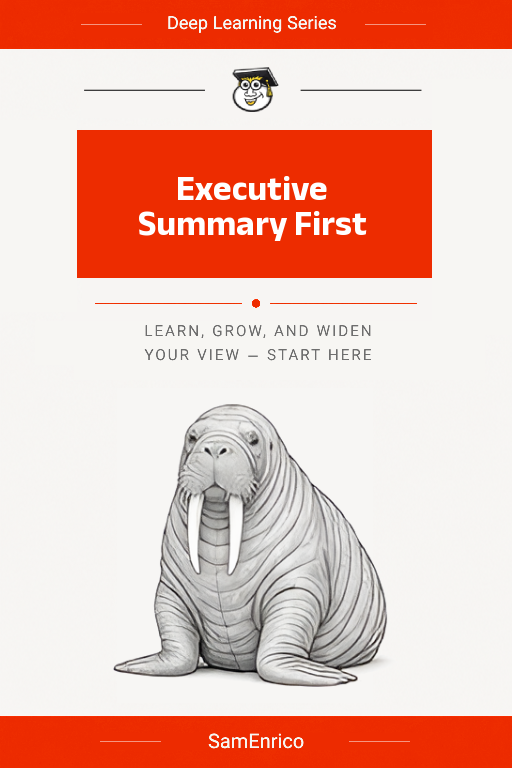
Executive Summary First
Write a one-paragraph summary of wins, risks, and
Write a one-paragraph summary of wins, risks, and the one decision needed.
Formats
About this book
Free sample
Chapter 1: The Skyscraper Problem--Every week, a senior vice president at a Fortune 500 company receives approximately 127 pages of reading material. These pages arrive as email attachments, slide decks, memos, reports, and meeting briefs. The VP reads about forty-two of those pages — the ones marked urgent by someone else’s priority system. The remaining eighty-five pages go unread, deleted, or filed into a folder called “Review Later” that has never been reviewed. The VP is not lazy.
The VP is not inefficient. The VP is drowning in information while starving for decisions.This is the skyscraper problem.Imagine a fifty-story office building. The executive suite is on the top floor. The executive needs to know one thing: whether to approve the new project, reallocate the budget, or escalate the risk. But the report handed to the executive starts on the ground floor.
Page one describes the methodology. Page two provides historical context. Page three explains who was in the meeting. By page four, the executive has already formed a judgment — not about the decision, but about the report itself. “This is going to take too long,” the executive’s brain says.
“I’ll skim it later.” Later never comes.The skyscraper problem is not a failure of effort. It is a failure of structure. Most people write the way they think: bottom-up. They gather data, analyze it, draw conclusions, and then — as an afterthought — write an executive summary that repeats what they just spent twenty pages proving. But executives do not think bottom-up.
They think top-down. They want the conclusion first, then the evidence that supports it. When you give them the opposite, you force them to reverse-engineer your thinking. And they will not do that. They will simply stop reading.This book exists to solve the skyscraper problem.
Its solution is radical in its simplicity: write the executive summary first. Not last. Not as an afterthought. First. Before the data analysis.
Before the slide deck. Before the meeting invitation. Write one paragraph that contains three things: wins, risks, and the one decision needed. Then stop. If you cannot write that paragraph…
This is the end of the free sample. Get the eBook to keep going. Buy now
Contents
- Chapter 1
- Chapter 2
- Chapter 3
- Chapter 4
- Chapter 5
- Chapter 6
- Chapter 7
- Chapter 8
- Chapter 9
- Chapter 10
- Chapter 11
- Chapter 12
Details
- Author
- Christie Keesha
- Publisher
- SamEnrico
- Language
- English
- Genre
- Non-Fiction, Professional's Cheat Sheet, Executive Summary, Decision Focus
- Released
- 2026-05-30
- Pages (approx.)
- 153
- Available as
- eBook, Audiobook

Read better in the ZLOADR app
Your eBooks on your phone or tablet. Sign in with your SamEnrico account and start reading.
More by Christie Keesha
 Loneliness Social PrescribingChristie Keesha$11.99
 Wholesaling Nextdoor GuideChristie Keesha$11.99
 Lucid Dreaming for Recurring DreamsChristie Keesha$11.99
 Wholesaling Text Message GuideChristie Keesha$11.99
 Drive Through Rage GuideChristie Keesha$11.99
 Office Door Signal SystemChristie Keesha$11.99
 Spin Virtual Class ImmersionChristie Keesha$11.99
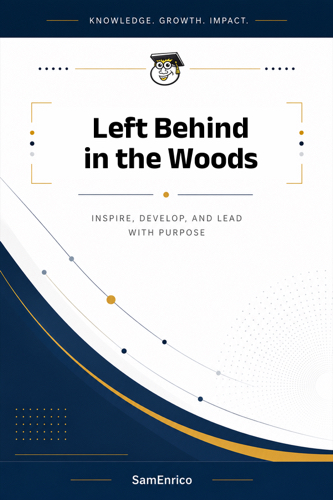 Left Behind in the WoodsChristie Keesha$11.99
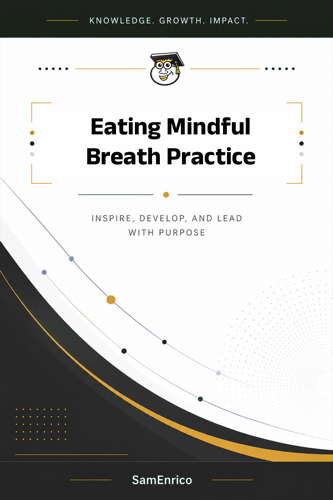 Eating Mindful Breath PracticeChristie Keesha$11.99
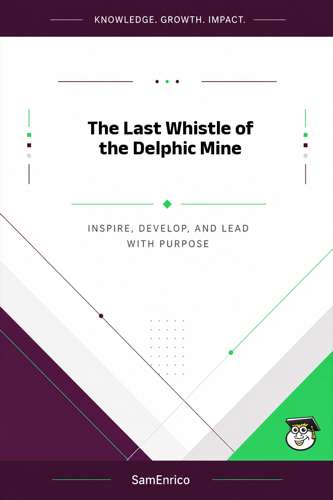 The Last Whistle of the Delphic MineChristie Keesha$11.99
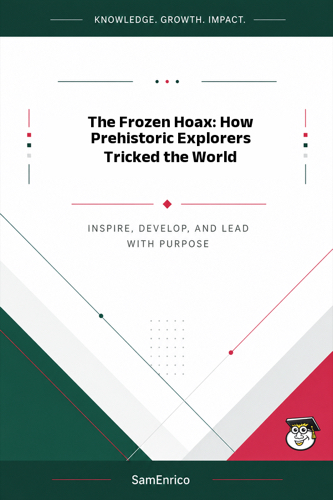 The Frozen Hoax: How Prehistoric Explorers Tricked the WorldChristie Keesha$11.99
 The Four Days' Fury: The Battle of the Downs That Shattered Dutch Invincibility (1639)Christie Keesha$11.99