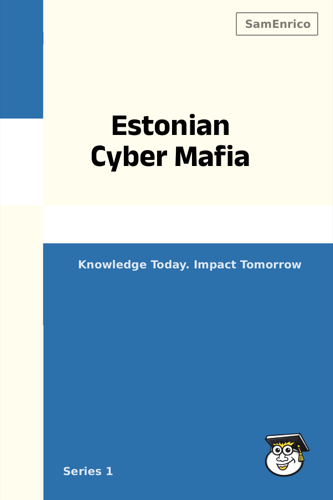
About this book
Free sample
Chapter 1: The Burning Code...--–- April 27, 2007. The rain over Tallinn smelled like nothing—no ozone, no smoke, no warning. But inside the National Cyber Security Incident Response Centre, the air had turned electric. A young analyst named Mart watched his screen flicker. First the parliament website went dark.
Then the banks. Then the prime minister's office. He picked up a phone that was already ringing. "We're under attack," a voice said. "From everywhere."This is how the first cyber war began.
Not with a missile or a declaration, but with a bronze statue.Six days earlier, the Estonian government had done something it knew would provoke rage. It ordered the relocation of the Bronze Soldier—a Soviet-era war memorial in the heart of Tallinn's city center—to a military cemetery on the outskirts. For Estonia's ethnic Russian minority, the statue was a monument to the Red Army's victory over Nazism. For ethnic Estonians, it was a symbol of fifty years of Soviet occupation, deportation, and silence. The government's decision was not reckless; it was deliberate.
Estonia had been an independent nation for sixteen years, a member of NATO for three. The time had come, officials argued, to bury the Soviet past.But the past does not bury easily.By the night of April 26, thousands of Russian-speaking protesters had gathered around the statue. What began as a peaceful demonstration turned violent. Rioters threw bottles and stones. Police responded with tear gas and water cannons.
Windows shattered. Cars burned. A curfew was declared. And then, just as the physical riots reached their peak, something strange happened online.The websites of the Estonian parliament (Riigikogu) crashed. Then the prime minister's office.
Then the Ministry of Justice, the Ministry of Foreign Affairs, and the State Chancellery. Then the servers of the two largest banks—Swedbank and SEB—went offline. For hours, Estonians could not access their own money. Automatic teller machines froze. Online payments failed.
Then the newspapers stopped publishing. Postimees, Eesti Päevaleht, the English-language Baltic Times—all unreachable. Then the emergency services portal went dark. Citizens trying to report fires or medical emergencies…
This is the end of the free sample. Get the eBook to keep going. Buy now
Contents
- Chapter 1
- Chapter 2
- Chapter 3
- Chapter 4
- Chapter 5
- Chapter 6
- Chapter 7
- Chapter 8
- Chapter 9
- Chapter 10
- Chapter 11
- Chapter 12
Details
- Author
- Schott Kendall
- Publisher
- SamEnrico
- Language
- English
- Genre
- Non-Fiction, True Crime / Baltic Crime
- Released
- 2026-06-12
- Pages (approx.)
- 149
- Available as
- eBook, Audiobook

Read better in the ZLOADR app
Your eBooks on your phone or tablet. Sign in with your SamEnrico account and start reading.
More by Schott Kendall
 Nail Polish Formaldehyde RiskSchott Kendall$11.99
 Foster Care and the Prom NightSchott Kendall$11.99
 Benzo Freedom Gentle Detox HandbookSchott Kendall$11.99
 Atlantic Slave Trade ChildhoodSchott Kendall$11.99
 Micaela BastidasSchott Kendall$11.99
 Little Free Library StewardSchott Kendall$11.99
 5x5 Strength ProgramSchott Kendall$11.99
 The Sages of Timbuktu: Africa's Financial Philosophers and the Birth of Economic WisdomSchott Kendall$11.99
 The Poison Diaries: Japan's Deadly Midwife and the Women Who Trusted HerSchott Kendall$11.99
 How to Produce Watercraft Steering PartsSchott Kendall$11.99
 How to Produce Marine LubricantSchott Kendall$11.99
 A Collector's Handbook to the Mg YaSchott Kendall$11.99