
Non-FictionHealth & WellnessComplete
Essential Oils Master Guide eBook
Complete reference for safe aromatherapy use.
Complete reference for safe aromatherapy use.
Formats
Free sample
Chapter 1: The Lavender Threshold...--–- The first thing you need to understand about essential oils is that they are not gentle. This is the opposite of what most marketing materials will tell you, and it is the single most important fact you will learn in this entire book. Lavender—soft, purple, associated with grandmothers and sachets and calm—can, in concentrated form, cause chemical burns. Peppermint—refreshing, clean, the flavor of toothpaste and after-dinner mints—can, when applied undiluted, send an adult to the emergency room with second-degree chemical burns and corneal damage if it gets in the eyes. Tea tree oil—the workhorse of natural first aid—can kill a cat with a single teaspoon ingested, and can cause severe contact dermatitis even in humans when used improperly.This is not meant to frighten you away from using essential oils.
Quite the opposite. This is meant to wake you up to the reality that these substances are medicine, and medicine must be respected. The very quality that makes essential oils so powerfully healing—their concentration, their potency, their ability to cross membranes and penetrate tissues—is the same quality that makes them dangerous when mishandled. You cannot treat a bottle of peppermint oil like a bottle of peppermint extract from the baking aisle. The former is fifty to one hundred times more concentrated than the latter.
A single drop of peppermint essential oil contains the medicinal equivalent of twenty-eight cups of peppermint tea. Twenty-eight cups. In one drop.This chapter is called The Lavender Threshold because lavender oil occupies a strange and important place in the history and practice of aromatherapy. Lavender is the safest of all essential oils. It is the only oil that is universally accepted as safe for direct skin application in first-aid situations.
It is the oil that launched modern aromatherapy when René-Maurice Gattefossé plunged his burned hand into a vat of it in 1910 and watched the wound heal with shocking speed and minimal scarring. Lavender is the threshold—the gateway oil that most people start with, the oil that feels forgiving, the oil that whispers, "This is nice. This is gentle. This is safe."But here is the paradox that this chapter will unfold for you: lavender's apparent gentleness can lull you into a false sense of security about every other oil. Once you have applied lavender undiluted to a burn (which, under specific circumstances, is safe and appropriate), you might think it is acceptable to apply oregano oil undiluted to a wart.
It is not. Oregano oil is a potent phenol that can dissolve skin cells on contact. Once you have diffused lavender in a child's room for a week of peaceful sleep, you might think it is acceptable to diffuse eucalyptus in an infant's nursery for congestion. It is not. Eucalyptus contains 1,8-cineole, which can cause respiratory distress and neurological symptoms in children under two years old.
Lavender is the exception, not the rule. The Lavender Threshold is the line you cross when you move from using the single safest oil to using the other 299 essential oils that exist in the world, each with its own safety profile, contraindications, and rules of engagement.By the end of this chapter, you will understand not only the history of aromatherapy and the basic science of how essential oils work, but more importantly, you will understand why this book takes the approach it does: rigorous safety first, scientific understanding second, practical application third. You will learn why the best-selling aromatherapy books of the past thirty years have all been wrong about something, and what the current consensus of clinical research actually says. You will learn how to think about essential oils like a pharmacist thinks about pharmaceuticals—with respect for their power, attention to dosing, and awareness of interactions—while still approaching them with the wonder and reverence they deserve as gifts from the plant world.The Accidental Discovery That Changed Everything The story of modern aromatherapy begins, as many scientific discoveries do, with an accident. In 1910, a French chemist named René-Maurice Gattefossé was working in his laboratory when an explosion occurred.
The details are murky—some accounts say he was working with a fragrant compound and a burner ignited it; others say it was a simple laboratory accident—but the result is not disputed. Gattefossé's hand was severely burned. The pain was excruciating. He later wrote that he instinctively plunged his burning hand into the nearest liquid, which happened to be a vat of lavender essential oil. To his astonishment, the pain subsided almost immediately.
Over the following days, the burn healed with remarkable speed and, more notably, with almost no scarring.This was not supposed to happen. In 1910, burn treatment was primitive. Severe burns often became infected. Scarring was expected, even guaranteed. But Gattefossé's burn did not follow the expected course.
He became obsessed with understanding why. He spent the next twenty-five years researching the properties of essential oils, and in 1937, he published a book titled Aromathérapie: Les Huiles Essentielles, Hormones Végétales. He coined the term "aromatherapy" from the Greek aroma (spice or fragrance) and therapeia (healing). But here is what most popular accounts leave out: Gattefossé was not a mystic or a new-age guru. He was a chemist.
He was interested in the chemical properties of essential oils—their ability to kill bacteria, reduce inflammation, and promote tissue regeneration. He was not interested in chakras or vibrational energies or the "spirit" of the plant. He was interested in molecules.This distinction matters because it sets up the central tension that runs through the entire history of aromatherapy, and it is a tension you will need to navigate as a user. On one side, you have the scientific, pharmacological, evidence-based approach: essential oils are complex chemical mixtures with measurable effects on human physiology. On the other side, you have the holistic, spiritual, intuitive approach: essential oils are living plant essences that connect us to nature and to something larger than ourselves.
Both approaches contain truth. Both approaches can be useful. But they are not the same, and confusing them can lead to mistakes—like believing that an oil's pleasant smell means it is safe to ingest, or that an oil's traditional use means it has been scientifically proven.Gattefossé's work was continued by other French physicians and scientists, most notably Dr. Jean Valnet, who used essential oils to treat wounded soldiers during World War II. When conventional antibiotics ran short, Valnet turned to essential oils of thyme, clove, and oregano—all powerful antimicrobials—to disinfect wounds and prevent gangrene.
His 1964 book, The Practice of Aromatherapy, brought the science of essential oils to a wider audience. But here again, a critical distinction is often lost: Valnet was a medical doctor using essential oils in a hospital setting, with precise dosing, sterile technique, and careful monitoring. He was not recommending that civilians self-treat at home without training.The person who brought aromatherapy to the general public was neither a chemist nor a physician. She was an Austrian-born beautician named Marguerite Maury, who developed a method of applying essential oils through massage. Maury was less interested in…
This is the end of the free sample. Get the eBook to keep going. Buy now
About this book
Details
- Author
- Coble Lawrence
- Publisher
- SamEnrico
- Language
- English
- Genre
- Non-Fiction, Health & Wellness, Complete
- Released
- 2026-06-09
- Pages (approx.)
- 160
- Available as
- eBook, Audiobook

Read better in the ZLOADR app
Your eBooks on your phone or tablet. Sign in with your SamEnrico account and start reading.
More by Coble Lawrence
 Allergy Friendly Meal PrepCoble Lawrence$11.99
 The Interruption ChallengeCoble Lawrence$11.99
 Bill Gates Competitive EdgeCoble Lawrence$11.99
 Pet Loss TikTok GuideCoble Lawrence$11.99
 Child Cancer Death GuideCoble Lawrence$11.99
 Bataan Death March SurvivorCoble Lawrence$11.99
 Dark Web Marketplace TrendsCoble Lawrence$11.99
 The Unstoppable Streak: Harold Abrahams and the 1924 Olympic Sprint MiracleCoble Lawrence$11.99
 The Djinn’s Double GameCoble Lawrence$11.99
 How to Produce Rosette Control For PecansCoble Lawrence$11.99
 How to Produce Field Hockey and Lacrosse Protective GearCoble Lawrence$11.99
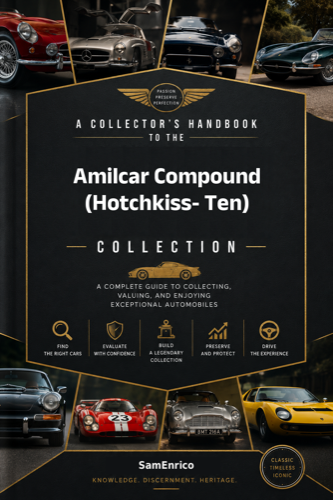 A Collector's Handbook to the Amilcar Compound (Hotchkiss- Ten)Coble Lawrence$11.99
You may also like
 Hong Kong Handover 1997Dunn Johnnie$11.99
 Zumba For Postnatal Recovery CourseNeal Christian$11.99
 Zumba for BeginnersLadner Nikia$11.99
 YouTube Comment Mining GuideHumes Pandora$12.99
 Worry Box MeditationCarlin Rudy$11.99
 Workplace Stress MeditationNguyen Lynn$11.99
 Workplace Stress and Sleep RepairHawley Ivory$11.99
 Workplace Perfectionism CureDelaney Jeffry$11.99
 Workplace Injustice Anger GuideWallen Isabelle$11.99
 Work Addiction and Burnout LinkGreenwood Ester$11.99
 Women in Yoga and WellnessBeattie Galina$11.99
 Women in Stand Up ComedyChun Evangeline$11.99