
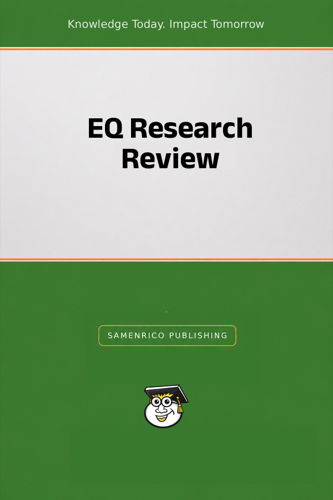
EQ Research Review eBook
Science behind emotional intelligence and its bene
by Mcgrath Russ
Science behind emotional intelligence and its benefits.
Formats
Free sample
Chapter 1: Three Kinds of "Smart"--–- In 2002, a brilliant software engineer named Marcus was fired for the third time in five years. His code was elegant. His solutions were innovative. His performance reviews always began with the same phrase: “Marcus is technically brilliant.” And they always ended with the same phrase: “But he cannot work with others.” He had interrupted his project manager during a client presentation. He had rolled his eyes at a junior developer’s question.
He had sent a late-night email to the entire team that began, “Since none of you seem to understand basic logic...” When HR asked him to complete an “emotional intelligence assessment” as part of his exit interview, Marcus scoffed. “Emotional intelligence isn’t real,” he said. “It’s just an excuse for mediocre people to feel better about themselves.”Marcus was wrong about emotional intelligence not being real. But he was right about something important. Much of what people call emotional intelligence is, in fact, poorly defined, inconsistently measured, and oversold.
And the confusion has created a perfect storm: smart, skeptical people like Marcus dismiss the entire concept because they have seen it used as a vague label for “being nice.” Meanwhile, true believers in emotional intelligence buy expensive trainings and self-help books that promise transformation but deliver little more than common sense advice wrapped in scientific-sounding jargon.Both groups are missing the same critical insight. Emotional intelligence is not one thing. It is three different things, each with its own definition, its own measurement tools, and its own evidence base. And unless you understand the differences, you will either reject something valuable or embrace something empty.This chapter is not an introduction to emotional intelligence. It is a map.
By the time you finish reading these pages, you will be able to look at any claim about EQ—whether in a scientific journal, a corporate training brochure, or a social media post—and immediately know three things: which model is being used, whether the evidence supports the claim, and what the claim means for you. You will also understand why Marcus, the brilliant engineer, was not lacking in emotional intelligence. He was lacking in one very specific kind of emotional intelligence. And that distinction changed everything.The Birth of a Confusion The term “emotional intelligence” first appeared in academic literature in 1990, when psychologists Peter Salovey and John Mayer published a paper proposing that the ability to perceive, understand, and manage emotions might constitute a genuine form of intelligence. Their argument was careful, modest, and grounded in decades of research on emotion and cognition.
They were not trying to start a revolution. They were trying to fill a gap in intelligence research, which had long focused on logical and spatial abilities while ignoring the role of emotion in adaptive behavior.Then came Daniel Goleman. In 1995, Goleman—a psychologist and journalist for the New York Times—published Emotional Intelligence: Why It Can Matter More Than IQ. The book was a phenomenon. It spent more than a year on the bestseller list.
It was translated into forty languages. It transformed Goleman into a global consultant and launched a billion-dollar industry of EQ assessments, trainings, and coaching programs.Goleman’s central argument was electrifying: IQ might get you hired, but EQ gets you promoted. He claimed that emotional intelligence was twice as important as technical skills and IQ for jobs at all levels. He drew on neuroscience, organizational research, and vivid case studies to show that emotional competencies—self-awareness, self-regulation, motivation, empathy, social skill—were the hidden drivers of success.The public loved the message. Academics were horrified.
Not because Goleman was wrong about the importance of emotional skills, but because he had expanded the definition so dramatically that it became almost impossible to test scientifically. Salovey and Mayer’s careful model of emotional abilities had been transformed into a sprawling collection of personality traits, motivational dispositions, and social competencies. Goleman had mixed together things that were theoretically distinct: cognitive abilities (like recognizing emotions in faces), personality traits (like optimism), and behavioral skills (like conflict resolution). The result was a model that was intuitively appealing but scientifically messy.This tension between the academic and popular versions of emotional intelligence has never been resolved. Instead, three distinct models have emerged, each with its own measurement tools, research base, and practical applications.
Understanding these models is not an intellectual exercise. It is the single most practical thing you can do before spending any time, money, or effort on emotional intelligence development.The Three Models at a Glance Before we dive into the details of each model, here is a quick overview to orient you:The Ability Model (Mayer & Salovey) treats emotional intelligence as a genuine cognitive ability—like spatial reasoning or verbal fluency. It is measured by performance tests with right and wrong answers. It predicts specific outcomes like leadership effectiveness and negotiation performance, even after controlling for IQ and personality. It is the model with the strongest scientific support but the least commercial presence.The Trait Model (Bar-On) treats emotional intelligence as a constellation of personality dispositions.
It is measured by self-report questionnaires. It overlaps heavily with standard personality traits, especially low neuroticism and high extraversion. It predicts well-being and life satisfaction but adds little beyond what personality tests already measure. It is the model behind most online “EQ tests.”The Mixed Model (Goleman & Boyatzis) treats emotional intelligence as a broad basket of competencies, including emotional abilities, personality traits, and motivational skills. It is measured by multi-rater assessments (self, peers, supervisors).
It has strong intuitive appeal and dominates corporate training. But it is so broad that it risks tautology: emotional intelligence predicts success because success is defined as having the competencies already in the model.These three models do not simply offer different definitions of the same underlying construct. They measure fundamentally different things. A person who scores high on the Ability Model may score low on the Trait Model—and vice versa. This is not a measurement error.
It is a reflection of the fact that what you can do (ability) is often different from what you think you can do (trait). And both are different from how others perceive your behavior (mixed model).The failure to distinguish these models has produced a literature full of contradictory claims. Headlines announce “Emotional Intelligence Is a Predictor of Success” while other headlines announce “Emotional Intelligence Is a Myth.” Both are correct—if you specify which model is being referenced. The Ability Model shows real predictive power. The Trait Model is largely redundant with personality.
The Mixed Model is too broad to test cleanly.Let us now examine each model in detail.The Ability Model: The Original Science The Ability Model, developed by Salovey and Mayer and refined over three decades, is the most rigorous and the least commercialized. It treats emotional intelligence as a set of four specific cognitive abilities, arranged hierarchically from basic to complex. These four branches are not just correlated; they build on each other. You cannot manage emotions effectively if you do not understand them. You cannot understand them if you cannot perceive them.
And you cannot use them to facilitate thinking if you cannot manage them.Branch One: Emotion Perception. This is the ability…
This is the end of the free sample. Get the eBook to keep going. Buy now
About this book
Details
- Author
- Mcgrath Russ
- Publisher
- SamEnrico
- Language
- English
- Genre
- research, Self-Help, Psychology
- Released
- 2026-06-11
- Pages (approx.)
- 135
- Available as
- eBook, Audiobook

Read better in the ZLOADR app
Your eBooks on your phone or tablet. Sign in with your SamEnrico account and start reading.
More by Mcgrath Russ
 Opioid Agonist vs AntagonistMcgrath Russ$11.99
 TM Practice Introduction GuideMcgrath Russ$11.99
 Async Crisis Documentation ManualMcgrath Russ$11.99
 Vegan Comparison Online TrapMcgrath Russ$11.99
 The Skywalker's Gambit: The Untold Story of the First Free Solo of El CapitanMcgrath Russ$11.99
 The Mekong Odyssey: A River of Secrets and SurvivalMcgrath Russ$11.99
 Understanding Cortical Hyperostosis SyndactylyMcgrath Russ$17.99
 How to Start a Fencing Made of Wood (assembled) Business (Beginners Guide)Mcgrath Russ$11.99
 Post COVID Commercial Lease GuideMcgrath Russ$12.99
 TikTok Organic ShopifyMcgrath Russ$12.99
 Counterterrorism AnalysisMcgrath Russ$11.99
You may also like
 Scientific Research On TM GuideMartens Nathanial$11.99
 Research Proposal Methodology Section MasteryPauley Debroah$11.99
 Research Proposal Appendix CompilationRaines Tyisha$11.99
 Academic Researcher Distraction GuideFord Virgil$11.99
 TM Research and ScienceCovert Nicki$11.99
 Social Anxiety Research ReviewRoberge Cole$11.99
 Research Proposal Significance Section GuideBock Tory$12.99
 Research Proposal Reviewer PsychologyLugo Tawanda$11.99
 Research Proposal Research Questions DesignLara Robbi$11.99
 Research Proposal References and CitationsPatten Shanice$11.99
 Research Proposal Mixed Methods DesignCameron Omega$11.99
 Research Proposal Data Management PlanAnderson Roberto$12.99