


Non-FictionSelf-HelpJob Search
EQ for Job Interviews Guide eBook
Reads interviewer emotions and manages pre-intervi
Reads interviewer emotions and manages pre-interview anxiety.
Formats
Free sample
Chapter 1: The Predator Within--–- Your phone buzzes. A calendar notification. “Interview: 2:00 PM.” Suddenly, your mouth is dry. Your heart hammers against your ribs like a prisoner demanding release. Your palms sweat so profusely you wipe them on your jeans, then immediately regret it because now there’s a dark, suspicious stain on your thigh.
You practice your opening line in a whisper, and your voice cracks on the third word. You imagine sitting across from a stern-faced stranger who can smell fear. You picture yourself freezing, rambling, or—worst of all—admitting you don’t know something fundamental about the role. By the time you arrive at the office (or click the Zoom link), you are already exhausted. You have fought a war against yourself, and you have lost.This is the secret pre-interview ritual for nearly eighty percent of job seekers.
And every single one of them believes they are uniquely broken.Here is the truth most interview guides refuse to tell you because it doesn’t sell quick fixes: your body is not broken. Your body is doing exactly what evolution designed it to do. The problem is not your physiology. The problem is that your physiology cannot tell the difference between a job interview and a saber-toothed tiger.This chapter is not about calming you down. It is not about breathing exercises that promise to erase your nerves in thirty seconds (though we will give you one that actually works).
This chapter is about something far more valuable: renaming the enemy so you stop fighting yourself. By the time you finish these pages, you will stop asking “How do I stop being nervous?” and start asking a much more powerful question: “How do I redirect this energy toward performance?”The Amygdala Is Not Your Enemy Deep inside your brain, tucked behind your ears in a region called the medial temporal lobe, sits a pair of small, almond-shaped clusters of neurons. These are your amygdalae (plural). Their only job, for the last several hundred million years of evolution, has been survival. They do not read.
They do not reason. They do not care about your career trajectory, your mortgage, or your dignity. They scan for threats—physical threats—and when they detect one, they unleash a cascade of hormones that prepare your body to fight, flee, or freeze.Here is the cruel trick: your amygdala cannot distinguish between a physical threat (a lion, a falling rock, a person with a weapon) and a social threat (a job interview, a performance review, a first date). To your amygdala, being judged by a stranger in business casual attire is neurologically identical to being chased by a predator. The same alarm system activates.
The same hormones flood your bloodstream. The same physical sensations appear: heart racing, pupils dilating, blood rushing away from your digestive system and toward your large muscles (hence the “butterflies” – that’s your digestion shutting down), tunnel vision, and the overwhelming urge to run away or say anything to end the interaction.This is not a weakness. This is a feature, not a bug. Your ancestors who did NOT feel their heart race before stepping into a dangerous situation were eaten. You are alive today because your nervous system is exquisitely sensitive to threat.
The problem is not that your amygdala fires. The problem is that it fires at the wrong targets—specifically, at a Zoom call with a hiring manager.We will return to this insight throughout the book. For now, I want you to write this sentence somewhere you will see it before every interview:“My amygdala is a well-meaning but outdated security system. It is not an idiot. It is trying to protect me from a threat that does not exist.
My job is not to fight it. My job is to update its software.”That is the unifying metaphor of this entire book. Every technique, every script, every pivot you learn in the following chapters is a software update for your amygdala. You are not broken. You are running ancient code on modern hardware.The Spotlight Effect: Why No One Is Watching You As Closely As You Think Now that we have named the biological source of your anxiety, let us name the cognitive amplifier that makes it feel ten times worse than it actually is.
This is called the Spotlight Effect, and it is one of the most robust findings in social psychology.In a famous study by Thomas Gilovich and his colleagues at Cornell University, researchers asked individual students to wear a t-shirt featuring a large, embarrassing photo of the singer Barry Manilow. (For younger readers: Barry Manilow was, at the time, considered deeply uncool.) The student wearing the t-shirt was then asked to enter a room full of other students and sit down. Afterward, the t-shirt-wearing student was asked: “What percentage of the people in the room do you think noticed your shirt?” The average answer was around fifty percent. In reality, only about twenty percent of the people in the room could correctly identify the face on the shirt. The t-shirt-wearers had overestimated their visibility by more than double.This is the Spotlight Effect in action.
You believe that everyone is watching you—your shaking hands, your cracking voice, the bead of sweat slowly descending your temple, the typo in your resume that you noticed at 3 AM. In reality, people are astonishingly self-absorbed. They are worried about their own performance, their own anxieties, their own lunch plans, and the strange noise their car is making. They are not cataloging your every flaw.Here is how the Spotlight Effect applies directly to your interview anxiety: you believe the interviewer can see your nervousness as clearly as you can feel it. You believe your racing heart is visible through your shirt.
You believe your voice crack echoed off the walls like a gunshot. You believe they noticed that your hand trembled when you reached for the water glass.They did not.Or if they did, they registered it for less than a second and then moved on. Interviewers are busy people. They are thinking about the next question, the time, the other candidates, the project deadline, the email they need to send. They are not conducting a forensic analysis of your autonomic nervous system.The most liberating sentence in this entire book is this: You are not the main character in the interviewer’s story.
You are a supporting character. They are the main character. They are worried about themselves. Use this to your advantage. The Spotlight Effect tells you that they aren’t watching you closely.
That gives you the freedom to watch them. This is your asymmetric advantage, and we will exploit it mercilessly in Chapter 3.The Reframe: From “Nervous” to “Prepared Energy”Let us perform a small but consequential experiment. I want you to say the following sentence out loud:“I am nervous about this interview.”How did that feel? For most people, saying “I am nervous” reinforces the feeling. It gives the anxiety a label, a seat at the table, an identity.
Your brain hears “nervous” and thinks: Danger. Threat. Something is wrong. The amygdala, already on high alert, receives confirmation that…
This is the end of the free sample. Get the eBook to keep going. Buy now
About this book
Details
- Author
- Timm Latrisha
- Publisher
- SamEnrico
- Language
- English
- Genre
- Non-Fiction, Self-Help, Job Search
- Released
- 2026-06-05
- Pages (approx.)
- 103
- Available as
- eBook, Audiobook

Read better in the ZLOADR app
Your eBooks on your phone or tablet. Sign in with your SamEnrico account and start reading.
More by Timm Latrisha
 Bipolar And Metabolic SyndromeTimm Latrisha$11.99
 The Stress Proof Relationship GuideTimm Latrisha$11.99
 Study Skills QuizTimm Latrisha$11.99
 Accountant Distraction ManagementTimm Latrisha$11.99
 Parent Child Listening GuideTimm Latrisha$11.99
 The Quit Smoking Dental HealthTimm Latrisha$11.99
 Telegram Saved MessagesTimm Latrisha$11.99
 The Last Red EnvelopeTimm Latrisha$11.99
 Wings of the First Dawn: The Arctic's Forgotten NavigatorsTimm Latrisha$11.99
 Tower of Terror: The Hidden Truth Behind the Drop of DoomTimm Latrisha$11.99
 The Poet of Exile: Mohsen Makhmalbaf's Cinematic RevolutionTimm Latrisha$11.99
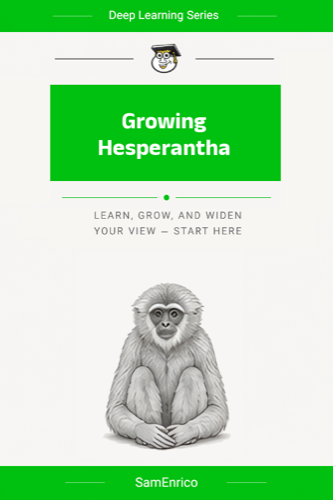 Growing HesperanthaTimm Latrisha$11.99
You may also like
 Hong Kong Handover 1997Dunn Johnnie$11.99
 Zumba For Postnatal Recovery CourseNeal Christian$11.99
 Zumba for BeginnersLadner Nikia$11.99
 YouTube Comment Mining GuideHumes Pandora$12.99
 Worry Box MeditationCarlin Rudy$11.99
 Workplace Stress MeditationNguyen Lynn$11.99
 Workplace Stress and Sleep RepairHawley Ivory$11.99
 Workplace Perfectionism CureDelaney Jeffry$11.99
 Workplace Injustice Anger GuideWallen Isabelle$11.99
 Work Addiction and Burnout LinkGreenwood Ester$11.99
 Women in Yoga and WellnessBeattie Galina$11.99
 Women in Stand Up ComedyChun Evangeline$11.99