
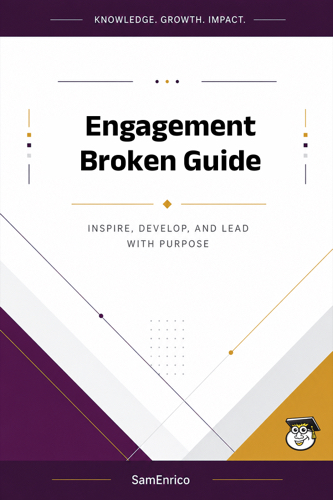
Non-FictionSelf-Help / Broken Engagement
Engagement Broken Guide eBook
Heals when wedding plans are called off and deposi
Heals when wedding plans are called off and deposit lost.
Formats
Free sample
Chapter 1: The 48-Hour Anchor...--–- The wedding website is still live. You can see the countdown timer. Thirty-seven days, fourteen hours, and eleven minutes until you were supposed to walk down an aisle that now feels like a grave. The venue confirmation email arrived this morning—automated, cheerful, asking you to confirm the final headcount by Friday. Your phone has seventeen missed calls from your mother, twelve from your ex’s mother, and a text from the florist that reads, “So excited for your big day!” You are sitting on the bathroom floor because standing up feels like too much effort.
Your chest is tight. Your hands are shaking. You have not eaten in twenty-four hours. And somewhere in the other room, the person you planned to marry is packing a bag—or already gone.This is not a normal breakup. Normal breakups do not come with contracts, deposits, guest lists, and a live countdown timer to a public celebration of a lie.
Normal breakups do not require you to cancel a honeymoon, return gifts, and explain to your third cousin why the salmon entrée is no longer relevant. You are not just heartbroken. You are financially entangled, socially exposed, and legally bound to a future that just evaporated. Every cell in your body is screaming, and the world is still sending you confirmation emails.Welcome to the first forty-eight hours after a broken engagement. This chapter is not about healing.
It is not about finding closure or learning life lessons or forgiving anyone. Those things come later, and they will be addressed in their own time. Right now, your only job is to survive the next two days without making decisions that will cost you thousands of dollars or years of regret. You are in crisis. And crisis requires a protocol, not poetry.The first thing you need to understand is that your brain is lying to you.
Not because you are weak or hysterical, but because you are experiencing a profound physiological event. When a major attachment bond is severed—especially one that was formalized through a public engagement—your nervous system responds as if you are in physical danger. Your amygdala (the brain’s alarm system) hijacks your prefrontal cortex (the rational decision-making center). This is why you cannot decide whether to call the venue or crawl into bed. This is why you have opened and closed the same email twelve times without responding.
This is why the thought of picking up the phone makes you want to vomit.This chapter will give you a two-hour action plan to regain enough neurological stability to function. It will teach you how to physically calm your body using polyvagal theory—not as a vague wellness concept, but as a tactical intervention. Then it will walk you through the “No-Contact for Sanity” protocol, adapted specifically for broken engagements to block not just your ex, but every wedding-related account, email, and notification that is currently torturing you. By the end of this chapter, the wedding website will be down, the automated emails will stop, and you will have a clear, simple list of what to do in the next forty-eight hours—and what absolutely not to do.You are not expected to feel better. You are expected to function just long enough to stop the bleeding.
Let us begin.The Physiology of a Broken Engagement: Why You Can’t Think Straight Before you do anything else, you need to understand what is happening inside your body. This is not optional psychology; this is biology. And biology is not your fault.When you become engaged, your brain undergoes a series of neurochemical changes. Dopamine (reward), oxytocin (bonding), and serotonin (mood regulation) all increase. Your brain literally rewires itself to expect a shared future.
The engagement is not just a social status; it is a neurological commitment. When that future is suddenly canceled, your brain experiences something closer to withdrawal than sadness. The same neural pathways that light up during drug withdrawal light up during a broken engagement. You are not just sad. You are in chemical withdrawal from a person and a future you were physically dependent on.This is compounded by the wedding planning process itself.
For months—or years—you have been making hundreds of small decisions that reinforced the attachment. The venue, the guest list, the menu, the registry. Each decision released a small burst of dopamine, creating a feedback loop of commitment. Now that loop is broken, and your brain is desperately searching for the next hit. This is why you keep checking your ex’s social media.
This is why you cannot stop thinking about the honeymoon you will not take. Your brain is trying to find the missing reward.The result is a state that trauma researchers call “hyperarousal with dissociation.” You are simultaneously flooded with stress hormones (cortisol and adrenaline) and disconnected from your own body. This is why your heart is racing but your thoughts feel foggy. This is why you feel both panicked and numb. This is why you cannot make a simple decision like what to eat or whether to answer the phone.Here is what you need to know: this state is temporary.
It will last anywhere from a few hours to a few days, depending on your nervous system’s baseline. But while you are in it, you are legally and financially vulnerable. You will agree to things you should not agree to. You will sign things you should not sign. You will send emails you will regret.
The single most important thing you can do in the next forty-eight hours is not to “process your feelings” or “find closure.” The single most important thing you can do is stabilize your nervous system so you do not make catastrophic decisions.The Two-Hour Stabilization Protocol This protocol is adapted from polyvagal theory, developed by Dr. Stephen Porges, and from crisis intervention techniques used by trauma specialists. It is designed to do one thing: move your nervous system out of “fight/flight/freeze” and into a state where rational thought is possible. You do not need to understand the science. You only need to follow the steps in order.Step One: Cold Water (Five Minutes)Splash cold water on your face.
Not room temperature. Cold. If you can tolerate it, hold an ice cube in each hand for sixty seconds. If you have access to a shower, turn it to cold for thirty seconds. Cold water activates the mammalian dive reflex, which immediately slows your heart rate and shifts your nervous system toward parasympathetic (rest and digest) mode.
This is not a metaphor. This is a physiological switch.Do not skip this step because you feel too tired or too sad. The cold water is not optional. It is the fastest way to interrupt the panic loop.Step Two: The 4-7-8 Breath (Three Minutes)Sit on the floor with your back against a wall. Exhale completely through your mouth.
Close your mouth and inhale quietly through your nose for a count of four. Hold your breath for a count of seven. Exhale completely through your mouth for a count…
This is the end of the free sample. Get the eBook to keep going. Buy now
About this book
Details
- Author
- Criswell Violette
- Publisher
- SamEnrico
- Language
- English
- Genre
- Non-Fiction, Self-Help / Broken Engagement
- Released
- 2026-06-06
- Pages (approx.)
- 140
- Available as
- eBook, Audiobook

Read better in the ZLOADR app
Your eBooks on your phone or tablet. Sign in with your SamEnrico account and start reading.
More by Criswell Violette
 Problem Solving DBT WorkbookCriswell Violette$11.99
 Self Esteem for Chronic IllnessCriswell Violette$11.99
 The First Week Smoke Free GuideCriswell Violette$11.99
 Graves Disease GuideCriswell Violette$11.99
 Child Murder Media EthicsCriswell Violette$11.99
 Lifetime of TherapyCriswell Violette$11.99
 Tactile Marking SystemsCriswell Violette$11.99
 The Second Battle of Panipat: Akbar's Gambit That Reshaped IndiaCriswell Violette$11.99
 The Amsterdam Diamond Heist: Bones, Blood, and a Billion-Dollar MysteryCriswell Violette$11.99
 How to Setup and Launch a Team Building EventCriswell Violette$11.99
 How to Start a Cotton Yarn Printing Business (Beginners Guide)Criswell Violette$11.99
 A Collector's Handbook to the BMW 328Criswell Violette$11.99
You may also like
 Hong Kong Handover 1997Dunn Johnnie$11.99
 Zumba For Postnatal Recovery CourseNeal Christian$11.99
 Zumba for BeginnersLadner Nikia$11.99
 YouTube Comment Mining GuideHumes Pandora$12.99
 Worry Box MeditationCarlin Rudy$11.99
 Workplace Stress MeditationNguyen Lynn$11.99
 Workplace Stress and Sleep RepairHawley Ivory$11.99
 Workplace Perfectionism CureDelaney Jeffry$11.99
 Workplace Injustice Anger GuideWallen Isabelle$11.99
 Work Addiction and Burnout LinkGreenwood Ester$11.99
 Women in Yoga and WellnessBeattie Galina$11.99
 Women in Stand Up ComedyChun Evangeline$11.99