
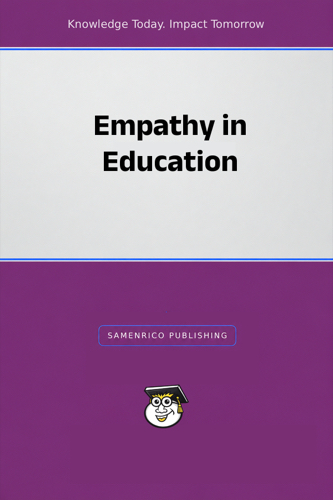
About this book
Free sample
Chapter 1: The Vanishing Mirror--–- Fifteen years ago, if you asked a group of middle school teachers to describe their students’ biggest challenge, they would have said something like “short attention spans” or “too much sugar before lunch.” Ask the same teachers today, and the answer comes faster, sharper, and heavier: “They don’t know how to look at each other.”Not literally, of course. Students still make eye contact—briefly, usually to check a phone screen reflected in someone else’s glasses. But the deeper gaze, the one that asks “What is happening inside you right now?” has become rare. Teachers describe classrooms where a student can be openly crying at a desk and five peers will step over their backpack without a glance. Playground conflicts escalate to fists not because children are crueler than before, but because they genuinely cannot read the warning signs on a classmate’s face: the tightening jaw, the quickened breath, the flinch.
These cues used to be automatic social GPS. Now, for a growing number of students, they might as well be written in a foreign language.This is not a moral panic. It is not another “kids these days” lament from an older generation nostalgic for an imaginary golden age. It is a measurable, trackable, and replicable finding from developmental psychology, neuroscience, and longitudinal education research. Between 1979 and 2009, the average level of empathic concern among American college students dropped by 48 percent, with the steepest declines occurring after the year 2000.
A separate meta-analysis of over 14,000 adolescents found that perspective-taking abilities—the cognitive skill of understanding another person’s thoughts and feelings—fell by 40 percent over three decades. During that same period, narcissistic traits rose by 58 percent. Psychologist Michele Borba, who synthesized these findings in her work on what she called “The Selfie Syndrome,” put it bluntly: “We are raising the most self-focused generation on record.”The title of this chapter, “The Vanishing Mirror,” comes from a metaphor that emerged in interviews with dozens of veteran teachers. They described the classroom as a hall of mirrors where students used to see themselves reflected in their…
This is the end of the free sample. Get the eBook to keep going. Buy now
Contents
- Chapter 1
- Chapter 2
- Chapter 3
- Chapter 4
- Chapter 5
- Chapter 6
- Chapter 7
- Chapter 8
- Chapter 9
- Chapter 10
- Chapter 11
- Chapter 12
Details
- Author
- Dominguez Kiara
- Publisher
- SamEnrico
- Language
- English
- Genre
- Non-Fiction, Self-Help / Education
- Released
- 2026-06-06
- Pages (approx.)
- 149
- Available as
- eBook, Audiobook

Read better in the ZLOADR app
Your eBooks on your phone or tablet. Sign in with your SamEnrico account and start reading.
More by Dominguez Kiara
 Leg and Foot RelaxationDominguez Kiara$11.99
 Feelings and Needs InventoryDominguez Kiara$11.99
 Do Defer Delegate DeleteDominguez Kiara$11.99
 Individual DBT Therapy GuideDominguez Kiara$11.99
 Cardiac Monitoring During WithdrawalDominguez Kiara$11.99
 Remote Work for HealthcareDominguez Kiara$11.99
 Child HeimlichDominguez Kiara$11.99
 The Last Phoenix of Babylon: Nebuchadnezzar’s Forgotten HeirDominguez Kiara$11.99
 Iron and Ash: The Battle of Saipan and the Cost of LiberationDominguez Kiara$11.99
 How to Produce ICE ScrewsDominguez Kiara$11.99
 A Collector's Handbook to the Hillman Husky (1967-70)Dominguez Kiara$11.99
 WIPO Madrid Common RegulationsDominguez Kiara$12.99
You may also like
 Hong Kong Handover 1997Dunn Johnnie$11.99
 Zumba For Postnatal Recovery CourseNeal Christian$11.99
 Zumba for BeginnersLadner Nikia$11.99
 YouTube Comment Mining GuideHumes Pandora$12.99
 Worry Box MeditationCarlin Rudy$11.99
 Workplace Stress MeditationNguyen Lynn$11.99
 Workplace Stress and Sleep RepairHawley Ivory$11.99
 Workplace Perfectionism CureDelaney Jeffry$11.99
 Workplace Injustice Anger GuideWallen Isabelle$11.99
 Work Addiction and Burnout LinkGreenwood Ester$11.99
 Women in Yoga and WellnessBeattie Galina$11.99
 Women in Stand Up ComedyChun Evangeline$11.99