
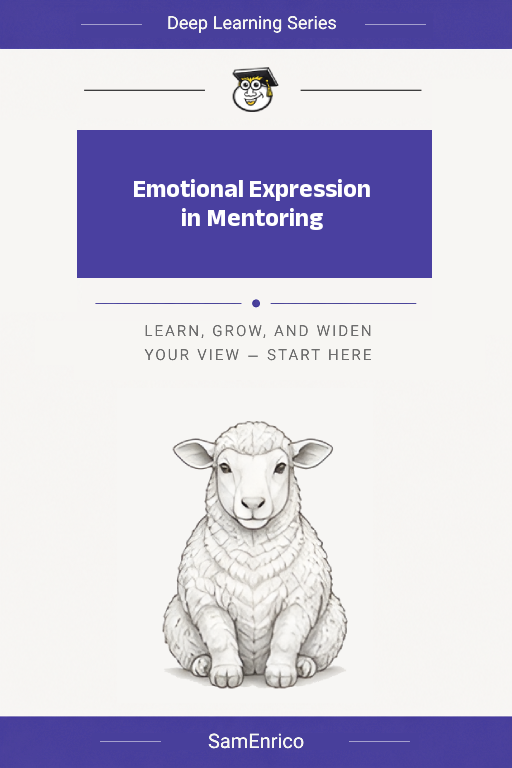
Non-FictionProfessional's Cheat Sheet
Emotional Expression in Mentoring
Match emotional intensity when mentoring: reserved
Match emotional intensity when mentoring: reserved Northern Europeans prefer calm analysis, while Mediterranean and Latin American juniors expect passion.
Formats
About this book
Free sample
Chapter 1: The Feedback That Failed--–- Klaus Brenner considered himself a rational man. Born in Hamburg, educated at RWTH Aachen, trained in the precision engineering division of a mid-sized German automotive supplier, he had built his career on the proposition that clear thinking, clearly communicated, produces clear results. When his company was acquired by a Brazilian conglomerate, Klaus was initially skeptical. But he was also ambitious. The new owners were creating a cross-cultural mentoring program to integrate German engineering rigor with Brazilian market agility, and Klaus was invited to serve as a mentor.
He accepted because he believed in the mission. He also believed he would be good at it.His protégé was Lucas Mendes, a twenty-nine-year-old marketing analyst from São Paulo. Lucas had been identified as high-potential: fluent in three languages, comfortable with data, and unusually skilled at translating customer insights into product requirements. Klaus reviewed Lucas’s file before their first meeting and made a note: Sharp. Needs structure.
I can help.The first session went, in Klaus’s estimation, very well. Lucas presented a go-to-market strategy for a new sensor product. Klaus listened without interrupting—silence, to Klaus, was a sign of respect, a way of giving the other person room to think. When Lucas finished, Klaus delivered his feedback in the style he had received as a junior engineer and had always appreciated: direct, specific, and unadorned by emotional language.“Your third argument lacked supporting data,” Klaus said. “The customer segment analysis was based on three interviews.
You need at least twenty for statistical relevance. And your conclusion ran thirty seconds too long. Cut the recap of slide seven.”Klaus paused, then added what he considered to be encouragement: “The framework was logical. The structure is there. Fix the data, tighten the conclusion, and you’ll have something solid.”Lucas nodded.
He said, “Thank you. I understand.” He gathered his papers and left.Klaus felt good about the session. He had given actionable feedback, identified a clear path to improvement, and affirmed what was working. In his mind, this was what mentoring looked like.Three days…
This is the end of the free sample. Get the eBook to keep going. Buy now
Contents
- Chapter 1
- Chapter 2
- Chapter 3
- Chapter 4
- Chapter 5
- Chapter 6
- Chapter 7
- Chapter 8
- Chapter 9
- Chapter 10
- Chapter 11
- Chapter 12
Details
- Author
- Binder Wilfredo
- Publisher
- SamEnrico
- Language
- English
- Genre
- Non-Fiction, Professional's Cheat Sheet
- Released
- 2026-05-27
- Pages (approx.)
- 145
- Available as
- eBook, Audiobook

Read better in the ZLOADR app
Your eBooks on your phone or tablet. Sign in with your SamEnrico account and start reading.
More by Binder Wilfredo
 SuperMemo To Anki GuideBinder Wilfredo$11.99
 Burnout Prevention for OptometristsBinder Wilfredo$11.99
 The Micronutrient Deficiency SignsBinder Wilfredo$11.99
 Soil Trace Evidence GuideBinder Wilfredo$11.99
 Goal Setting Self HypnosisBinder Wilfredo$11.99
 Amílcar Cabral Guinea BissauBinder Wilfredo$11.99
 Child Loss And Work ReturnBinder Wilfredo$11.99
 LGBTQ Pregnancy Loss GuideBinder Wilfredo$11.99
 The Druid's Last Stand: Boudica's Forgotten RebellionBinder Wilfredo$11.99
 Roberto Gómez Bolaños: The Genius Behind Latin America's Longest-Running SitcomBinder Wilfredo$11.99
 How to Become a Safety-clothing-and-equipment DeveloperBinder Wilfredo$11.99
 How to Produce ScoreboardsBinder Wilfredo$11.99
You may also like
 Hong Kong Handover 1997Dunn Johnnie$11.99
 Zumba For Postnatal Recovery CourseNeal Christian$11.99
 Zumba for BeginnersLadner Nikia$11.99
 YouTube Comment Mining GuideHumes Pandora$12.99
 Worry Box MeditationCarlin Rudy$11.99
 Workplace Stress MeditationNguyen Lynn$11.99
 Workplace Stress and Sleep RepairHawley Ivory$11.99
 Workplace Perfectionism CureDelaney Jeffry$11.99
 Workplace Injustice Anger GuideWallen Isabelle$11.99
 Work Addiction and Burnout LinkGreenwood Ester$11.99
 Women in Yoga and WellnessBeattie Galina$11.99
 Women in Stand Up ComedyChun Evangeline$11.99