
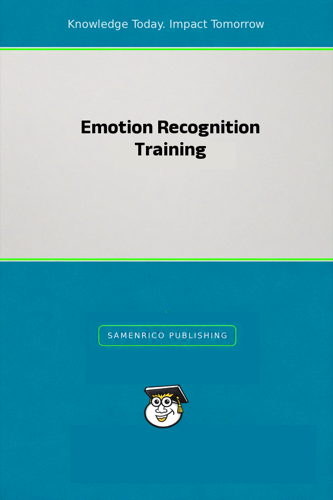
Free sample
Chapter 1: The Silent Conversation--–- Every time you look at another human being, you are reading a story. The corners of their mouth, the furrow between their brows, the tilt of their head, the tone of their voice—these are not random movements or meaningless sounds. They are sentences in a silent conversation that has been running for every moment of your life. You have been fluent in this language since infancy, long before you could speak a single word of English, Mandarin, or Spanish. You use it to decide whether someone is friend or foe, truth-teller or liar, lover or stranger.
And yet, like most people, you are probably not as good at it as you think you are.Consider this scene. A woman sits across from her husband at the dinner table. He has just returned from work. She asks, “How was your day?” He says, “Fine.” His voice is flat. His shoulders are slightly hunched.
He does not meet her eyes. She feels a flicker of irritation—why won’t he talk to her? She pushes harder. “Did something happen?” He says, “I said it was fine.” Now his jaw is tight. She feels rejected, then angry.
An hour later, they are not speaking. She goes to bed convinced he is angry with her. He lies awake wondering why she always assumes the worst. The truth? He lost a major account at work.
He is ashamed, not angry. He is afraid to tell her because he thinks she will be disappointed. His “fine” was not a rejection. It was a shield.This scene happens thousands of times every day, in thousands of homes, in dozens of languages. Two people, both feeling intensely, both misreading each other completely.
Neither one is malicious. Neither one is trying to hurt the other. They are simply emotionally illiterate—not because they are stupid or insensitive, but because no one ever taught them how to read the silent conversation.This book is going to teach you.The Hidden Curriculum of Human Success Let us begin with a question that sounds almost too simple to matter: What is the single most important skill for success in life?If you ask a hundred people, you will get a hundred answers. Grit. Luck.
Intelligence. Hard work. Connections. A good education. The right parents.
The right timing. All of these matter. But the research is now overwhelming: the ability to accurately recognize emotions in others is a stronger predictor of professional success, relationship satisfaction, and personal well-being than almost any other measurable trait.Let that sink in. Not IQ. Not your college degree.
Not your technical skills. Not even your work ethic. Your ability to look at another person and correctly identify what they are feeling.The data is startling. In a landmark study of over 500 professionals across finance, healthcare, education, and technology, researchers found that individuals who scored in the top quartile on emotion recognition tests earned an average of $29,000 more per year than those in the bottom quartile—even when controlling for education, experience, and cognitive ability. That is not a coincidence.
People who read emotions well are better negotiators, better managers, better salespeople, and better collaborators. They get promoted faster. They are trusted more. They are seen as more charismatic, more competent, and more likable.But the workplace is only the beginning. In romantic relationships, emotion recognition accuracy is one of the strongest predictors of long-term satisfaction and stability.
Couples who can accurately read each other’s facial expressions, vocal tones, and body language resolve conflicts faster, report deeper intimacy, and divorce at significantly lower rates. In parenting, mothers and fathers who recognize their children’s emotional states—even when those states are not openly expressed—raise children with higher self-esteem, better social skills, and fewer behavioral problems. In healthcare, doctors who accurately read patient anxiety and fear are sued less often and achieve better health outcomes. In law enforcement, officers trained in emotion recognition de-escalate potentially violent encounters more effectively.This is not magic. It is information.
Emotions are data. They tell you what a person needs, fears, wants, and intends. If you cannot read the data, you are flying blind. If you can read it, you have a map.The Great Misunderstanding: Empathy vs. Accuracy Before we go any further, we need to clear up one of the most common and damaging confusions in all of psychology.
Most people believe that being good with emotions means being empathetic—feeling what others feel. They imagine a warm, caring person who cries when others cry and laughs when others laugh. Empathy is beautiful. Empathy is essential for human connection. But empathy is not the same as accuracy, and confusing the two can get you into serious trouble.Empathy is feeling with someone.
Emotional accuracy (also called emotion recognition or emotion perception) is seeing what someone is feeling. You can be highly empathetic and completely inaccurate. In fact, the two often pull in opposite directions.Here is why. Empathy works through emotional contagion—the automatic tendency to mimic and synchronize with another person’s emotional expressions, which then triggers the same emotional state in you. When you see a sad face, your own facial muscles subtly mimic that sadness, and your brain interprets those muscle movements as sadness.
Suddenly, you feel sad too. This is a powerful bonding mechanism. But it is a terrible way to gather accurate information.Imagine you are a therapist. A client walks in, visibly distressed. If you are highly empathetic, you will immediately begin to feel distressed yourself.
Your heart rate will increase. Your muscles will tense. Your attention will narrow. You will be so busy feeling the client’s distress that you will have no cognitive bandwidth left to figure out why they are distressed, what kind of distress it is (anxiety? grief?
shame? anger?), or what they need from you. You will drown with them instead of helping them.Accuracy, by contrast, requires a degree of emotional detachment. You see the distress, you label it correctly, but you do not necessarily feel it. You remain calm, clear, and capable of responding strategically.
This is not coldness. It is competence. The best doctors, therapists, leaders, and parents are not the ones who feel the most. They are the ones who see the most clearly.Throughout this book, we will train your accuracy without killing your empathy. You will learn to recognize emotions without automatically absorbing them.
You will learn to see the data without drowning in it.The Cost of a Misread Face Let me tell you about a man named Gary. Gary was a high school principal in a small Midwestern town. He was respected, hardworking, and genuinely cared about his students. One afternoon, a fourteen-year-old boy named Marcus was sent to Gary’s office for disruptive behavior. Marcus sat in the chair across from Gary’s desk, arms crossed, jaw tight, eyes fixed on the floor.
Gary asked, “Do you want to tell me what happened?” Marcus said nothing. Gary asked again. Still nothing. Gary felt his own anger rising. He leaned forward and said, “I’m trying to help you, but you’re not helping yourself.…
This is the end of the free sample. Get the eBook to keep going. Buy now
About this book
Details
- Author
- Holliday Merri
- Publisher
- SamEnrico
- Language
- English
- Genre
- Non-Fiction, Self-Help / Recognition
- Released
- 2026-06-09
- Pages (approx.)
- 160
- Available as
- eBook, Audiobook

Read better in the ZLOADR app
Your eBooks on your phone or tablet. Sign in with your SamEnrico account and start reading.
More by Holliday Merri
 Working Memory For SurgeonsHolliday Merri$11.99
 Self Esteem After Baby LossHolliday Merri$11.99
 Detox Vomiting ManagementHolliday Merri$11.99
 Personal Branding Portfolio GuideHolliday Merri$11.99
 The Remote Flow State GuideHolliday Merri$11.99
 EMDR Trigger PreparationHolliday Merri$11.99
 Additional Insured EndorsementHolliday Merri$11.99
 Blood Moon: The Last Hunt of the Beast of GévaudanHolliday Merri$11.99
 A Collector's Handbook to the Aston Martin VantageHolliday Merri$11.99
 Airedale Terrier: King of TerriersHolliday Merri$11.99
 How to Produce a Safety LampHolliday Merri$11.99
 JEE Integer Type Question GuideHolliday Merri$12.99