
Non-FictionSelf-HelpElder Care
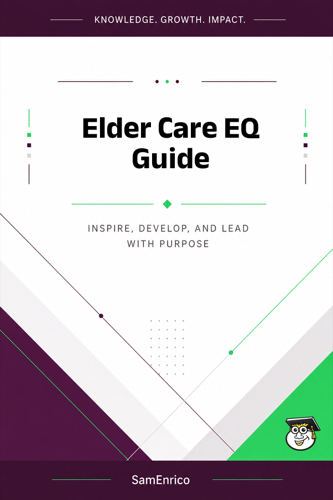
Elder Care EQ Guide eBook
Manage emotions of caring for aging parents.
by Bragg Staci
Manage emotions of caring for aging parents.
Formats
Free sample
Chapter 1: The Living Funeral--The first time your mother doesn't recognize you, something cracks that you didn't know could crack. It is not the dramatic shatter of a tragedy—no glass breaking, no scream, no sirens. It is quieter than that. She looks at you with the polite confusion she might offer a stranger at a bus stop, and you realize: the person who knew you before you knew yourself is, in some fundamental way, already gone. And yet she is still sitting right there, breathing, wearing the earrings you gave her last Christmas, asking you to pass the salt.This is the strange, unbearable middle place where elder care lives.
Your parent is not dead, so you cannot mourn. But your parent is not fully present, so you cannot celebrate. You are suspended in a limbo that has no name in ordinary language. The Greeks had a word for the love that remains after loss—philostorgos—but no common word for the grief that starts long before a heartbeat stops. Dr.
Pauline Boss, the family therapist who coined the term ambiguous loss, calls this the most stressful kind of human experience: the trauma of a loved one who is physically present but psychologically absent, or physically absent but psychologically present. For the caregiver of an aging parent, both conditions apply at once. Your parent is right there at the kitchen table, and your parent has already left you. You are holding a hand that is still warm, attached to a mind that is already cold in places you cannot map.This chapter is about giving that experience a name. Because here is a truth that every experienced caregiver learns but almost no one says aloud: you cannot manage what you cannot name.
The swirling fog of sadness, irritability, exhaustion, and numbness that follows you through your days has a source. It is grief. Not the grief of the funeral, not the grief of the obituary, not the grief that comes with black clothes and casseroles. It is ambiguous grief—the sorrow of losing someone in installments, the mourning of a future that will never arrive, the daily small death of watching a person unbecome themselves.And until you name it, it will own you.The Three Rivers of Ambiguous Grief Ambiguous grief is not a single feeling but a convergence of three distinct emotional currents. They flow together, often indistinguishable, but learning to see them separately is the first act of emotional intelligence in caregiving.
Think of them as three rivers that join to form the same wide, slow, muddy water.The first river is anticipatory grief.This is the mourning of a future you expected but will never have. You are grieving the vacation you always planned to take with your parents when you both had time. You are grieving the conversation where your father would finally explain why he left his first job, or the recipe your mother promised to teach you but now can no longer remember. You are grieving the holidays that will never again feel the way they felt when everyone was whole. Anticipatory grief is the cruelest form of hope defeated in advance.
It is the realization that the last good Thanksgiving already happened, and you didn't know it at the time. You were just eating turkey, not taking mental photographs, not memorizing the sound of your mother's laugh because you assumed there would be so many more.Anticipatory grief does not wait for permission. It arrives the first time you notice your parent slowing down, the first time they forget an appointment, the first time you have to help them stand up from a chair. It whispers: This is the beginning of the end. And you argue with it, because you are a good child and you believe in hope and you have read articles about the power of positive thinking.
But the whisper does not stop. It gets louder with every new limitation, every new diagnosis, every new piece of equipment delivered to the house. By the time the actual end arrives, anticipatory grief has already been living inside you for months or years. This is why some people cry harder at the diagnosis than at the death. The diagnosis is the first death.
Everything after is just watching the body catch up.The second river is the long goodbye.This is the daily accumulation of small losses. Not the big, dramatic losses—those almost feel like relief because at least they are clear. The long goodbye is the death by a thousand cuts. The day your parent stops being able to use the remote control. The day they ask you how to work the telephone they have used for thirty years.
The day they put the milk in the pantry and the cereal in the refrigerator. The day they look at a photograph of their own wedding and ask who those people are. The day they cannot remember how to sign their name. The day they stop asking about your children because your children have become strangers.Each of these losses is too small to grieve on its own. If you stopped to mourn every one, you would never get out of bed.
So you swallow them, one after another, until your throat is full of swallowed sorrows and you cannot remember what it felt like to have a conversation that did not require translation, repetition, or gentle redirection. The long goodbye is exhausting in a way that acute grief is not. Acute grief is a storm—violent, overwhelming, but eventually it passes. The long goodbye is a slow leak. You do not notice the water rising until you are drowning.Caregivers in the long goodbye often report feeling impatient and then immediately guilty about the impatience.
This is because the human brain is wired to seek resolution. We want stories to have endings. We want problems to have solutions. But the long goodbye offers neither. It offers only more of the same, day after day, with no climax and no conclusion until the very end.
The impatience is not a character flaw. It is a neurological response to an unresolvable situation. Your brain is screaming, When does this end? And the answer is: not yet. Possibly for a very long time.
Possibly for years.The third river is retrospective grief.This is the most disorienting of the three because it arrives after the fact. Retrospective grief is the realization that a moment you did not recognize as significant at the time was actually a last. The last time your parent walked unassisted. The last time they cooked a meal. The last time they called you by your childhood nickname.
The last time they remembered your birthday without a reminder. The last time they laughed at one of your jokes. You did not know these were lasts. You were just living your life, tired and distracted, thinking there would be another time. And then one day you realize that the last time happened weeks or months ago, and you did not mark it, did not honor it, did not even notice it.Retrospective grief is the sorrow of missed significance.
It is the feeling of looking back at a photograph and realizing that the person in the picture is already…
This is the end of the free sample. Get the eBook to keep going. Buy now
About this book
Details
- Author
- Bragg Staci
- Publisher
- SamEnrico
- Language
- English
- Genre
- Non-Fiction, Self-Help, Elder Care
- Released
- 2026-06-09
- Pages (approx.)
- 120
- Available as
- eBook, Audiobook

Read better in the ZLOADR app
Your eBooks on your phone or tablet. Sign in with your SamEnrico account and start reading.
More by Bragg Staci
 Nap for Stay at Home ParentsBragg Staci$11.99
 Couples Massage GuideBragg Staci$11.99
 Acupuncture for InsomniaBragg Staci$11.99
 Self Hypnosis for HypochondriaBragg Staci$11.99
 OKR For Pet Care GoalsBragg Staci$11.99
 Collaborative Mind Mapping GuideBragg Staci$11.99
 Circadian Hormone Tracking AppBragg Staci$11.99
 The Vanishing Billion: The Mysterious Disappearance of a Crypto FortuneBragg Staci$11.99
 The Fur Trade Kings: Hudson's Bay and the Birth of a NationBragg Staci$11.99
 How to Start a Mining Tool (powered Portable) Business (Beginners Guide)Bragg Staci$11.99
 One Page Podcast Promotion PlanBragg Staci$12.99
 Filipino Admin Assistant BlueprintBragg Staci$12.99
You may also like
 Hong Kong Handover 1997Dunn Johnnie$11.99
 Zumba For Postnatal Recovery CourseNeal Christian$11.99
 Zumba for BeginnersLadner Nikia$11.99
 YouTube Comment Mining GuideHumes Pandora$12.99
 Worry Box MeditationCarlin Rudy$11.99
 Workplace Stress MeditationNguyen Lynn$11.99
 Workplace Stress and Sleep RepairHawley Ivory$11.99
 Workplace Perfectionism CureDelaney Jeffry$11.99
 Workplace Injustice Anger GuideWallen Isabelle$11.99
 Work Addiction and Burnout LinkGreenwood Ester$11.99
 Women in Yoga and WellnessBeattie Galina$11.99
 Women in Stand Up ComedyChun Evangeline$11.99