

EFI Certified Export Guide eBook
Get Ethical Forestry Institute certification for s
Get Ethical Forestry Institute certification for sustainable timber exports to Europe.
Formats
Free sample
Chapter 1: The Rotterdam Wake-Up Call...–- The container vessel Maersk Bangkok had just docked at Rotterdam’s ECT Delta Terminal when Marta Costa’s phone buzzed with the email she had been dreading for six months. The message, from a senior customs inspector at the Netherlands Food and Consumer Product Safety Authority, was brutally concise: “Shipment #BR-2024-0892 – 422 metric tons of ipe decking – rejected. Reason: Incomplete geolocation data for harvest plots 17-B, 19-F, and 22-G. No proof of deforestation-free status for parcels harvested prior to December 31, 2020. Goods to be held at consignee’s expense.
Appeal window: 15 days.”Marta, the export compliance director for a mid-sized Brazilian timber operation, felt her stomach drop. The contract with the German buyer was worth €1.8 million. The container had already been in transit for 32 days. Demurrage charges were accruing at €450 per day. And her buyer had already threatened to cancel the order if delivery was delayed beyond the 45-day window.She had thought she was prepared.
Her company held Forest Stewardship Council certification. They had paid for third-party audits. They had even hired a consultant to review their paperwork. But none of that mattered now. The European Union Deforestation Regulation – known across the industry as EUDR – had changed the rules of the game, and Marta’s company had been caught on the wrong side of a regulatory shift that was about to reshape the global timber trade forever.This book is written to ensure that you are never Marta.The $45 Billion Door That Is Closing The European Union is the world’s largest importer of timber and timber products.
Every year, approximately $45 billion worth of wood – from tropical hardwoods for decking to softwood pulp for paper and construction lumber for Europe’s booming green building sector – crosses the borders of EU member states. For decades, exporting to Europe was a relatively straightforward proposition: meet the buyer’s specifications, comply with basic national forestry laws in your country of origin, and provide a commercial invoice.Those days are over.On June 29, 2023, the European Union adopted Regulation 2023/1115, known formally as the EU Deforestation Regulation and informally across the industry as EUDR. This regulation is not a minor update or a technical tweak to existing rules. It is a fundamental restructuring of the legal requirements for any operator – exporter, importer, or trader – who places timber, cattle, soy, coffee, cocoa, palm oil, or rubber on the EU market.The core mandate of EUDR is deceptively simple but operationally seismic: any timber product entering the EU must be proven, with documentary evidence, to have been produced on land that was not subject to deforestation after December 31, 2020. Additionally, the timber must have been harvested in full compliance with all applicable laws of the country of origin – including land use rights, environmental regulations, labor laws, and tax codes.This is not a voluntary certification scheme.
This is not a marketing label that you can choose to pursue or ignore. This is mandatory law. Starting in 2025 (with full enforcement expected by mid-2026), every shipment of timber that arrives at a European port without a completed, verifiable, and auditable Due Diligence Statement will be rejected. That timber will sit on the dock, accruing storage and demurrage fees, until it is either returned to its origin at the exporter’s expense or destroyed.The cost of non-compliance is not theoretical. In late 2024, the first wave of pilot enforcement actions under the precursor EU Timber Regulation (EUTR) resulted in over €150 million in fines and seized shipments.
Under EUDR, the penalties will be significantly steeper. Member states like Germany, France, and the Netherlands have already passed national legislation allowing for fines of up to 4% of a company’s annual global turnover – and in cases of intentional non-compliance or fraudulent declarations, prison sentences for company directors.Why Certification Alone No Longer Protects You One of the most dangerous misconceptions circulating in the timber export industry today is the belief that holding a Forest Stewardship Council (FSC) or Programme for the Endorsement of Forest Certification (PEFC) certificate automatically guarantees EUDR compliance. This is false.FSC and PEFC certification are voluntary, market-driven systems designed to promote sustainable forest management. They are valuable tools. They demonstrate that a forest operation meets certain environmental and social standards.
But they were not designed to meet the specific, data-intensive, legally binding requirements of EUDR. A forest can be FSC-certified today and still fail EUDR tomorrow if the certification audit did not verify geolocation data for every individual plot back to December 31, 2020.This gap between voluntary certification and mandatory regulatory compliance is precisely where the European Forest Institute (EFI) and its aligned certification standards have entered the picture.Understanding the European Forest Institute – And What It Is Not Before we go further, a critical clarification is necessary – one that will save you from the confusion that has already tripped up hundreds of exporters.The European Forest Institute (EFI) is not a certification body. It does not issue its own certificates. It does not have a logo that you can put on your packaging or marketing materials. If someone tells you that they have “EFI certification,” they are using imprecise shorthand.
The accurate terminology – and the terminology used throughout this book – is EFI-aligned certification.Here is how the system actually works. The European Forest Institute is a pan-European policy and research organization with 30 member countries. It does not directly audit or certify timber operations. Instead, EFI endorses and aligns with existing certification standards that meet its rigorous criteria for sustainability, legality, and traceability. The most prominent of these endorsed standards comes from an organization called Preferred by Nature (formerly known as NEPCon until 2019).Preferred by Nature maintains a suite of certification standards – including PBN-02 (Forest Management), PBN-03 (Chain of Custody), and PBN-05 (Controlled Wood) – that have been recognized by EFI as meeting the highest bar for EU market access.
When you achieve certification under these standards, you can legitimately describe your operation as “certified to EFI-aligned standards.” But the certificate itself is issued by Preferred by Nature, not by EFI.Why does this distinction matter? Because European customs authorities, buyers, and auditors are increasingly precise about terminology. Claiming “EFI certification” when no such thing exists could be interpreted as a misleading or even fraudulent statement under the EU’s anti-greenwashing directives. Throughout this book, when we refer to certification, we will be precise: we are discussing certification to EFI-aligned standards, primarily those administered by Preferred by Nature, with additional options from other EFI-endorsed bodies mentioned where relevant.The Three Frameworks You Must Understand To navigate the new European timber trade landscape, you need to understand three distinct but interconnected frameworks. Confusing them – as Marta’s company did – is the fastest route to a rejection notice in Rotterdam.Framework 1: The EU Deforestation Regulation (EUDR)As described above, EUDR is the mandatory law.
It applies to every operator placing timber on the EU market, regardless of whether that timber is certified or not. The core requirements are:Geolocation data for every plot of land where the timber was produced. This means latitude and longitude coordinates, with sufficient precision to identify the boundaries of the harvest area. Generalized location data (e.g., “municipality of Santarém”) is not acceptable.Deforestation-free status proven back…
This is the end of the free sample. Get the eBook to keep going. Buy now
About this book
Details
- Author
- Mcalister Jewel
- Publisher
- SamEnrico
- Language
- English
- Genre
- Non-Fiction, Business Brief, EFI
- Released
- 2026-05-30
- Pages (approx.)
- 153
- Available as
- eBook, Audiobook

Read better in the ZLOADR app
Your eBooks on your phone or tablet. Sign in with your SamEnrico account and start reading.
More by Mcalister Jewel
 Genetic Risk for ObesityMcalister Jewel$11.99
 Keto For Seniors HandbookMcalister Jewel$11.99
 Competitive Moats In Business Plans HandbookMcalister Jewel$11.99
 The Treehouse Hideaway GuideMcalister Jewel$11.99
 Elderly Parent Death AcceptanceMcalister Jewel$11.99
 Oisín and Niamh: The Forgotten Years of the Fairy LoverMcalister Jewel$11.99
 The Last Prisoner: The Unseen War on DrugsMcalister Jewel$11.99
 Jerry Yang Cash Patience ManualMcalister Jewel$12.99
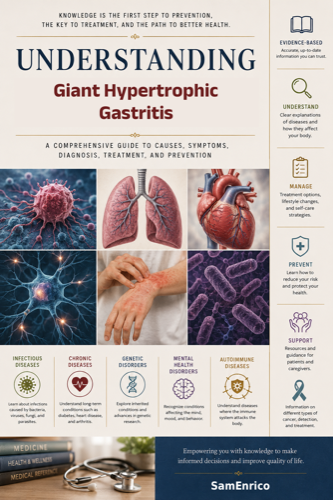 Understanding Giant Hypertrophic GastritisMcalister Jewel$17.99
 French TeacherMcalister Jewel$11.99
 How to Start a Cat and Dog Raising and Breeding Business (Beginners Guide)Mcalister Jewel$11.99
You may also like
 Hong Kong Handover 1997Dunn Johnnie$11.99
 Zumba For Postnatal Recovery CourseNeal Christian$11.99
 Zumba for BeginnersLadner Nikia$11.99
 YouTube Comment Mining GuideHumes Pandora$12.99
 Worry Box MeditationCarlin Rudy$11.99
 Workplace Stress MeditationNguyen Lynn$11.99
 Workplace Stress and Sleep RepairHawley Ivory$11.99
 Workplace Perfectionism CureDelaney Jeffry$11.99
 Workplace Injustice Anger GuideWallen Isabelle$11.99
 Work Addiction and Burnout LinkGreenwood Ester$11.99
 Women in Yoga and WellnessBeattie Galina$11.99
 Women in Stand Up ComedyChun Evangeline$11.99