
Non-FictionConsumer Mind ReportEducation
Education Spending Guide eBook
Contrast college vs alternative credentials, stude
by Cloud Elli
Contrast college vs alternative credentials, student debt tolerance, online course adoption, and parental support.
Formats
Free sample
Chapter 1: The $1.7 Trillion Lie--–- The letter arrived on a Tuesday, tucked between a pizza coupon and a credit card offer. Thin envelope. Return address from a state university. My neighbor, Sarah, opened it while standing at her kitchen counter, one hand holding a coffee mug, the other tearing the perforated edge. Inside was a single sheet of paper.
Not an acceptance letter—she had already celebrated that months ago. This was the financial aid offer for her daughter, Emily.The number at the bottom made Sarah sit down. Not because it was shockingly high. Because it was deceptively low."Total estimated family contribution after aid: $24,000 per year."Sarah looked at me over the rim of her coffee mug, her face caught between relief and confusion. "That's not so bad, right?
I mean, for a good education?"What Sarah didn't know—what no one had told her—was that the number on that page was a lie. Not a typo. Not a mistake. A carefully constructed, legally compliant, systematically deceptive lie designed to make a 96,000investmentoverfouryearsfeellikeamanageable96,000 investment over four years feel like a manageable 96,000investmentoverfouryearsfeellikeamanageable24,000 annual expense. The truth would take another three years to reveal itself: after interest capitalization, after lost wages from her daughter's unpaid summer internships, after the gap between the "expected starting salary" printed in the career center brochure and the actual job offer Emily received.
The real cost would approach 180,000.Therealstartingsalarywouldbe180,000. The real starting salary would be 180,000.Therealstartingsalarywouldbe38,000.Sarah is not unusual. She is not irresponsible. She is not financially illiterate. Sarah is a certified public accountant.If a CPA cannot see through the financial aid lie, the problem is not with parents.
The problem is with the system itself.The Number That Changed Everything Let me give you a number that will appear in this chapter more than any other: 44 million. That is how many Americans currently hold student loan debt. Not 44 million people who borrowed for medical school or law school or a top-tier MBA. Forty-four million Americans across every income bracket, every profession, every level of educational attainment. The total balance of their loans exceeds $1.7 trillion.To understand what 1.7trillionmeans,youhavetostopthinkinglikeaneconomistandstartthinkinglikeaparent.Onepointseventrilliondollarsislargerthantheentireeconomicoutputof Australia.Itismorethanthecombinedconsumerdebtofevery Americancreditcardholder.Itisroughly1.7 trillion means, you have to stop thinking like an economist and start thinking like a parent.
One point seven trillion dollars is larger than the entire economic output of Australia. It is more than the combined consumer debt of every American credit card holder. It is roughly 1.7trillionmeans,youhavetostopthinkinglikeaneconomistandstartthinkinglikeaparent.Onepointseventrilliondollarsislargerthantheentireeconomicoutputof Australia.Itismorethanthecombinedconsumerdebtofevery Americancreditcardholder.Itisroughly520 for every man, woman, and child in the United States—including newborns.But numbers like that are abstract. They float above our lives like weather systems, real but not personal. So let me make it personal.The average borrower between the ages of 25 and 34 carries 33,000instudentdebt.Thatisnotamortgage.Itisnotacarloan.Itisamonthlypaymentofroughly33,000 in student debt.
That is not a mortgage. It is not a car loan. It is a monthly payment of roughly 33,000instudentdebt.Thatisnotamortgage.Itisnotacarloan.Itisamonthlypaymentofroughly350 for ten years—350thatcannotgotowardadownpaymentonahouse,350 that cannot go toward a down payment on a house, 350thatcannotgotowardadownpaymentonahouse,350 that cannot go into a retirement account, 350thatcannotbesavedforachild′sfutureeducation.Overadecade,that350 that cannot be saved for a child's future education. Over a decade, that 350thatcannotbesavedforachild′sfutureeducation.Overadecade,that350 per month adds up to 42,000inpayments,ofwhich42,000 in payments, of which 42,000inpayments,ofwhich9,000 is pure interest that buys nothing except the privilege of having borrowed.But here is the part that keeps education reformers awake at night: the 33,000averageismisleading.Ithidesthedistribution.Foreveryborrowerwhoowes33,000 average is misleading. It hides the distribution.
For every borrower who owes 33,000averageismisleading.Ithidesthedistribution.Foreveryborrowerwhoowes10,000, there is another who owes $60,000. For every graduate who paid off their loans in five years, there is a parent who cosigned a PLUS loan and will still be paying when their grandchildren are in middle school.I have sat across from families in all four corners of this distribution. The ones who borrowed 15,000foracommunitycollegenursingdegreeandpaiditoffineighteenmonths.Theoneswhoborrowed15,000 for a community college nursing degree and paid it off in eighteen months. The ones who borrowed 15,000foracommunitycollegenursingdegreeandpaiditoffineighteenmonths.Theoneswhoborrowed80,000 for a bachelor's degree in communications and now work as a front desk coordinator making 35,000.Theoneswhoborrowed35,000. The ones who borrowed 35,000.Theoneswhoborrowed200,000 for a private university and now live in their parents' basement because the loan payment alone consumes 70 percent of their take-home pay.They all made the same mistake, and it was not laziness, ignorance, or irresponsibility.
It was trusting the system.The Two Narratives That Are Both True (And That's the Problem)Before we go any further, I need to acknowledge something uncomfortable. There are two competing narratives about education spending in America, and both of them are correct. This is not a situation where one side is lying and the other side has the truth. This is a situation where the truth is complicated, and the simple versions of the truth are killing families financially.Narrative One: The Wage Premium College graduates earn significantly more than non-graduates over their lifetimes. The numbers are real: a bachelor's degree holder will earn approximately 75 percent more than a high school graduate over a forty-year career.
For the average worker, that difference is about $1.2 million in additional lifetime earnings. The unemployment rate for college graduates consistently runs about half that of workers with only a high school diploma.This narrative is supported by decades of labor market data from the Bureau of Labor Statistics, the Federal Reserve, and every major economics department in the country. It is not propaganda. It is not marketing from the university system. It is real.Narrative Two: The Underemployment Reality Forty percent of recent college graduates work in jobs that do not require a four-year degree.
That is not 40 percent of all graduates—that is 40 percent of graduates who finished school within the last five years. They are waiting tables, driving for ride-sharing services, working retail, answering phones in call centers. Their degrees are not helping them earn more than a high school graduate would earn in the same role. In fact, in many cases, the high school graduate who started working at eighteen is ahead financially because they have four years of earnings and zero debt.This narrative is also supported by rigorous data, including the Federal Reserve Bank of New York's Labor Market Survey and the Strada Institute's research on underemployment.Both narratives are true. Both narratives are published by reputable sources.
Both narratives are cited by politicians, pundits, and parents to support whatever conclusion they already wanted to reach.The problem is not that one narrative is false. The problem is that both narratives ignore the question that actually matters for your family.The question is not: "Is college worth it on average?"The question is: "Is this specific college, for this specific major, for this specific student, worth this specific amount of debt?"Average statistics do not raise children. Average statistics do not cosign loans. Average statistics do not wake up at 3 AM wondering if they made a $200,000 mistake. You are not an average.
Your child is not an average. And the average return on investment for all degrees across all schools for all students tells you absolutely nothing about whether your family should borrow money for a private university's philosophy program.The Most Expensive Question Parents Ask…
This is the end of the free sample. Get the eBook to keep going. Buy now
About this book
Details
- Author
- Cloud Elli
- Publisher
- SamEnrico
- Language
- English
- Genre
- Non-Fiction, Consumer Mind Report, Education
- Released
- 2026-06-01
- Pages (approx.)
- 153
- Available as
- eBook, Audiobook

Read better in the ZLOADR app
Your eBooks on your phone or tablet. Sign in with your SamEnrico account and start reading.
More by Cloud Elli
 Non US Amazon FBA Launch GuideCloud Elli$11.99
 Improv Audio Game CollectionCloud Elli$11.99
 Fear Of Failure Origins GuideCloud Elli$11.99
 Cozy Cabin Winter VisualizationCloud Elli$11.99
 The Retail Cloud Transformation OutlookCloud Elli$11.99
 Fionn Mac Cumhaill: The Giant Who Shaped the LandCloud Elli$11.99
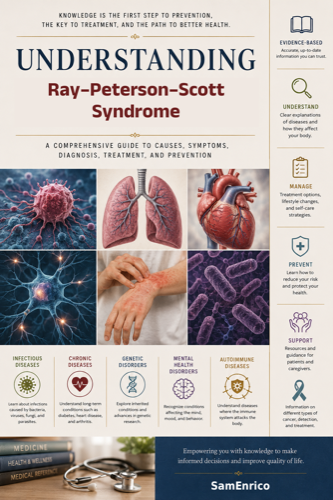 Understanding Ray–Peterson–Scott SyndromeCloud Elli$17.99
 Multi Member LLC Non ResidentCloud Elli$12.99
 Home Health Physical TherapistCloud Elli$11.99
 How to Become a Poacher OperatorCloud Elli$11.99
You may also like
 Hong Kong Handover 1997Dunn Johnnie$11.99
 Zumba For Postnatal Recovery CourseNeal Christian$11.99
 Zumba for BeginnersLadner Nikia$11.99
 YouTube Comment Mining GuideHumes Pandora$12.99
 Worry Box MeditationCarlin Rudy$11.99
 Workplace Stress MeditationNguyen Lynn$11.99
 Workplace Stress and Sleep RepairHawley Ivory$11.99
 Workplace Perfectionism CureDelaney Jeffry$11.99
 Workplace Injustice Anger GuideWallen Isabelle$11.99
 Work Addiction and Burnout LinkGreenwood Ester$11.99
 Women in Yoga and WellnessBeattie Galina$11.99
 Women in Stand Up ComedyChun Evangeline$11.99