
Non-FictionHealth & WellnessJournaling
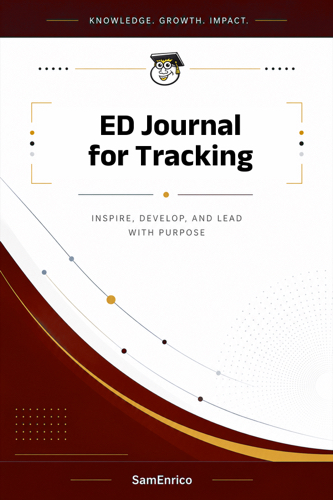
ED Journal for Tracking eBook
Logs episodes, triggers, and progress.
by Morrow Taryn
Logs episodes, triggers, and progress.
Formats
Free sample
Chapter 1: Naming the Enemy...--–- You are about to do something that feels deeply unnatural. You are going to take the voice that has been whispering, shouting, or calmly instructing you for months or years, and you are going to give it a name. You are going to draw a boundary between that voice and who you actually are. And in doing so, you will take the first step toward turning this journal from a record of your failures into a witness statement against the disorder that has been masquerading as you.If you have ever kept a food diary before, you know the pattern. You write down what you ate.
Maybe you write down when you ate it. Sometimes you add a column for calories, or for how guilty you felt afterward. And then you read it back days later and feel a familiar sickness in your stomach—not because of the food, but because the journal looks like a confession. Page after page of evidence that you are out of control, or too controlled, or broken in some fundamental way that other people don't seem to be. The journal becomes an indictment.
And eventually, you stop writing in it, because who wants to keep a record of their own sentencing?This book is not that journal.The single most important difference between this journal and every other log you may have tried is contained in the pages that follow. It is a principle so simple that it can feel almost silly, and so powerful that it has formed the backbone of some of the most effective eating disorder treatments in existence, including narrative therapy and Cognitive Behavioral Therapy-Enhanced (CBT-E). The principle is this: You are not your eating disorder.That sentence looks obvious. It reads like a bumper sticker. But if you sit with it for a moment, you will likely notice a part of you that resists.
A part that says, "But the eating disorder comes from me. It is my thoughts. My behaviors. My body. How can it not be me?"That resistance is the voice we are going to name.The Illusion of Ownership Eating disorders are unique among mental health conditions in how completely they colonize a person's sense of self.
Depression might feel like a heavy blanket draped over you—unpleasant, but distinguishable from your core identity. Anxiety might feel like an alarm system that triggers too easily—annoying, but you know the alarm is not who you are. But an eating disorder? An eating disorder speaks in your voice, about your body, using your memories and fears and hopes as ammunition. It does not feel like an invader.
It feels like you.This is the disorder's most effective camouflage.Think about the last time you had a thought that you now recognize as belonging to the eating disorder. Maybe it was "I can't eat that, I don't deserve it." Maybe it was "If I gain one more pound, I will be worthless." Maybe it was "Everyone is looking at my body and judging me right now." When that thought arrived, did it arrive with a neon sign that said "WARNING: THIS IS AN EATING DISORDER THOUGHT"? Of course not. It arrived as simply your thought. It felt like the truth.
It may have felt like the only truth.This is what researchers call "ego-syntonic" thinking—thoughts and beliefs that feel aligned with the self, that feel true and correct rather than foreign and intrusive. The eating disorder is exquisitely ego-syntonic. It does not announce itself as an illness. It announces itself as common sense, as self-improvement, as discipline, as the voice of reason in a world that wants you to let yourself go.The first task of recovery, then, is not to stop the thoughts. You cannot stop thoughts by trying to stop them—that is like trying to tell your heart not to beat.
The first task is to change your relationship to the thoughts. And you cannot change your relationship to something until you can see it as separate from yourself.That is what this chapter is for.The Externalization Principle In narrative therapy, there is a technique called externalization. The premise is simple: the problem is the problem, the person is not the problem. When a client says "I am so anxious," the narrative therapist might say, "Tell me about this anxiety. When did it first arrive?
What does it want you to believe? How does it trick you into doing things you don't actually want to do?"Notice the shift. The anxiety is no longer an identity trait. It is a visiting entity with its own motivations and tactics. This small linguistic shift creates psychological distance.
And psychological distance creates the possibility of choice. You cannot choose how to respond to a thought that you believe is you. You can only obey it or fight it, and both options keep you trapped in its frame. But when you see the thought as coming from something other than you, you can observe it, question it, and decide whether to accept its recommendation.Externalization is not about avoiding responsibility. It is about accurately locating responsibility.
If a neighbor's dog barks all night, you do not blame yourself for being unable to sleep. You recognize that the dog is barking, and you decide what to do about it—close the window, get earplugs, talk to the neighbor. You do not lie awake thinking "I am a terrible person for being bothered by this sound." The dog is the dog. You are you.Your eating disorder is the barking dog. It is loud, persistent, and entirely convinced that its noise is justified.
But it is not you.Worksheet: Name Your EDBefore you read further, you are going to do something that may feel strange. You are going to give your eating disorder a name.Not a clinical name—not "anorexia nervosa" or "bulimia nervosa" or "binge eating disorder." Those are diagnostic labels that describe patterns of behavior. They are useful for doctors and insurance companies. They are not useful for this. You are going to give your eating disorder a personal name, the way you might name a difficult neighbor or a persistent salesperson who keeps calling.Some people name their ED "Ed." Short, simple, and it turns the disorder into a specific character with a specific name.
Some people choose names that reflect the voice's personality—"The Judge," "The Warden," "The Perfectionist," "The Whispers." Some people choose silly names like "Greg" or "Karen" because it is hard to be intimidated by a voice named Karen. Some people choose names from mythology or fiction—"Gollum," "Voldemort," "The Nothing." There is no wrong answer. The only requirement is that the name feels distinct from your own.Take out a piece of paper or open a new note on your phone. Write down three possible names. Say them out loud.
Which one makes you feel a tiny flicker of separation? Which one makes you think "That is not me"? That is your answer.For the rest of this journal, you will refer to your eating disorder by that name. When you log an episode…
This is the end of the free sample. Get the eBook to keep going. Buy now
About this book
Details
- Author
- Morrow Taryn
- Publisher
- SamEnrico
- Language
- English
- Genre
- Non-Fiction, Health & Wellness, Journaling
- Released
- 2026-06-05
- Pages (approx.)
- 155
- Available as
- eBook, Audiobook

Read better in the ZLOADR app
Your eBooks on your phone or tablet. Sign in with your SamEnrico account and start reading.
More by Morrow Taryn
 Parental Insomnia SolutionsMorrow Taryn$11.99
 Men Silent Depression SignsMorrow Taryn$11.99
 Palace Study RoutineMorrow Taryn$11.99
 Time Distortion Trance GuideMorrow Taryn$11.99
 The Neuroscience of EmpathyMorrow Taryn$11.99
 Parenting Patience AnchorMorrow Taryn$11.99
 REIT Short SellingMorrow Taryn$11.99
 The Battle of Borodino: Napoleon’s Pyric VictoryMorrow Taryn$11.99
 Inanna and the Forbidden Descent: A Love That Defied the GodsMorrow Taryn$11.99
 How to Produce FeijoasMorrow Taryn$11.99
 A Collector's Handbook to the Alta 9 HPMorrow Taryn$11.99
 How to Produce RivetsMorrow Taryn$11.99
You may also like
 Hong Kong Handover 1997Dunn Johnnie$11.99
 Zumba For Postnatal Recovery CourseNeal Christian$11.99
 Zumba for BeginnersLadner Nikia$11.99
 YouTube Comment Mining GuideHumes Pandora$12.99
 Worry Box MeditationCarlin Rudy$11.99
 Workplace Stress MeditationNguyen Lynn$11.99
 Workplace Stress and Sleep RepairHawley Ivory$11.99
 Workplace Perfectionism CureDelaney Jeffry$11.99
 Workplace Injustice Anger GuideWallen Isabelle$11.99
 Work Addiction and Burnout LinkGreenwood Ester$11.99
 Women in Yoga and WellnessBeattie Galina$11.99
 Women in Stand Up ComedyChun Evangeline$11.99