
Non-FictionHealth & WellnessAssessment
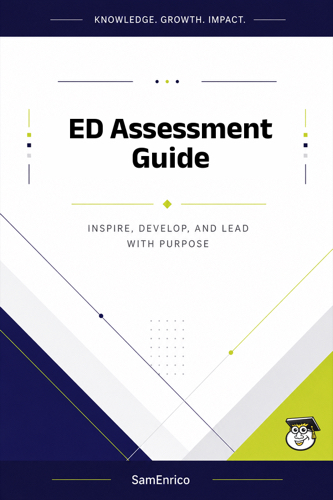
ED Assessment Guide eBook
Evaluate severity using validated questionnaires l
Evaluate severity using validated questionnaires like IIEF.
Formats
Free sample
Chapter 1: Beyond "It's Fine"--–- The patient sitting across from you is not trying to mislead you. He is trying to protect himself. When you ask, "How are things in the bedroom?" and he answers, "It's fine, just stress at work," he is not lying. He is summarizing. He is condensing months of frustration, embarrassment, and quiet desperation into a single word that he hopes will end the conversation before it becomes unbearable.
And if you accept that answer—if you nod, write "no sexual dysfunction" in your note, and move on—you have failed him. Not because you are a bad clinician. Because you have relied on a method that is structurally incapable of capturing the truth.This is the central problem of erectile dysfunction assessment. The symptom itself—the inability to achieve or maintain an erection sufficient for satisfactory sexual performance—carries a weight that few other medical complaints approach. It is experienced as a failure of masculinity.
It is hidden from partners, friends, and often from the patient's own conscious awareness. It is rationalized, minimized, and attributed to external causes: work stress, fatigue, the relationship, age. The patient who says "it's fine" may have spent the past three years avoiding sexual encounters, declining his partner's advances, and waking each morning with a sense of dread about his failing body. But he will not tell you this in response to an open-ended question. The psychological barriers are too high.
The shame is too deep.The traditional narrative sexual history, passed down through generations of medical training, is built on an assumption that collapses entirely in the face of erectile dysfunction: the assumption that patients are both willing and able to accurately report their own symptoms. For chest pain, this assumption holds reasonably well. For shortness of breath, it holds. For erectile dysfunction, it does not. The symptom is too stigmatized, the recall task too complex, the language too imprecise.
The result is a clinical encounter that feels comfortable for both parties—the patient avoids disclosure, the clinician avoids discomfort—but produces nothing of value. The patient leaves without help. The clinician leaves with a false sense of having addressed the issue.This chapter dismantles the assumptions underlying the traditional approach and builds the case for a fundamentally different method: standardized, validated questionnaires that transform a shame-laden, imprecise complaint into a crisp, numerical, actionable score. The Sexual Health Inventory for Men (SHIM) and the full International Index of Erectile Function (IIEF) are not cold instruments that replace clinical judgment. They are tools that enable it.
They give patients permission to disclose. They give clinicians a common language. They turn "it's fine" into data. And they are, without question, the minimum standard of care for any clinician who evaluates men with erectile dysfunction.Why "How Are Things?" Is a Dangerous Question The open-ended question is a cornerstone of patient-centered communication. "Tell me about your problem." "How have things been?" "What brings you in today?" These questions invite narrative, build rapport, and allow patients to prioritize what matters most to them.
In most domains of medicine, they are invaluable. In sexual medicine, they are a trap.The danger begins with the nature of the symptom. Erectile dysfunction is unique among common medical complaints in that it is experienced as a moral failing rather than a medical condition. Patients do not say "My blood vessels are not functioning properly." They say "I can't perform." The language of performance, of success and failure, of adequacy and inadequacy, pervades both the patient's internal experience and the cultural discourse around male sexuality. To admit erectile dysfunction is to admit inadequacy as a man.
This is not hyperbole. Qualitative studies of men with ED consistently find themes of shame, emasculation, and loss of identity. One man in a focus group said, "I would rather tell my doctor I was using heroin than tell him I couldn't get an erection." Another said, "It feels like my body is betraying me, and admitting it out loud makes it real."The open-ended question asks a patient to volunteer this admission. It asks him to choose the words, to raise the topic, to expose his vulnerability without any script or shield. This is an unreasonable demand.
The patient will almost always respond with minimization, deflection, or outright denial. "It's fine." "Could be better." "Just getting older." "Work has been crazy." These are not data. They are defenses. And the clinician who accepts them has been outmaneuvered by the patient's own psychological protection mechanisms.The second danger is the structure of memory. Sexual function is episodic, not continuous.
The patient does not have a stable "erection quality" that persists unchanged over time. He has a series of discrete encounters, each with its own context, partner, mood, and outcome. To answer "How are things?" he must retrieve these episodic memories, evaluate each one, weight them by recency and emotional intensity, and produce a summary judgment. This is a computationally complex task, and the human brain takes shortcuts. The most salient encounters—usually the most recent and the most emotionally charged—dominate the summary.
A patient who had ten successful erections and one catastrophic failure will remember the failure and report dysfunction. A patient who had ten failures and one success will remember the success and report normal function. The open-ended question does not correct for these heuristics. It amplifies them.The third danger is the absence of a shared vocabulary. The clinician and patient may use the same words to mean different things.
"Hard" to one patient means full rigidity sufficient for penetration. To another, it means any detectable tumescence. "Maintain" to one patient means for the duration of intercourse. To another, it means for thirty seconds. "Sometimes" to one patient means one out of ten attempts.
To another, it means half. Without anchored response options, these terms are functionally meaningless. The clinician who hears "sometimes I have trouble" has no idea whether the patient means rare difficulty or near-constant failure. The clinical response—reassurance vs. aggressive treatment—depends entirely on this distinction.
The open-ended question cannot make it.The Solution Hiding in Plain Sight The solution to all three dangers—shame, recall bias, and vague language—has been available for over two decades. The International Index of Erectile Function (IIEF) was developed in the 1990s as a psychometrically sound, multi-domain instrument for assessing male sexual function. Its short form, the Sexual Health Inventory for Men (SHIM), was validated shortly thereafter and has become the most widely used ED screening tool in the world. These instruments are not experimental. They are not optional.
They are the standard of care.The SHIM consists of five questions, each with five or six anchored response options. It takes less than two minutes to complete. It can be self-administered in the waiting room, completed on a tablet, or filled out at home before the visit. It produces a score from 5 to 25, with validated cutoffs for no ED (22-25), mild ED (17-21), mild-moderate ED (12-16), moderate ED (8-11), and severe ED (5-7). It is free, in the public domain, and available in dozens of languages.
There is no excuse for not using it.But the SHIM is more than a screening tool. It is a psychological…
This is the end of the free sample. Get the eBook to keep going. Buy now
About this book
Details
- Author
- Ashmore Lashandra
- Publisher
- SamEnrico
- Language
- English
- Genre
- Non-Fiction, Health & Wellness, Assessment
- Released
- 2026-06-08
- Pages (approx.)
- 145
- Available as
- eBook, Audiobook

Read better in the ZLOADR app
Your eBooks on your phone or tablet. Sign in with your SamEnrico account and start reading.
More by Ashmore Lashandra
 Validation For DisabilityAshmore Lashandra$11.99
 The Parent Anger Support GroupAshmore Lashandra$11.99
 Underearners Anonymous Step GuideAshmore Lashandra$11.99
 The MO Learning Curve GuideAshmore Lashandra$11.99
 The Beast of Gévaudan: France's Unstoppable WolfAshmore Lashandra$11.99
 MillinerAshmore Lashandra$11.99
 Register .eu Domain GuideAshmore Lashandra$12.99
 PR for Edtech StartupsAshmore Lashandra$12.99
 The Breeder's Guide to Orpington ChickensAshmore Lashandra$11.99
 How to Become a Outsole SchedulerAshmore Lashandra$11.99
You may also like
 Hong Kong Handover 1997Dunn Johnnie$11.99
 Zumba For Postnatal Recovery CourseNeal Christian$11.99
 Zumba for BeginnersLadner Nikia$11.99
 YouTube Comment Mining GuideHumes Pandora$12.99
 Worry Box MeditationCarlin Rudy$11.99
 Workplace Stress MeditationNguyen Lynn$11.99
 Workplace Stress and Sleep RepairHawley Ivory$11.99
 Workplace Perfectionism CureDelaney Jeffry$11.99
 Workplace Injustice Anger GuideWallen Isabelle$11.99
 Work Addiction and Burnout LinkGreenwood Ester$11.99
 Women in Yoga and WellnessBeattie Galina$11.99
 Women in Stand Up ComedyChun Evangeline$11.99