
Non-FictionStudent's ShortcutFinancial Reporting
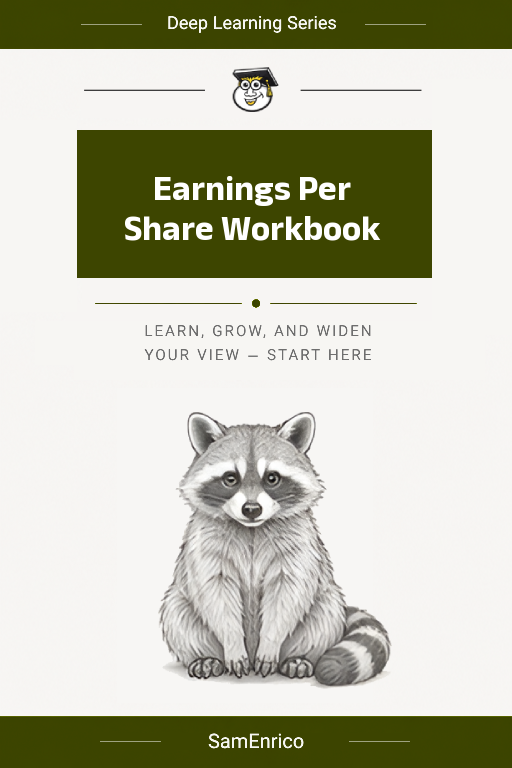
Earnings Per Share Workbook
Calculate basic and diluted EPS for public compani
by Vo Theo
Calculate basic and diluted EPS for public companies. Apply formulas including weighted average shares and convertible securities.
Formats
About this book
Free sample
Chapter 1: The Investor’s Yardstick--–- Earnings per share. Three simple words that move markets, determine executive bonuses, and can add or erase billions in shareholder value overnight. Yet for all its power, EPS remains one of the most misunderstood and miscalculated metrics in all of finance. This chapter begins not with formulas, but with a question: Why does EPS matter so much, and what happens when you get it wrong?The answer lies in a simple but devastating truth. Every day, professional investors make buy and sell decisions based on comparisons between reported EPS and analyst forecasts.
A penny beat sends stocks soaring. A penny miss triggers double-digit declines. Behind these movements are real companies with real employees, real retirees depending on pension funds, and real families whose savings are tied to market performance. When EPS is calculated incorrectly, those decisions are built on faulty foundations.Consider the case of a well-known technology company that restated its EPS for three fiscal years due to errors in its diluted share count. The restatement reduced reported EPS by an average of eight percent across the affected periods.
Shareholders who sold based on the originally reported numbers had no recourse. Investors who held lost real value overnight. The accounting firm paid a nine-figure settlement, but the reputational damage to the company persisted for years.This workbook exists to ensure you never make those errors. Before you calculate a single weighted average share or apply the treasury stock method, you must understand what EPS represents, why it commands such attention, and how your calculations will be used by decision-makers. This chapter builds that foundation.The Valuation Power of a Single Number EPS sits at the center of virtually every equity valuation model.
The most widely used valuation metric in the world—the price-to-earnings ratio—is simply price divided by EPS. When an analyst says a stock trades at fifteen times earnings, they mean the stock price is fifteen times the company’s earnings per share. A higher multiple suggests the market expects future growth; a lower multiple suggests skepticism or distress.But the math cuts both ways.…
This is the end of the free sample. Get the eBook to keep going. Buy now
Contents
- Chapter 1
- Chapter 2
- Chapter 3
- Chapter 4
- Chapter 5
- Chapter 6
- Chapter 7
- Chapter 8
- Chapter 9
- Chapter 10
- Chapter 11
- Chapter 12
Details
- Author
- Vo Theo
- Publisher
- SamEnrico
- Language
- English
- Genre
- Non-Fiction, Student's Shortcut, Financial Reporting
- Released
- 2026-06-01
- Pages (approx.)
- 157
- Available as
- eBook, Audiobook

Read better in the ZLOADR app
Your eBooks on your phone or tablet. Sign in with your SamEnrico account and start reading.
More by Vo Theo
 Job Search Schedule Discipline GuideVo Theo$11.99
 Indian GST Registration Number Verification CourseVo Theo$11.99
 Metaphor Persuasion GuideVo Theo$11.99
 The Freelance Non compete LoopholeVo Theo$11.99
 Fiverr Gig Creation ManualVo Theo$11.99
 Dance Moms Child Star TraumaVo Theo$11.99
 The Pomodoro Time Block FusionVo Theo$11.99
 Scripting Books GuideVo Theo$11.99
 Walton Family TrustVo Theo$11.99
 The Quantum Leap: How IBM's Eagle Unlocked the FutureVo Theo$11.99
 The Phantom of the Pentagon: The Deep Cover Spy Who Outwitted the Cold WarVo Theo$11.99
 Blood and Silk: Suleiman the Magnificent's Siege of Rhodes (1522)Vo Theo$11.99
You may also like
 Hong Kong Handover 1997Dunn Johnnie$11.99
 Zumba For Postnatal Recovery CourseNeal Christian$11.99
 Zumba for BeginnersLadner Nikia$11.99
 YouTube Comment Mining GuideHumes Pandora$12.99
 Worry Box MeditationCarlin Rudy$11.99
 Workplace Stress MeditationNguyen Lynn$11.99
 Workplace Stress and Sleep RepairHawley Ivory$11.99
 Workplace Perfectionism CureDelaney Jeffry$11.99
 Workplace Injustice Anger GuideWallen Isabelle$11.99
 Work Addiction and Burnout LinkGreenwood Ester$11.99
 Women in Yoga and WellnessBeattie Galina$11.99
 Women in Stand Up ComedyChun Evangeline$11.99