
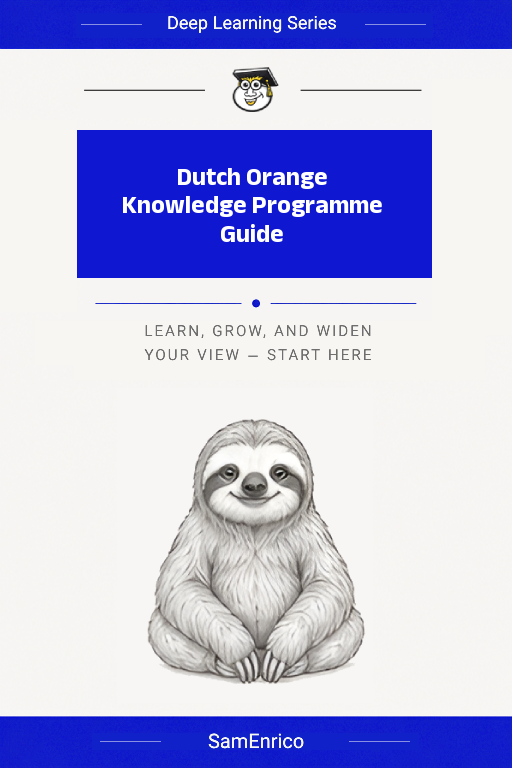
Dutch Orange Knowledge Programme Guide eBook
Access Netherlands government funding for mid-care
by Seal Gaye
Access Netherlands government funding for mid-career professionals from Africa, with course matching and employer endorsement strategies for OKP scholarships.
Formats
Free sample
Chapter 1: The Secret Map--–- In the back offices of the Dutch Ministry of Foreign Affairs, there exists a document that determines the fate of every single Orange Knowledge Programme application submitted from Africa. Most applicants have never heard of it. Fewer than five percent will ever read it. Yet without it, your chances of securing OKP funding drop from possible to nearly impossible.This document is not a budget spreadsheet or a visa regulation. It is not a secret formula or a classified policy.
It is something far more mundane and far more powerful: the Country Focus Document. And it is the closest thing the OKP has to a treasure map.For years, talented mid-career professionals have poured weeks of labour into their OKP applications—drafting motivation letters, securing employer signatures, retaking IELTS exams—only to receive the same polite rejection: “Your application does not align with the current priorities of the programme.” They blame their writing skills. They blame their test scores. They blame bad luck. But in most cases, the real culprit is far simpler and far more avoidable: they applied to the wrong country window.This chapter will reveal why not all African nations are equal in the eyes of the OKP, how to decode your country’s unique priority matrix, and why a brilliant application for Water Management from a Kenyan engineer might be an instant rejection for a Ghanaian counterpart—even with identical qualifications.
By the end of this chapter, you will understand the single most important rule of the OKP: alignment with your country’s specific focus document is not a scoring criterion. It is a binary gatekeeper. Pass through it, and your application gets read. Fail to pass, and it goes directly into the rejection pile, unread by human eyes.The Geography of Funding: Why Your Passport Matters More Than Your Grades The Orange Knowledge Programme is not a universal scholarship. Unlike the Erasmus Mundus programme, which offers the same opportunities to applicants from any participating country, or the Fulbright programme, which operates on bilateral agreements with relatively consistent terms, the OKP is explicitly and proudly differentiated by geography.
The Dutch government allocates its development budget based on strategic bilateral relationships, historical ties, and measurable development gaps. As a result, an applicant from South Africa competes in a completely different funding pool than an applicant from Ethiopia, even if they apply for the exact same Master’s programme at Wageningen University.This is not a flaw in the system. It is a deliberate design choice. The Netherlands maintains a focused development agenda that prioritises specific sectors in specific countries. For example, the Dutch embassy in Kenya invests heavily in water management and food security because those are the sectors where Kenya has both critical needs and a receptive government.
The Dutch embassy in Ghana, by contrast, prioritises governance and extractives transparency because Ghana’s development challenges lie in corruption, revenue management, and rule of law. A water engineer in Ghana faces an uphill battle for OKP funding—not because water management is unimportant in Ghana, but because it is not the current bilateral priority.Understanding this geography of funding is the first step toward a winning application. Before you write a single word of your motivation letter, before you contact a Dutch university’s OKP focal point, before you ask your employer for a signature, you must answer one question: What does my country’s Dutch embassy want to fund this year?The Country Focus Document: Your Rosetta Stone Every eligible African nation participating in the OKP has a formal document known as the Country Focus Document. These documents are published by the Dutch embassies in collaboration with Nuffic and are updated approximately every two to four years. They are publicly available—though often buried deep on embassy websites or Nuffic’s partner portal—and they contain the single most valuable information an applicant can possess: the list of priority themes and sub-themes that will receive funding in the current cycle.Let us look at a real example.
The Country Focus Document for Kenya (2023–2025) lists three primary priority areas:Water and Food Security (with sub-themes including irrigation efficiency, post-harvest loss reduction, and drought resilience)Sustainable Energy (with sub-themes including off-grid solar and biomass)Reproductive Health (with sub-themes including adolescent health and family planning)An application that touches any of these themes—even tangentially—has a chance. An application that falls entirely outside these themes is dead on arrival, regardless of how compelling the personal story or how prestigious the Dutch university.Now compare that to the Country Focus Document for Ghana (2023–2025):Governance and Rule of Law (with sub-themes including anti-corruption, public financial management, and extractives transparency)Food and Nutrition Security (with a narrower focus on value chains and private sector development)Sexual and Reproductive Health and Rights (with an emphasis on youth and marginalised populations)Notice the difference. While Kenya prioritises water management and energy, Ghana does not list water as a priority at all. A Ghanaian water engineer could have a decade of experience, perfect test scores, and a glowing employer endorsement, but if they apply to a water-focused course, their application will almost certainly be rejected—not because they are unqualified, but because the Dutch embassy in Ghana has allocated no funding for water management in the current cycle.The painful truth: Many applicants discover this only after rejection. They assume that because a course is listed as “OKP Qualified” on Studyfinder.nl, it is automatically fundable from any country.
That assumption is false. The “OKP Qualified” filter simply indicates that the course has been pre-approved by Nuffic for the programme. It does not guarantee that your specific country’s embassy has allocated a scholarship slot for that theme in the current year.Case Study One: The Kenyan Civil Engineer Who Almost Failed Let us examine a real case—anonymised but drawn from actual OKP application data. James (name changed) was a civil engineer working for the Kenyan Ministry of Water, Sanitation, and Irrigation. He had seven years of experience designing small-scale irrigation systems in arid regions.
His IELTS score was 7.5. His employer was enthusiastic. He identified a short course at IHE Delft called “Integrated Water Resources Management” and verified that it was OKP Qualified. He spent six weeks writing a meticulous motivation letter.His application was rejected within two weeks of submission. No interview.
No request for additional documents. Just a standard form letter.What went wrong? James had made the most common error in OKP applications: he assumed that because his course was OKP Qualified and his work was relevant, his country would fund it. But when he finally located Kenya’s Country Focus Document after his rejection, he discovered that the current priority under Water and Food Security was not irrigation management. It was post-harvest loss reduction.
The Dutch embassy in Kenya had recently shifted its focus toward food systems and storage, away from irrigation infrastructure. James’s application—excellent in isolation—was thematically misaligned with the embassy’s current allocation.James reapplied the following year. This time, he chose a short course on “Post-Harvest Technology and Supply Chain Management” at Wageningen University. He rewrote his motivation letter to frame his irrigation…
This is the end of the free sample. Get the eBook to keep going. Buy now
About this book
Details
- Author
- Seal Gaye
- Publisher
- SamEnrico
- Language
- English
- Genre
- Non-Fiction, Student's Shortcut
- Released
- 2026-05-29
- Pages (approx.)
- 137
- Available as
- eBook, Audiobook

Read better in the ZLOADR app
Your eBooks on your phone or tablet. Sign in with your SamEnrico account and start reading.
More by Seal Gaye
 Women in Architecture HistorySeal Gaye$11.99
 Telecom Service PreferencesSeal Gaye$11.99
 Spaced Repetition for ScienceSeal Gaye$11.99
 Cannabis Withdrawal Symptoms and ManagementSeal Gaye$11.99
 Bhagwan Red Robe UniformSeal Gaye$11.99
 Habit Friction ReductionSeal Gaye$11.99
 Growth Mindset For Public SpeakingSeal Gaye$11.99
 About Section TemplateSeal Gaye$11.99
 The Last Flight of the Miracle on the Hudson: A Pilot's Race Against TimeSeal Gaye$11.99
 The Hollow Hill: A Sidhe’s BargainSeal Gaye$11.99
 How to Start a Employment Agency (temporary) Business (Beginners Guide)Seal Gaye$11.99
 A Collector's Handbook to the Chevrolet Master JaSeal Gaye$11.99
You may also like
 LSE Online Program LengthAgee Letisha$11.99
 Harvard Extension School for Working AdultsRoush Yer$11.99
 LSE Online Reading ListAshford Ludivina$11.99
 LSE Online Language RequirementsWhitten Daphine$11.99
 LSE Online Class SizeHughey Garret$11.99
 LSE Online Alumni MentorshipWild Lyla$11.99
 London School of Economics Alumni NetworkDutton Chantal$11.99
 Harvard Extension School Student SupportCantrell Christene$11.99
 Harvard Extension School Library AccessSantana Adah$11.99
 Harvard Extension School Degree CompletionBray Wyatt$11.99
 Harvard Extension School Course AuditingAbbott Craig$11.99
 Harvard Extension School Extension DiplomaNew Joane$11.99