
Non-FictionStudent's Shortcut / Technology
Dubai Student Technology eBook
undefined
undefined
Formats
Free sample
Chapter 1: The Digital Native's Lie--–- Close your laptop. Put down your phone. Look at the screen you were just staring at. Now answer this question honestly: who is in control—you or the device?If you hesitated, you are not alone. Most students in Dubai today believe they are digital natives.
They believe that because they were born into a world of i Phones, Tik Tok, and instant messaging, they somehow possess an innate mastery over technology. This is the Digital Native's Lie, and it is the most dangerous misconception you carry into your education.Here is the truth that Silicon Valley executives know but will never tell you: being surrounded by technology from birth does not make you skilled at using it. Living in a library does not make you a novelist. Sleeping in a garage does not make you a mechanic. And scrolling through Instagram for six hours a day does not make you tech-savvy—it makes you a consumer in a economy that profits from your attention.I have watched hundreds of students walk through Dubai's smartest schools—GEMS, Nord Anglia, Taaleem, Kings'—carrying the latest i Pads and Mac Books, their backpacks bulging with expensive hardware.
And I have watched most of them use that hardware to do exactly three things: take notes, check grades, and watch You Tube. They are driving Ferraris to the mailbox.This book is your intervention. Over the next twelve chapters, I will show you how to see through the Digital Native's Lie, reclaim your attention, and transform your relationship with technology from passive consumption into active creation. You live in the world's most ambitious urban laboratory—a city that has bet its entire future on AI, robotics, and data. It is time to start acting like it.The Smart City That Raised You Let me paint a picture of the world you take for granted.
When you were born, Dubai was already constructing the Palm Islands. By the time you started primary school, the Burj Khalifa had been the tallest building in the world for years. When you entered middle school, autonomous police cars were patrolling the streets. And now, as you prepare for university, the Dubai Metaverse Strategy is turning the city into a virtual playground.You have never known a Dubai without 5G. You have never had to mail a letter or wait in line at a government office for more than a few minutes.
You have never experienced a school without smartboards, learning management systems, or Wi-Fi in every classroom. To you, this is simply normal.But here is the paradox: the more seamlessly technology integrates into your life, the less you notice it—and therefore the less you question it, improve it, or use it strategically. I call this the Smart City Paradox. You are swimming in the most advanced educational environment on Earth, and you are floating face-down.This chapter exists to flip you over.Deconstructing the Lie The term "digital native" was popularized in 2001 by education consultant Marc Prensky. He argued that young people, having grown up with digital technology, think and process information fundamentally differently than older "digital immigrants." The idea was comforting, flattering even.
It suggested that you had a natural advantage.But twenty years of research have eviscerated this theory. Study after study has shown that young people are no more inherently skilled at using technology than any other age group. In fact, researchers at Stanford University found that digital natives are actually more susceptible to online misinformation because they trust familiar interfaces and rarely verify sources. A study from the University of Oxford concluded that the "digital native" label has caused schools to assume students already know how to use technology effectively—so they never bother to teach it.Think about that for a moment. Your school assumes you know what you are doing.
Your teachers assume you can figure it out. Your parents assume you are a wizard because you can fix the Wi-Fi. And you, absorbing all these assumptions, have never stopped to ask: "Am I actually good at this?"The evidence suggests you are not. Most students use less than fifteen percent of the features available in their learning management systems. Most cannot distinguish between a sponsored link and an organic search result.
Most have never backed up a file to the cloud, have never used a password manager, have never written a line of code, have never built a website, have never analyzed a dataset, have never created a digital portfolio, and have never asked themselves the most important question of all: "What am I producing with all this technology?"The Consumption Trap Let us run a quick experiment. Open your phone's screen time settings. Go to the last seven days. Look at the number of hours you have spent on social media, streaming video, and mobile games. Now compare that to the number of hours you have spent creating something—writing, coding, designing, editing, building.For the average student, the ratio is ten to one.
Ten hours of consumption for every hour of production. For many, it is twenty to one or worse.This is not an accident. The apps you use every day—Tik Tok, Instagram, Snapchat, You Tube, Netflix—are designed by teams of Ph Ds in behavioral psychology. Their explicit goal is to maximize your "time on device." They use variable rewards (the same mechanism as slot machines), infinite scroll (no natural stopping point), and push notifications (designed to trigger FOMO). You are not weak for getting sucked in.
You are human, fighting against systems engineered to exploit human psychology.But here is what the app designers do not want you to know: you can fight back. The first step is simply seeing the trap. The second step is choosing to step out.Let me tell you about Omar. Omar was a Grade 11 student at a British curriculum school in Dubai Silicon Oasis. He spent four hours a day on his phone—Instagram, Tik Tok, Whats App, the usual rotation.
His grades were mediocre. His parents were frustrated. His teachers described him as "capable but unfocused."Then Omar read an early draft of this book. He installed a screen time tracker. He saw the number: 4.7 hours per day of consumption, 0.2 hours of creation.
He was horrified. Over the next month, he made a series of small changes. He deleted Tik Tok from his phone (not his account, just the app). He set his phone to grayscale mode (which removes the colorful dopamine triggers). He moved Instagram to a folder on the second page of his home screen.
He installed a website blocker that locked social media during study hours.The results were not overnight. The first week, he felt anxious, bored, and twitchy. He picked up his phone every few minutes out of habit, only to remember there was nothing to scroll. But by the second week, something shifted. He found himself reading books again.
He started a coding project. He began writing short stories. His grades climbed from C's to B's and then to A's. By the end of the semester, he had built a simple weather app using Dubai's…
This is the end of the free sample. Get the eBook to keep going. Buy now
About this book
Details
- Author
- Shelton Jacqueline
- Publisher
- SamEnrico
- Language
- English
- Genre
- Non-Fiction, Student's Shortcut / Technology
- Released
- 2026-06-08
- Pages (approx.)
- 141
- Available as
- eBook, Audiobook

Read better in the ZLOADR app
Your eBooks on your phone or tablet. Sign in with your SamEnrico account and start reading.
More by Shelton Jacqueline
 Indonesia Green IncentivesShelton Jacqueline$11.99
 Women in Makeup Artistry FilmShelton Jacqueline$11.99
 Sheela Media InterviewsShelton Jacqueline$11.99
 Cannabis Use Disorder in College StudentsShelton Jacqueline$11.99
 Newsletter Subscription LinkShelton Jacqueline$11.99
 Caregiver Legal StressShelton Jacqueline$11.99
 Circadian Rhythm Reset GuideShelton Jacqueline$11.99
 The Healers of Alexandria: Africa's Lost Medical LegacyShelton Jacqueline$11.99
 The Scourge of Carrhae: Rome's Forgotten CatastropheShelton Jacqueline$11.99
 How to Produce Gardening EquipmentShelton Jacqueline$11.99
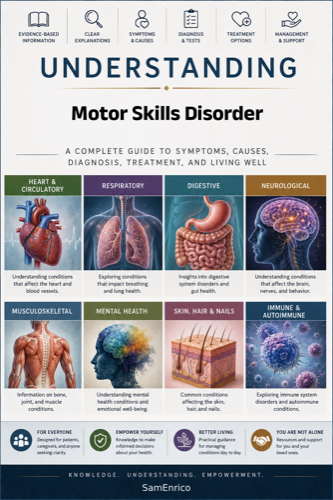 Understanding Motor Skills DisorderShelton Jacqueline$11.99
 Change Request Assessment PromptsShelton Jacqueline$12.99
You may also like
 Hong Kong Handover 1997Dunn Johnnie$11.99
 Zumba For Postnatal Recovery CourseNeal Christian$11.99
 Zumba for BeginnersLadner Nikia$11.99
 YouTube Comment Mining GuideHumes Pandora$12.99
 Worry Box MeditationCarlin Rudy$11.99
 Workplace Stress MeditationNguyen Lynn$11.99
 Workplace Stress and Sleep RepairHawley Ivory$11.99
 Workplace Perfectionism CureDelaney Jeffry$11.99
 Workplace Injustice Anger GuideWallen Isabelle$11.99
 Work Addiction and Burnout LinkGreenwood Ester$11.99
 Women in Yoga and WellnessBeattie Galina$11.99
 Women in Stand Up ComedyChun Evangeline$11.99