

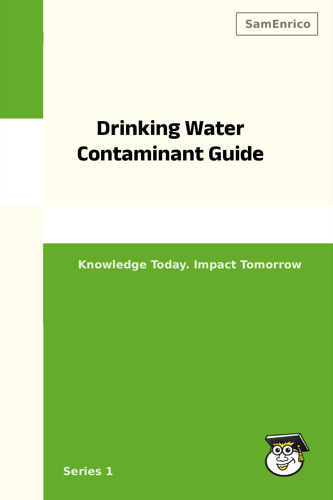
Non-FictionHealth & WellnessWater Quality
Drinking Water Contaminant Guide
Test for lead, PFAS, and chlorine byproducts, then
Test for lead, PFAS, and chlorine byproducts, then install appropriate filtration systems.
Formats
About this book
Free sample
Chapter 1: From Sky to Sink--–- The water that pours from your kitchen faucet has traveled an epic journey—one that begins in the clouds and passes through landscapes both pristine and polluted, through treatment plants and aging pipes, before finally arriving in your glass. This journey is anything but simple, and at every stage along the way, contaminants have opportunities to enter. Before we can discuss how to test for lead, PFAS, or chlorine byproducts—the "Big Three" threats that this book will help you eliminate—you must first understand where your water actually comes from and what happens to it between its atmospheric origin and your tap. This chapter traces that hidden journey, revealing the critical contamination points that most homeowners never consider and introducing the fundamental distinction between treating all the water in your home versus only the water you drink.The Hydrologic Cycle: Your Water's Ancient Origins Every drop of drinking water on planet Earth has been cycling through the environment for billions of years. The same water that quenches your thirst today may have once fallen on a dinosaur, flowed through a Roman aqueduct, or been exhaled by a prehistoric forest.
This hydrologic cycle—evaporation, condensation, precipitation, collection—is nature's original water treatment system, but it is far from perfect when it comes to producing pure drinking water.When water evaporates from oceans, lakes, and rivers, it leaves behind most dissolved solids and contaminants. In theory, rainfall is nearly pure. In practice, raindrops capture atmospheric pollutants as they fall through the air: dust, soot, industrial emissions, agricultural chemicals, and even airborne PFAS from manufacturing facilities. Acid rain—caused by sulfur dioxide and nitrogen oxides from coal-fired power plants and vehicle exhaust—lowers the p H of precipitation, making it more corrosive when it eventually contacts metal pipes and plumbing fixtures. This atmospheric leg of the journey is the first, often overlooked, point where water quality is compromised, and it sets the stage for many of the problems we will address in later chapters.Once rain or snow reaches the ground, it follows one of two paths.…
This is the end of the free sample. Get the eBook to keep going. Buy now
Contents
- Chapter 1
- Chapter 2
- Chapter 3
- Chapter 4
- Chapter 5
- Chapter 6
- Chapter 7
- Chapter 8
- Chapter 9
- Chapter 10
- Chapter 11
- Chapter 12
Details
- Author
- Alicea Sigrid
- Publisher
- SamEnrico
- Language
- English
- Genre
- Non-Fiction, Health & Wellness, Water Quality
- Released
- 2026-06-10
- Pages (approx.)
- 149
- Available as
- eBook, Audiobook

Read better in the ZLOADR app
Your eBooks on your phone or tablet. Sign in with your SamEnrico account and start reading.
More by Alicea Sigrid
 Silent Treatment Recovery GuideAlicea Sigrid$11.99
 News Comment Anger TriggersAlicea Sigrid$11.99
 The Emotional Spending Trigger LogAlicea Sigrid$11.99
 Nairobi Energy Access StartupAlicea Sigrid$11.99
 The Lioness of the Nile: Queen Tiye and the Rise of the Amarna DynastyAlicea Sigrid$11.99
 Understanding Pseudoachondroplastic DysplasiaAlicea Sigrid$17.99
 How to Start a Tour Operator BusinessAlicea Sigrid$11.99
 Present Value Economics ExcelAlicea Sigrid$12.99
 Voting Leave Legal TrapsAlicea Sigrid$12.99
 Director of InfrastructureAlicea Sigrid$11.99
You may also like
 Hong Kong Handover 1997Dunn Johnnie$11.99
 Zumba For Postnatal Recovery CourseNeal Christian$11.99
 Zumba for BeginnersLadner Nikia$11.99
 YouTube Comment Mining GuideHumes Pandora$12.99
 Worry Box MeditationCarlin Rudy$11.99
 Workplace Stress MeditationNguyen Lynn$11.99
 Workplace Stress and Sleep RepairHawley Ivory$11.99
 Workplace Perfectionism CureDelaney Jeffry$11.99
 Workplace Injustice Anger GuideWallen Isabelle$11.99
 Work Addiction and Burnout LinkGreenwood Ester$11.99
 Women in Yoga and WellnessBeattie Galina$11.99
 Women in Stand Up ComedyChun Evangeline$11.99