
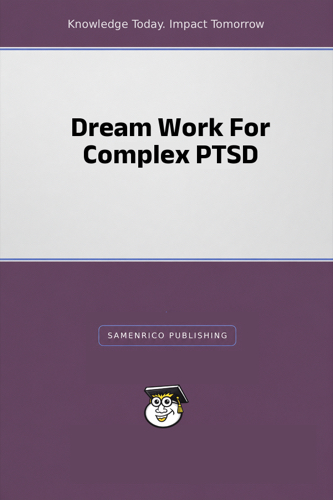
Non-FictionSelf-HelpC PTSDDevelopmental
Dream Work For Complex PTSD Audiobook
Address developmental and repeated trauma through
Address developmental and repeated trauma through long term dream processing.
Formats
Free sample
Chapter 1: The Body's Secret Clock--If you have picked up this book, there is a very good chance that you have already spent years trying to fix your nightmares. You have probably tried the standard advice. You have been told to practice good sleep hygiene. You have been told to avoid screens before bed. You have been told to try melatonin, or magnesium, or a weighted blanket.
You may have even been prescribed medication—Prazosin, perhaps, the blood pressure drug that is also used for PTSD nightmares. And maybe these things helped a little. Maybe they took the edge off. But the nightmares kept coming back, didn't they? Or if they stopped, something else got worse.
The numbness. The exhaustion. That strange, hollow feeling of waking up after a night of violent dreams and remembering nothing except the certainty that you are not safe.The problem is not that you have tried the wrong solutions. The problem is that you have been asking the wrong question. The standard question is: How do I make the nightmares stop?
That is a reasonable question. It is the question anyone would ask after decades of being chased, drowned, buried, or hunted in their sleep. But it is the wrong question because it treats the nightmare as an enemy to be defeated rather than a message to be understood.The right question is this: What is my nightmare trying to tell me about the trauma my waking mind cannot face?This chapter will introduce you to a radically different way of understanding your nightmares—not as random neurological misfires or symptoms to be suppressed, but as a precise, intelligent, and desperately urgent communication system. You will learn why the standard treatments for PTSD often fail for Complex PTSD. You will learn the single most important distinction between two types of nightmares.
And you will begin to understand why your body, not your mind, holds the key to decoding what your dreams are saying.The Failure of the Standard Model Let me begin with a confession that may sound like heresy in certain therapeutic circles. Standard evidence-based treatments for PTSD—Cognitive Behavioral Therapy (CBT), Prolonged Exposure (PE), and Eye Movement Desensitization and Reprocessing (EMDR)—work remarkably well for single-incident trauma. A veteran who survived an IED blast. A woman who was assaulted in a parking garage. A child who witnessed a school shooting.
These treatments have helped thousands of people process discrete, time-bound traumatic events and return to something resembling normal life.But when…
This is the end of the free sample. Get the Audiobook to keep going. Buy now
About this book
Details
- Author
- Paxton Ashanti
- Publisher
- SamEnrico
- Language
- English
- Genre
- Non-Fiction, Self-Help, C PTSD, Developmental
- Released
- 2026-06-08
- Pages (approx.)
- 156
- Available as
- eBook, Audiobook

Listen in the VoxFlicks app
Audiobooks and audio dramas wherever you go. Sign in with your SamEnrico account and press play.
More by Paxton Ashanti
 Partner Criticism Overreaction GuidePaxton Ashanti$11.99
 Meal Timing Energy GuidePaxton Ashanti$11.99
 Parenting Stress And Neurodivergent KidsPaxton Ashanti$11.99
 The Frozen Cartographer: How a Humble Scribe Mapped the Arctic’s Hidden RiversPaxton Ashanti$11.99
 Ganga's Descent: The River That Purifies the WorldPaxton Ashanti$11.99
 Cloud Energy Outlook 2030Paxton Ashanti$12.99
 Multi Platform Freelance Strategy HandbookPaxton Ashanti$12.99
 Client Solutions OfficerPaxton Ashanti$11.99
 How to Start a Bricks Made of Clay Business (Beginners Guide)Paxton Ashanti$11.99
You may also like
 Hong Kong Handover 1997Dunn Johnnie$11.99
 Zumba For Postnatal Recovery CourseNeal Christian$11.99
 Zumba for BeginnersLadner Nikia$11.99
 YouTube Comment Mining GuideHumes Pandora$12.99
 Worry Box MeditationCarlin Rudy$11.99
 Workplace Stress MeditationNguyen Lynn$11.99
 Workplace Stress and Sleep RepairHawley Ivory$11.99
 Workplace Perfectionism CureDelaney Jeffry$11.99
 Workplace Injustice Anger GuideWallen Isabelle$11.99
 Work Addiction and Burnout LinkGreenwood Ester$11.99
 Women in Yoga and WellnessBeattie Galina$11.99
 Women in Stand Up ComedyChun Evangeline$11.99