
Non-FictionStudent's ShortcutDepreciation
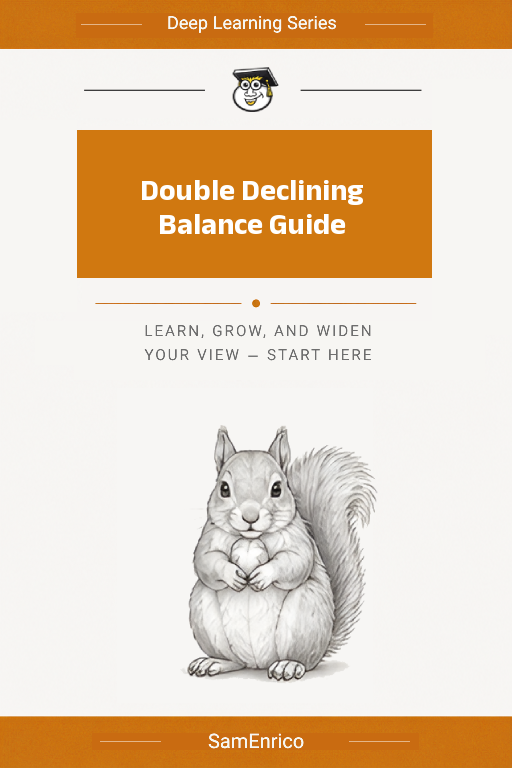
Double Declining Balance Guide
Compute accelerated depreciation using 2 divided b
Compute accelerated depreciation using 2 divided by Useful Life times Book Value.
Formats
About this book
Free sample
Chapter 1: The Cash Flow Mirage--–- In a small manufacturing office outside Cleveland, a seasoned bookkeeper named Diane stared at her company’s year-end financial statement. Net income had fallen by 40,000comparedtothepreviousyear.Theownerspanicked.Theycalledanemergencymeeting,questionedeverydepartmenthead,andevenconsideredlayoffs.But Dianenoticedsomethingtheyhadmissed:thedropinnetincomecamealmostentirelyfromasinglenon−cashexpensecalleddepreciation.Thecompanyhadpurchased40,000 compared to the previous year. The owners panicked. They called an emergency meeting, questioned every department head, and even considered layoffs. But Diane noticed something they had missed: the drop in net income came almost entirely from a single non-cash expense called depreciation.
The company had purchased 40,000comparedtothepreviousyear.Theownerspanicked.Theycalledanemergencymeeting,questionedeverydepartmenthead,andevenconsideredlayoffs.But Dianenoticedsomethingtheyhadmissed:thedropinnetincomecamealmostentirelyfromasinglenon−cashexpensecalleddepreciation.Thecompanyhadpurchased200,000 worth of new CNC machinery, and the accountant had used an accelerated method that front-loaded the expense. Cash in the bank had actually grown by $85,000. Yet fear had already spread through the leadership team.Diane’s story is not unusual. Across industries, from construction to software to retail, business owners, managers, and even some accountants misunderstand what depreciation really represents. They treat it as a mysterious “paper loss” – something that reduces reported profits but somehow doesn’t affect the checkbook.
Others ignore it entirely, assuming it’s just a tax game with no real-world strategic value. Both views are dangerously wrong.This chapter dismantles the single greatest misconception in fixed asset accounting: that depreciation is merely an accounting fiction. In truth, depreciation is one of the most powerful levers you can pull to manage cash flow, reduce taxable income, and align your financial statements with economic reality. But to use that lever effectively, you must first understand what depreciation actually is, what it is not, and why the double declining balance method – the focus of this entire book – stands apart as an aggressive, strategic tool for the informed business owner.We begin with a seemingly simple question: If depreciation doesn’t consume cash, why does it matter at all? The answer will transform how you read your financial statements and plan your tax strategy.The Great Divide: Cash Flow vs.
Net Income Let us start with a fundamental distinction that most business owners learn the hard way. Net income and cash flow…
This is the end of the free sample. Get the eBook to keep going. Buy now
Contents
- Chapter 1
- Chapter 2
- Chapter 3
- Chapter 4
- Chapter 5
- Chapter 6
- Chapter 7
- Chapter 8
- Chapter 9
- Chapter 10
- Chapter 11
- Chapter 12
Details
- Author
- Frias Malorie
- Publisher
- SamEnrico
- Language
- English
- Genre
- Non-Fiction, Student's Shortcut, Depreciation
- Released
- 2026-06-01
- Pages (approx.)
- 153
- Available as
- eBook, Audiobook

Read better in the ZLOADR app
Your eBooks on your phone or tablet. Sign in with your SamEnrico account and start reading.
More by Frias Malorie
 Wholesaling Facebook GroupsFrias Malorie$11.99
 Childhood Nightmare GuideFrias Malorie$11.99
 Assertiveness Training for BeginnersFrias Malorie$11.99
 The Sympathy vs Empathy GuideFrias Malorie$11.99
 Memory Palace Foundation GuideFrias Malorie$11.99
 The Pelvic Floor ED FixFrias Malorie$11.99
 Gig Stacking StrategyFrias Malorie$11.99
 Gaming for Healthcare WorkersFrias Malorie$11.99
 The Wembley Way: How a Stadium Rose from Ruins to GloryFrias Malorie$11.99
 The Battle of Chaldiran: The Ottomans and the Fall of Persian Invincibility (1514)Frias Malorie$11.99
 The Essential Guide to ZydecoFrias Malorie$11.99
 How to Produce a RetarderFrias Malorie$11.99
You may also like
 Hong Kong Handover 1997Dunn Johnnie$11.99
 Zumba For Postnatal Recovery CourseNeal Christian$11.99
 Zumba for BeginnersLadner Nikia$11.99
 YouTube Comment Mining GuideHumes Pandora$12.99
 Worry Box MeditationCarlin Rudy$11.99
 Workplace Stress MeditationNguyen Lynn$11.99
 Workplace Stress and Sleep RepairHawley Ivory$11.99
 Workplace Perfectionism CureDelaney Jeffry$11.99
 Workplace Injustice Anger GuideWallen Isabelle$11.99
 Work Addiction and Burnout LinkGreenwood Ester$11.99
 Women in Yoga and WellnessBeattie Galina$11.99
 Women in Stand Up ComedyChun Evangeline$11.99