
Non-FictionSelf-HelpAnimal Imagery
Dolphin Visualization Playful Calm eBook
Swim with imagined dolphins, feeling their joy, gl
Swim with imagined dolphins, feeling their joy, gliding through water without effort.
Formats
Free sample
Chapter 1: The Water Remembers--You already know how to do this. Not the dolphin part—not yet—but the feeling of floating without trying. It lives somewhere in your body, buried under years of "sit up straight," "try harder," and "relax... no, really relax, why aren't you relaxed yet?" That last one is particularly cruel, isn't it? The command to relax that generates its own little spike of failure.
You've felt it. Everyone has. But here's what no one tells you: the opposite of stress is not calm. The opposite of stress is effortlessness. And effortlessness cannot be forced.
It can only be remembered.This book is not a set of instructions. It is a set of invitations. And the first invitation is to stop reading for a moment. Close your eyes. Put the book down on your chest or beside you.
Now, without changing anything about your breathing, notice the weight of your own body. Not the thoughts about your body—the actual physical sensation of being held by whatever surface you're on. A chair. A couch. A bed.
The floor. Notice that you are not doing the holding. Something else is. Gravity is a kind of ocean, and you have been swimming in it your whole life without realizing you were floating. That slight resistance you feel in your lower back?
That's the surface pushing back. That's support. You are, right now, in this very moment, being held.Most of us have forgotten what support feels like. We walk around like tightrope walkers, convinced that if we stop clenching, we will fall. But the water—the metaphorical water of your own subconscious mind—has been waiting for you to stop thrashing.
This chapter is called "The Water Remembers" because it does. Your body remembers what it felt like to float in the womb. Your nervous system remembers what it felt like before anyone told you to try. And the dolphins? They are not here to teach you something new.
They are here to remind you of something you have always known.The Three Lies You Believed About Relaxation Before we go anywhere near the ocean, we need to clear some debris. There are three cultural lies about relaxation that have quietly colonized your nervous system. You didn't choose to believe them. They were installed by well-meaning parents, productivity gurus, and a society that confuses exhaustion with virtue. Let's name them.Lie Number One: Relaxation must be earned.
You hear this one every time you say "I'll rest when this project is done" or "I don't deserve a break yet." It is the Protestant work ethic dressed up as self-care. The implication is that calm is a reward for suffering, which means that if you are not suffering, you have not earned the right to be calm. This is backwards. Calm is not a paycheck. It is your baseline.
You do not earn the right to breathe. You just breathe.Lie Number Two: Relaxation requires technique. This is the lie sold by every meditation app, every breathing gadget, every "mindfulness for beginners" book that gives you seventeen steps to follow before you are allowed to feel okay. The message is subtle but poisonous: you are not naturally good at this. You need instruction.
You need to track your minutes. You need to achieve a certain brainwave state. None of that is true. You have already relaxed millions of times in your life—every time you fell asleep, every time you got lost in a good movie, every time you laughed so hard you forgot your own name. No technique was required.
Only permission.Lie Number Three: Effort is the same as progress. This is the most seductive lie of all. We have been trained to equate discomfort with growth. No pain, no gain. Feel the burn.
Push through. But your nervous system does not operate like a muscle. It operates like a body of water. You cannot force water to be still by hitting it. You cannot bully your way into calm.
When you try harder to relax, your sympathetic nervous system—the one responsible for fight or flight—interprets the effort as a threat. It says, "Something must be wrong if we're trying this hard." And it cranks up the cortisol. This is why so many people say meditation makes them more anxious. They were trying. The trying was the problem.Let me say that again, because it is the single most important sentence in this chapter: The trying was the problem.The Dolphin Mistake Most People Make Here is what most people imagine when they hear "dolphin visualization." They close their eyes.
They try to picture a dolphin. They see a vague, cartoonish shape. It doesn't feel real. They get frustrated. They try harder.
The dolphin swims away. They open their eyes and decide that visualization doesn't work for them.That sequence is not a failure of visualization. It is a failure of approach. You cannot grab a dolphin in your imagination any more than you can grab one in the wild. Dolphins are not impressed by effort.
They are curious about ease. So here is the counterintuitive secret: you do not need to see a dolphin clearly. You do not need to hold the image. You need to allow the dolphin to appear in the same way you allow a dream to happen—by relaxing the grasping mind and trusting the water.Think about the last time you tried to remember a name. The harder you tried, the more it escaped you.
Then, the moment you stopped trying—while you were brushing your teeth or walking to your car—the name appeared effortlessly. Your brain was working the whole time. The conscious effort was just getting in the way. Visualization works exactly the same way. Your brain is already capable of producing vivid, sensory-rich imagery.
You do it every night in dreams. The question is not whether you can visualize. The question is whether you can stop trying long enough to let it happen.This chapter will teach you how to stop trying. Not through willpower—that would be more trying—but through a fundamental shift in your relationship to your own mind. You are not the general commanding the troops.
You are the water. And the water does not command anything. It supports.What Actually Happens in Your Brain When You Visualize Before we go any further into the felt experience, let's look at the machinery. Not because you need science to relax—you don't—but because the science gives you permission to trust what you're feeling. When you imagine a dolphin gliding through water, your brain activates many of the same neural networks that would fire if you were actually swimming.
This is the mirror neuron system, discovered by neuroscientists in the 1990s. Mirror neurons fire both when you perform an action and when you observe or vividly imagine someone else performing that action. They do not distinguish between real and imagined. To your brain, a sufficiently vivid visualization is practice.But here is the part that matters for this book: mirror neurons also fire for emotional states. When you imagine a dolphin's joy—the sheer, uncomplicated…
This is the end of the free sample. Get the eBook to keep going. Buy now
About this book
Details
- Author
- Dasilva Valeria
- Publisher
- SamEnrico
- Language
- English
- Genre
- Non-Fiction, Self-Help, Animal Imagery
- Released
- 2026-06-08
- Pages (approx.)
- 129
- Available as
- eBook, Audiobook

Read better in the ZLOADR app
Your eBooks on your phone or tablet. Sign in with your SamEnrico account and start reading.
More by Dasilva Valeria
 Phone User Driver FrustrationDasilva Valeria$11.99
 China Consumer Confidence GuideDasilva Valeria$11.99
 The Framing Effect Persuasion GuideDasilva Valeria$11.99
 Gift Tax Annual Exclusion GuideDasilva Valeria$11.99
 Tutoring Chinese Adults for Career GrowthDasilva Valeria$12.99
 Dating App Terms of Service GuideDasilva Valeria$12.99
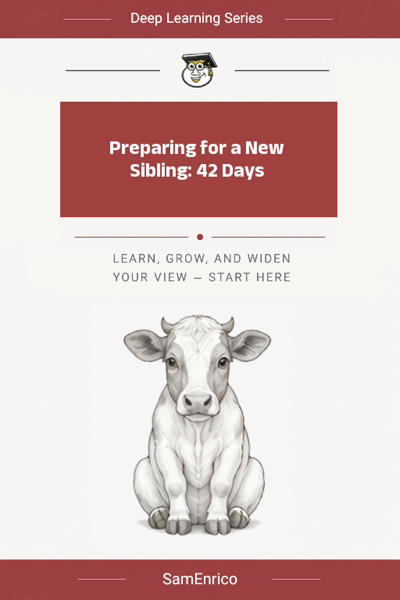 Preparing for a New Sibling: 42 DaysDasilva Valeria$11.99
 Understanding Oto Palato Digital Syndrome Type I and IiDasilva Valeria$17.99
 How to Become a TwisterDasilva Valeria$11.99
You may also like
 Hong Kong Handover 1997Dunn Johnnie$11.99
 Zumba For Postnatal Recovery CourseNeal Christian$11.99
 Zumba for BeginnersLadner Nikia$11.99
 YouTube Comment Mining GuideHumes Pandora$12.99
 Worry Box MeditationCarlin Rudy$11.99
 Workplace Stress MeditationNguyen Lynn$11.99
 Workplace Stress and Sleep RepairHawley Ivory$11.99
 Workplace Perfectionism CureDelaney Jeffry$11.99
 Workplace Injustice Anger GuideWallen Isabelle$11.99
 Work Addiction and Burnout LinkGreenwood Ester$11.99
 Women in Yoga and WellnessBeattie Galina$11.99
 Women in Stand Up ComedyChun Evangeline$11.99