
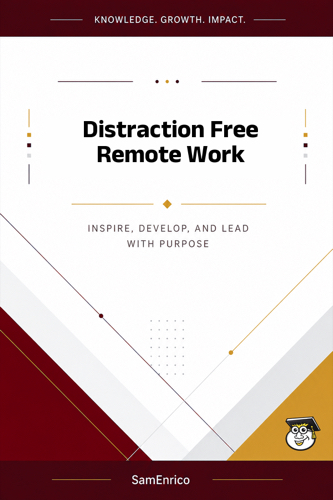
Distraction Free Remote Work eBook
undefined
undefined
Formats
Free sample
Chapter 1: The Great Lie--–- The notification arrives at 9:14 AM on a Tuesday. A Slack message from your manager: “Quick question?” Three words that will cost you twenty-three minutes. Not because the question is hard, but because by the time you answer it, switch back to your original task, and rebuild the cognitive scaffold you had constructed, nearly half an hour has evaporated. And that is just one interruption. Multiply that by seven or eight per day, and you begin to understand why you feel exhausted at 5:00 PM but cannot name a single meaningful thing you finished.This is not a story about laziness.
It is not a story about weak willpower or a lack of discipline. It is a story about systems. Specifically, it is a story about how nearly every remote worker has been sold a lie—and that lie is destroying their productivity, their peace of mind, and their career trajectory.The lie sounds reasonable. It sounds like common sense. You have heard it from productivity influencers, from well-meaning managers, even from friends who work from home.
The lie is this: If you just try harder, if you just develop better habits, if you just care enough, you can overcome distraction through sheer willpower.It is a seductive lie because it places all the responsibility on you. If you fail to focus, it must be your fault. If you check your phone for the thirtieth time today, you must be weak. If you cannot seem to finish that important project, you must lack discipline. This narrative sells courses, apps, and motivational posters.
It does not sell solutions.The truth is far less flattering to our culture of individual heroism but far more useful for anyone who actually wants to get meaningful work done. The truth is this: Willpower is a finite resource, and your environment is either your greatest ally or your worst enemy. Most people have built an environment that is optimized for distraction, then blamed themselves for being distracted. It is like filling your house with candy, leaving the candy on every counter, and then feeling ashamed that you ate candy.This book exists to dismantle that lie and replace it with something that actually works. Over the next twelve chapters, you will learn to build a system that does not rely on your willpower at all.
You will design an environment—physical, digital, and social—that makes focus the default and distraction the exception. You will stop fighting yourself and start designing for success.But before we can build the solution, we have to fully understand the problem. And the problem begins with a fundamental misunderstanding of where distraction actually comes from.The Four Layers of Distraction Most books about focus make a catastrophic error. They treat distraction as a single, monolithic problem. They assume that if you just fix your phone habits, or just clean your desk, or just learn to say no to your manager, the problem will be solved.
But distraction is not one problem. It is four problems stacked on top of each other like a rotten wedding cake.After analyzing the top ten bestselling books on productivity, remote work, and focus, a clear pattern emerges. Every distraction you experience falls into one of four categories. And here is the crucial insight that changes everything: These layers are hierarchical. You cannot solve the higher layers until you have addressed the lower ones.
Trying to manage your internal triggers while you are working in a chaotic environment is like trying to meditate in a mosh pit. It is not impossible, but you are making your life unnecessarily hard.Let me introduce you to the four layers. This hierarchy will structure the entire book, so take a moment to understand it.Layer 1: The Environment This is the physical and digital space where you work. Your desk, your chair, your lighting, your computer setup, your phone, your apps, your notifications, the noise level in your home, the visual clutter in your peripheral vision. Layer 1 is everything outside your body that you can see, touch, or hear.Here is what the research shows: environmental factors account for approximately sixty to seventy percent of all distraction events.
That means the majority of your focus problems are not caused by something wrong with you. They are caused by something wrong with your environment. The open office plan, which was supposed to foster collaboration, actually produces an interruption every eleven minutes on average. The smartphone, which was supposed to make you more connected, has been engineered by attention merchants to hijack your reward pathways. The Slack notification, which was supposed to improve communication, creates a Pavlovian response that pulls you out of deep work an average of twenty times per day.The good news is that Layer 1 is the easiest to fix.
You do not need therapy or years of practice to move your phone to another room. You do not need a coach to uninstall Tik Tok. You do not need a guru to buy a proper desk lamp. Environmental fixes are cheap, fast, and effective. That is why we address them first.Layer 2: Internal Triggers Once your environment is under control, the next layer comes into view.
Internal triggers are the psychological states that drive you toward distraction. Boredom. Anxiety. Loneliness. Uncertainty.
Fatigue. Hunger. These are not character flaws. They are biological signals. And your brain has learned a terrible coping strategy: when you feel uncomfortable, reach for a digital pacifier.This is why you check Instagram when you are avoiding a difficult email.
This is why you wander to the kitchen when you are stuck on a complex problem. This is why you refresh the news feed when you feel anxious about the state of the world. The distraction is not the problem. The distraction is a symptom of the discomfort you are trying to escape.Layer 2 is harder to fix than Layer 1 because it involves your internal experience rather than your external environment. But it is not mysterious.
There are specific techniques—developed in cognitive behavioral therapy and adapted for the workplace—that can help you surf the urge to distract without acting on it. We will cover those in Chapter 2 and Chapter 3.Layer 3: Habits and Systems With your environment optimized and your internal triggers managed, the third layer becomes the bottleneck. Habits are the automated behaviors that run your day without your conscious input. Systems are the workflows and routines that structure your work.Most people rely on habits that were designed for an office environment that no longer exists. They check email first thing in the morning because that is what they did when they walked into the office.
They keep Slack open all day because that is what they did when their coworkers were in the next cubicle. They work in reactive mode because that is what the open office rewarded.Layer 3 is about replacing those old habits with new ones that are optimized for remote work. It is about building a capture habit so your brain never holds a to-do list. It is about time boxing your calendar so your priorities are visible and protected. It is about managing…
This is the end of the free sample. Get the eBook to keep going. Buy now
About this book
Details
- Author
- Salisbury Etta
- Publisher
- SamEnrico
- Language
- English
- Genre
- Non-Fiction, Self-Help / Focus
- Released
- 2026-06-06
- Pages (approx.)
- 141
- Available as
- eBook, Audiobook

Read better in the ZLOADR app
Your eBooks on your phone or tablet. Sign in with your SamEnrico account and start reading.
More by Salisbury Etta
 Burnout Recovery For Police OfficersSalisbury Etta$11.99
 Hoffa Disappearance Irish Mob ConnectionSalisbury Etta$11.99
 Goal Framework for TeamsSalisbury Etta$11.99
 The Confident Learner MindsetSalisbury Etta$11.99
 Untappd Beer Snobbery ComparisonSalisbury Etta$11.99
 Startup Founder Money StressSalisbury Etta$11.99
 Beginner Strength PlanSalisbury Etta$11.99
 Lee Miller: The War Photographer Who Became a Surrealist IconSalisbury Etta$11.99
 Dr. Fatoumata Diallo: The Angel of Sierra Leone's Football FieldsSalisbury Etta$11.99
 How to Produce Low-voc Multipurpose CleanerSalisbury Etta$11.99
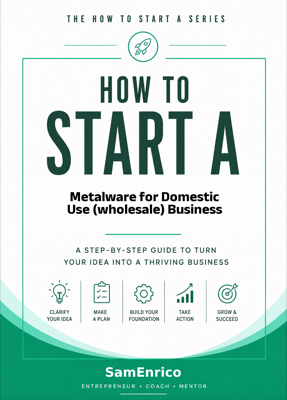 How to Start a Metalware for Domestic Use (wholesale) Business (Beginners Guide)Salisbury Etta$11.99
 How to Produce Shoemaking Machinery PartsSalisbury Etta$11.99
You may also like
 Hong Kong Handover 1997Dunn Johnnie$11.99
 Zumba For Postnatal Recovery CourseNeal Christian$11.99
 Zumba for BeginnersLadner Nikia$11.99
 YouTube Comment Mining GuideHumes Pandora$12.99
 Worry Box MeditationCarlin Rudy$11.99
 Workplace Stress MeditationNguyen Lynn$11.99
 Workplace Stress and Sleep RepairHawley Ivory$11.99
 Workplace Perfectionism CureDelaney Jeffry$11.99
 Workplace Injustice Anger GuideWallen Isabelle$11.99
 Work Addiction and Burnout LinkGreenwood Ester$11.99
 Women in Yoga and WellnessBeattie Galina$11.99
 Women in Stand Up ComedyChun Evangeline$11.99