
Non-FictionSelf-HelpDisability
Disability Financial Coping eBook
Navigate SSDI, SSI, and work incentives without lo
Navigate SSDI, SSI, and work incentives without losing benefits.
Formats
Free sample
Chapter 1: The Frozen Middle--–- The letter arrived on a Tuesday, tucked between a pizza coupon and a credit card offer. You knew it was from the Social Security Administration before you opened it—the envelope had that particular shade of government gray, the return address you’ve memorized. Your hand trembled as you tore it open. Inside: a notice of overpayment. $14,000.
They said you had worked too many hours, earned too much money, and now they wanted it all back. The letter didn’t care that you had used that money to fix your wheelchair ramp or pay down the medical debt from your last hospitalization. It didn’t care that you were just trying to test whether you could hold down a part-time job without collapsing. It just demanded repayment. And in that moment, you made a silent promise: never again.
Never again would you risk work. Never again would you report income. You would stay small, stay poor, stay safe.This is the single most destructive moment in the life of a disabled person who wants to work. It is not the disability that traps you. It is the fear.
And that fear is not your fault. It has been carefully, systematically cultivated by a benefits system that punishes clarity and rewards confusion. The Social Security Administration has created a maze so complex that even its own employees cannot explain it consistently. Then they have placed you inside that maze, blindfolded, and told you that one wrong turn means losing your healthcare, your housing, and your dignity. Then they have asked you to make rational decisions about work.This book is the blindfold remover.Before we talk about Trial Work Periods, Substantial Gainful Activity thresholds, or the beautiful magic of Impairment-Related Work Expenses—before we do any of the math that will save your financial life—we have to address the monster living in your head.
That monster has a name. It is called the Benefits Cliff Myth. And it is a lie that has kept millions of disabled Americans trapped in poverty for decades.The Myth That Keeps You Poor The Benefits Cliff Myth sounds like this: “If I earn one dollar over the limit, I lose everything. My check stops. My Medicare or Medicaid vanishes.
I am thrown off the cliff into total financial ruin.”Every disabled worker you know has repeated this sentence. Your caseworker has probably hinted at it. Your well-meaning parent has definitely said it. Online forums are filled with horror stories of people who went over an invisible line and lost their homes. The myth is so pervasive, so deeply embedded in the culture of disability, that it has become an unquestioned truth.
It functions like a religious prohibition: thou shalt not earn too much, lest ye be cast into the outer darkness of the full-time workforce without a safety net.Here is the truth that will change your life: The Benefits Cliff is a myth. There is no single dollar amount that terminates all benefits instantly. Instead, there are phased cliffs, gradual reductions, grace periods, and safety nets. Working more almost always leaves you better off, not worse off. And the worst-case scenario—losing your disabled status entirely—is extraordinarily rare for people who are actually still disabled.I want you to read that paragraph again.
Slowly.The SSA did not design a system to punish work. They designed a system to encourage work, but they layered so many rules and exceptions on top of each other that the encouragement became invisible. The work incentives exist. They are generous. They are just buried under bureaucratic language that no normal human can decipher.
This chapter is the shovel.The Anatomy of a Cliff: Why We Believe the Lie To understand why the Benefits Cliff Myth is so powerful, we have to understand fear. Not the abstract kind—the specific, rational fear that comes from living on a fixed income.When you rely on SSDI or SSI, your monthly check is not just money. It is the permission slip to see a doctor. It is the rent payment. It is the difference between eating and not eating.
The stakes are life-and-death. In this environment, any risk feels catastrophic. Your brain is wired to avoid losses more than it seeks gains. Psychologists call this loss aversion. Losing $100 feels twice as painful as gaining $100 feels good.
Now multiply that by your entire survival infrastructure.So when someone whispers that work might cost you your benefits, your brain screams: Do not risk it. You retreat into safety. You stay home. You stay broke. And the system, which desperately wants to reduce its disability rolls, has accidentally created the exact opposite of what it intends.But here is where the myth becomes truly insidious: it is based on a grain of truth.
There are thresholds. Benefits can be reduced. In very rare cases, benefits can stop. The myth takes these true fragments and welds them into a false whole. Your job is to separate the fragments from the weld.The Two Kinds of "Losing Benefits" You Must Understand Before we talk about dollar amounts, we have to talk about what “losing benefits” actually means.
Almost everyone conflates two completely different events. They are not the same. Understanding the difference is the single most important conceptual leap in this entire book.Cash Cessation is when your monthly check stops. That is it. You no longer receive money from the SSA.
But you remain a disabled person in the eyes of the government. Your Medicare or Medicaid often continues. Your protected status continues. You can restart benefits without a new application if your work attempt fails. Cash cessation is not the end of the world.
It is a pause.Medical Cessation is when the SSA declares that you are no longer disabled. Your condition has improved to the point where you can perform Substantial Gainful Activity without accommodations. This is much rarer. It requires a formal Continuing Disability Review (which we will cover in Chapter 12) and a finding of medical improvement. Medical cessation is serious.
It ends your eligibility for disability programs entirely. You would have to reapply from scratch if your condition worsens.Here is what the Benefits Cliff Myth does: it convinces you that working above SGA triggers Medical Cessation. That is false. Working above SGA triggers, at worst, Cash Cessation. And Cash Cessation comes with safety nets, grace periods, and reinstatement rights.
The myth collapses the distance between these two events to zero. In reality, that distance is measured in years.Let me say it plainly: You can lose your monthly check and still be considered disabled. You can earn over the limit and still keep your healthcare. You can try full-time work, fail, and restart your benefits without a new application. The system has pathways for exactly this scenario.The Numbers That Actually Matter (For Now)I am going to give you two numbers.
Do not panic. These numbers change every year. We will update them in future editions. For now, think of them as landmarks, not walls.The TWP Trigger Amount ($1,110 per month in 2025): This is the number that starts the clock…
This is the end of the free sample. Get the eBook to keep going. Buy now
About this book
Details
- Author
- Nance Jefferson
- Publisher
- SamEnrico
- Language
- English
- Genre
- Non-Fiction, Self-Help, Disability
- Released
- 2026-06-10
- Pages (approx.)
- 151
- Available as
- eBook, Audiobook

Read better in the ZLOADR app
Your eBooks on your phone or tablet. Sign in with your SamEnrico account and start reading.
More by Nance Jefferson
 Carson Daly TRL to TodayNance Jefferson$11.99
 Weekend Email Anger Management WorkbookNance Jefferson$11.99
 Nobel Laureates in Developmental BiologyNance Jefferson$11.99
 The Friend Betrayal ResentmentNance Jefferson$11.99
 The Oxford Plague Chronicles: How Medieval Scholars Defied the Black DeathNance Jefferson$11.99
 Graduate AnalystNance Jefferson$11.99
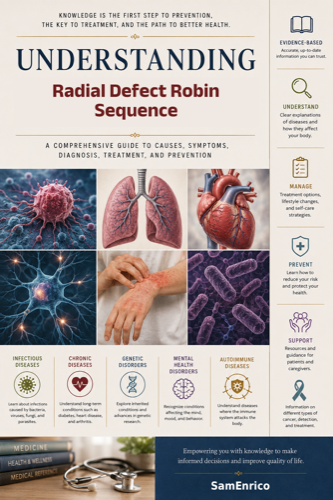 Understanding Radial Defect Robin SequenceNance Jefferson$17.99
 Export Payment Fraud PreventionNance Jefferson$12.99
 Airtable PLG GuideNance Jefferson$12.99
 How to Start a Organo-sulphur Compounds Business (Beginners Guide)Nance Jefferson$11.99
You may also like
 Hong Kong Handover 1997Dunn Johnnie$11.99
 Zumba For Postnatal Recovery CourseNeal Christian$11.99
 Zumba for BeginnersLadner Nikia$11.99
 YouTube Comment Mining GuideHumes Pandora$12.99
 Worry Box MeditationCarlin Rudy$11.99
 Workplace Stress MeditationNguyen Lynn$11.99
 Workplace Stress and Sleep RepairHawley Ivory$11.99
 Workplace Perfectionism CureDelaney Jeffry$11.99
 Workplace Injustice Anger GuideWallen Isabelle$11.99
 Work Addiction and Burnout LinkGreenwood Ester$11.99
 Women in Yoga and WellnessBeattie Galina$11.99
 Women in Stand Up ComedyChun Evangeline$11.99