
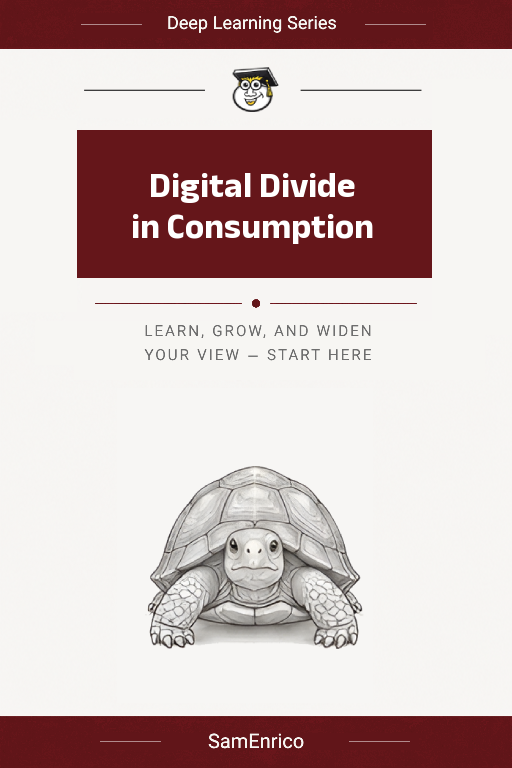
Non-FictionConsumer Mind ReportDigital Behavior
Digital Divide in Consumption eBook
Examines how Boomers and Gen Z differ in online sh
by Cintron Kory
Examines how Boomers and Gen Z differ in online shopping, social media influence, and mobile payment adoption.
Formats
Free sample
Chapter 1: Two Economies, One Checkout Line--The email arrived at 11:47 PM on a Tuesday. Sarah, the 54-year-old chief marketing officer of a once-beloved American furniture chain, read it twice before setting down her wine glass. The subject line read: "Q3 Earnings – Board Meeting Tomorrow." The body contained three numbers that would end her career if she couldn't explain them by 9:00 AM. Online sales among customers over 55 had dropped 22 percent. Online sales among customers under 25 had dropped 31 percent.
Total marketing spend had increased 14 percent.She had done everything the consultants told her. She had built a single, unified e-commerce platform that worked "for everyone." She had hired the same agency that made Nike's app. She had added one-click checkout, AI recommendations, and a chatbot. And somehow, she had managed to alienate every single generation at the same time.Her twenty-six-year-old data analyst, Marcus, had tried to warn her six months earlier. He had shown her a heat map of user sessions.
The boomers were clicking the "chat with an expert" button and then abandoning the site when they got a bot. The Gen Z users were clicking "view in store availability" and then laughing at the suggestion that anyone would drive to a physical location. The two generations were not using the same website. They were using two different websites that happened to share a URL. But Sarah had been too busy, too pressured, and too convinced that "digital transformation" meant one thing for everyone.She lost her job three weeks later.
The company filed for Chapter 11 protection the following quarter.This book is written for everyone who does not want to be Sarah.The Great Generational Lie For the past decade, business leaders have been sold a simple, comforting story. It goes like this: Young people are "digital natives." They grew up with screens in their cribs. They can smell a fake review from three scrolls away. Old people are "digital immigrants." They learned email as adults. They still print directions sometimes.
The solution, the story goes, is to help the immigrants catch up while letting the natives run ahead.This story is wrong. It is not just oversimplified. It is actively destructive.The evidence is everywhere if you know how to look. In 2024, a major bank discovered that their mobile app adoption among customers over 60 was actually higher than among customers under 30—but the older users opened the app half as often and kept larger balances in physical branches. The same bank discovered that their younger users were abandoning the app at the login screen because the two-factor authentication "felt suspicious." Two generations.
One app. Two completely different psychologies of trust.The real divide is not about knowing how to use technology. It is about what technology means to you. What it asks of you. What it can take from you.This chapter introduces the core framework that will guide the entire book: the distinction between the Trust Economy and the Token Economy.
These are not just different shopping habits. They are different ways of being a person in a commercial world.The Trust Economy: How Boomers See the Digital World Let us begin with Carol. She is sixty-eight years old. She retired two years ago after thirty-one years as a high school English teacher. She has an i Pad, an i Phone, and a Windows laptop.
She uses all of them competently. She pays her bills online. She video calls her grandchildren every Sunday. She is not afraid of technology.But Carol will not save her credit card information on a new website. She will not click a link in an email from her "bank" even if it looks exactly right.
She will spend forty-five minutes reading reviews before buying a forty-dollar coffee maker. And she still keeps two hundred dollars in cash tucked inside a cookbook on her kitchen shelf.Carol lives in what this book calls the Trust Economy.The Trust Economy is not about being slow or fearful. It is about having a lot to lose and knowing it. Carol spent three decades building her retirement savings. She watched her parents lose money in the 2008 crash even though they had done everything right.
She has been burned by identity theft once—someone opened a credit card in her name in 2017, and it took nine months to resolve. She is not technophobic. She is rationally cautious.The defining feature of the Trust Economy is that trust must be earned slowly, proven repeatedly, and can be revoked instantly. Boomers do not trust a brand because they saw an ad. They trust a brand because they have bought from it three times and each time the product arrived on time and the return process worked.
They trust Amazon not because they love Jeff Bezos but because Amazon has processed thirty-seven returns for Carol over twelve years without a single argument. That is trust. Not emotion. Evidence.This explains behavior that seems contradictory to younger observers. Why does Carol use Apple Pay?
Because she read that it is more secure than swiping a card—the tokenization means the merchant never sees her real number. She adopted Apple Pay for the same reason she installed a deadbolt on her front door: risk reduction. Why does she refuse to use a digital wallet for her loyalty cards? Because she does not trust the app developer not to sell her data. Same psychology.
Different application.The Trust Economy has three pillars.First pillar: Institutional deference. Boomers grew up in an era when institutions worked. The post office delivered. The bank held your money. The news told you the truth (or at least a single, authoritative version of it).
This does not mean Boomers are naive. It means they believe that a trusted institution—the Better Business Bureau, Consumer Reports, a celebrity with genuine expertise—can accelerate the trust-building process. When Oprah recommends a book, Carol will consider it. When a random Tik Toker with twelve thousand followers recommends a skincare product, Carol will assume it is a paid ad.Second pillar: Ownership as security. Boomers buy things to keep them.
A car is not a monthly subscription. A couch is not a rental. The layaway plans of their youth taught them that you save, you wait, you own. This is not materialism. It is risk management.
If you own the thing, no algorithm can take it away from you. If you own the thing, you are not at the mercy of a price hike or a terms-of-service change.Third pillar: The cost of being wrong is high. A bad purchase for Carol is not a funny story she tells her friends. It is a dent in her fixed income. It is the reminder that she is no longer earning a paycheck to recover from mistakes.
This is why she researches for weeks. This is why she reads the one-star reviews first. This is why she will drive forty-five minutes to return a nineteen-dollar item rather than donate it or throw it away. The money is already spent. The principle is at stake.The Token Economy: How Gen Z Sees the Digital World Now meet Jayden.
He is twenty-two years old. He graduated college fourteen months ago. He works as a social media manager for a…
This is the end of the free sample. Get the eBook to keep going. Buy now
About this book
Details
- Author
- Cintron Kory
- Publisher
- SamEnrico
- Language
- English
- Genre
- Non-Fiction, Consumer Mind Report, Digital Behavior
- Released
- 2026-05-30
- Pages (approx.)
- 153
- Available as
- eBook, Audiobook

Read better in the ZLOADR app
Your eBooks on your phone or tablet. Sign in with your SamEnrico account and start reading.
More by Cintron Kory
 Child Star Co-Star RelationshipsCintron Kory$11.99
 Breath Rhythm StabilizationCintron Kory$11.99
 Elon Musk Flamethrower MarketingCintron Kory$11.99
 The Betrayal Stress After Affair GuideCintron Kory$11.99
 PNE for Accident VictimsCintron Kory$11.99
 The Kegworth Air Disaster: A Trial That Redefined Aviation SafetyCintron Kory$11.99
 Event Tent SetupCintron Kory$11.99
 Wyoming LLC Foreign Owner WorkbookCintron Kory$12.99
 How to Become a Sequins StringerCintron Kory$11.99
 Understanding Listeria InfectionCintron Kory$17.99
You may also like
 Hong Kong Handover 1997Dunn Johnnie$11.99
 Zumba For Postnatal Recovery CourseNeal Christian$11.99
 Zumba for BeginnersLadner Nikia$11.99
 YouTube Comment Mining GuideHumes Pandora$12.99
 Worry Box MeditationCarlin Rudy$11.99
 Workplace Stress MeditationNguyen Lynn$11.99
 Workplace Stress and Sleep RepairHawley Ivory$11.99
 Workplace Perfectionism CureDelaney Jeffry$11.99
 Workplace Injustice Anger GuideWallen Isabelle$11.99
 Work Addiction and Burnout LinkGreenwood Ester$11.99
 Women in Yoga and WellnessBeattie Galina$11.99
 Women in Stand Up ComedyChun Evangeline$11.99