
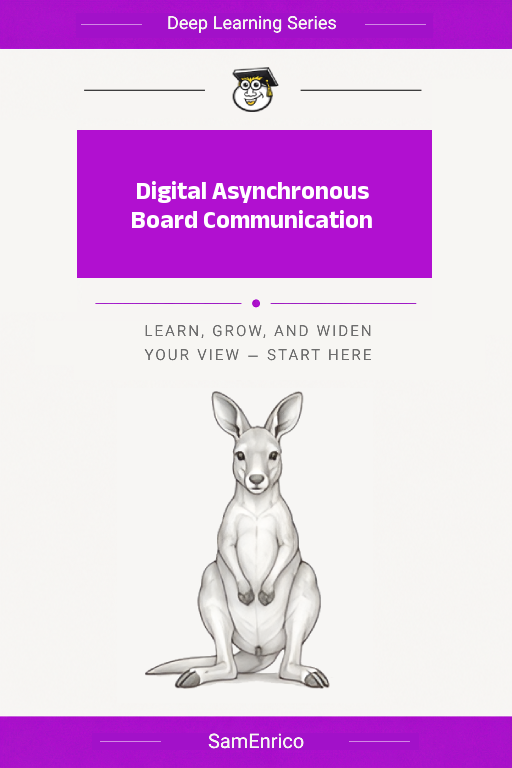
Digital Asynchronous Board Communication eBook
Use Voxer or Marco Polo for voice message check-in
Use Voxer or Marco Polo for voice message check-ins, allowing advisors to respond when available without scheduling live meetings.
Formats
Free sample
Chapter 1: The $1.2 Trillion Blind Spot--–- On a Tuesday morning in March, the eleven members of a high-growth technology company’s board of directors gathered in a glass-walled conference room overlooking San Francisco Bay. The agenda promised four items: quarterly financial review, product roadmap approval, CEO performance discussion, and strategic planning for the upcoming fiscal year. Six hours later, they had completed exactly one and a half items. The financial review ran long because three members hadn’t read the materials. The product roadmap sparked a debate that circled the same arguments for ninety minutes.
The CEO performance discussion was postponed entirely due to lack of time. And strategic planning? That was pushed to the “next special session” that would require another six weeks of calendar tetris to schedule.What happened in that room is not an outlier. It is the rule.According to research from Harvard Business Review, the average senior executive spends nearly twenty-three hours per week in meetings—a number that has increased by more than forty percent over the past two decades. Of those hours, participants rate approximately seventy-one percent as unproductive.
Simple multiplication yields a staggering figure: U.S. businesses waste an estimated $1.2 trillion annually in meeting time that generates little to no value. But the waste is not merely economic. It is strategic, psychological, and relational. Boards—the very bodies responsible for governance, oversight, and long-term direction—are among the worst offenders.The traditional board meeting is broken.This book exists because that brokenness is not inevitable.
It is a design flaw. And like all design flaws, it can be redesigned. The solution is not better meeting facilitation, shorter agendas, or stricter time limits. Those are bandages on a hemorrhage. The real solution requires abandoning the fundamental assumption that governance requires synchronous, scheduled, real-time gatherings.
It requires embracing a different model: asynchronous board communication powered by voice messaging.Before we build that new model, we must understand precisely why the old one fails. This chapter diagnoses the disease. Subsequent chapters will prescribe the cure.The Tyranny of the Scheduled Gathering The board meeting as we know it today is a relic of industrial-era coordination. When communication required physical proximity, gathering in a single room at a single time was the only way to exchange complex information. That constraint shaped everything: agendas were linear, participation was sequential, and decisions were compressed into artificial windows of availability.That constraint no longer exists.
Technology has dissolved geography and time zones. Cloud storage makes documents instantly accessible. Messaging platforms enable threaded, persistent conversations. Yet boards continue to meet as if it were 1985—or 1885.Why?Because meetings feel productive. They produce the illusion of progress.
The calendar shows a block of time labeled “Board Meeting.” People attend, speak, adjourn. Something was accomplished, or so it seems. But the feeling of productivity masks a deeper pathology: the tyranny of the scheduled gathering.Consider what actually happens in a typical board meeting. The chair calls the room to order. Members shuffle papers or open laptops.
Someone presents a slide deck. Discussion follows—but not equal discussion. Research from organizational behavior scholar Chris Argyris shows that in any group larger than six, two or three voices dominate at least seventy percent of the speaking time. The remaining members contribute minimally, not because they lack insight, but because the format rewards speed over depth, confidence over curiosity, and performance over reflection.Then there is the agenda problem. Boards routinely attempt to discuss five different categories of work in a single three-hour block: operational updates, financial oversight, strategic questions, governance compliance, and relationship maintenance.
Each category requires a different cognitive mode. Operational updates demand attention to detail. Strategic questions demand abstract thinking. Relationship maintenance demands emotional attunement. The human brain cannot switch between these modes efficiently.
Every transition costs cognitive overhead. By the third agenda item, most board members are running on mental fumes.The result is shallow strategy and rushed decisions. Complex issues receive ten minutes of discussion. Critical trade-offs are deferred to email threads that no one reads. Dissenting voices are silenced by the clock.
And the CEO leaves the room with a vague sense of direction but no real clarity.The Redwork/Bluework Trap To understand why the board meeting fails strategic thinking, we turn to David Marquet’s influential work, Leadership Is Language. Marquet distinguishes between two types of work: redwork and bluework.Redwork is operational. It is task-oriented, procedural, and binary. Think of a pilot running through a pre-flight checklist, a surgeon following a protocol, or an assembly line worker tightening bolts. Redwork is about doing things right.
It thrives on clarity, repetition, and predictable outcomes.Bluework is strategic. It is creative, cognitive, and exploratory. Think of a team designing a new product, a board evaluating a merger opportunity, or an executive weighing a pivot in business model. Bluework is about doing the right things. It thrives on ambiguity, iteration, and divergent thinking.Here is the problem that Marquet identifies, and that plagues every boardroom: we constantly force bluework into redwork schedules.
We take strategic questions that require exploration, reflection, and debate—bluework—and compress them into agenda items with fixed time limits—redwork. The result is that bluework gets redworked. Strategic thinking becomes procedural. Creative exploration becomes checkbox compliance.The board meeting is a redwork machine trying to process bluework fuel. It cannot work.
It was never designed to work.Marquet offers a simple diagnostic question for any meeting: Are you doing redwork or bluework right now? Most board members cannot answer because the meeting oscillates between the two so rapidly that cognitive whiplash sets in. The financial review (redwork) ends. The strategic discussion (bluework) begins. The chair interrupts the strategic discussion to ask for a procedural vote (redwork).
Then someone raises a relational concern about the CEO’s tone (bluework of a different color). By the end, no one knows what mode they are in, and the quality of every decision suffers.The asynchronous board solves this problem by disentangling redwork from bluework entirely. Operational updates become brief voice check-ins. Strategic questions become threaded, reflective voice conversations that unfold over days, not minutes. Governance votes become explicit, trackable, and asynchronous.
Relationship maintenance becomes its own separate channel. Each mode gets its own rhythm, its own tools, and its own cognitive space.The Email Failure That Paved the Way Before we advocate for voice, we must acknowledge the obvious alternative that most boards have already tried: email.Email seems like a natural fit for asynchronous board communication. It is asynchronous by design. It leaves a written record. It allows attachments, threading, and search.
Nearly every board member already uses it. So why has email failed as a governance tool?The answer lies in three structural defects: context poverty, exhaustion dynamics, and signal loss.First, context poverty. Email is low-context communication. It conveys words, but not tone, hesitation, emphasis, or emotion. Research on computer-mediated communication, pioneered by scholars like Joseph Walther, shows that text-only channels produce higher rates of misinterpretation than voice or video, especially for complex or ambiguous topics.
A board member writing “I have concerns about the Q3 forecast” could mean anything from mild curiosity to profound alarm.…
This is the end of the free sample. Get the eBook to keep going. Buy now
About this book
Details
- Author
- Spellman Darcie
- Publisher
- SamEnrico
- Language
- English
- Genre
- Non-Fiction, Mental Wealth
- Released
- 2026-06-01
- Pages (approx.)
- 138
- Available as
- eBook, Audiobook

Read better in the ZLOADR app
Your eBooks on your phone or tablet. Sign in with your SamEnrico account and start reading.
More by Spellman Darcie
 GAD And Personal SafetySpellman Darcie$11.99
 Self Sabotage Inner Voice CureSpellman Darcie$11.99
 Conversation Starters for Double DatesSpellman Darcie$11.99
 Family Healing After GamblingSpellman Darcie$11.99
 PGD Awareness MonthSpellman Darcie$11.99
 Workaholic Coaching GuideSpellman Darcie$11.99
 Microaggression Confrontation GuideSpellman Darcie$11.99
 Social Skills TrainingSpellman Darcie$11.99
 The Shadow of the Silk Road: The Highwayman of the HimalayasSpellman Darcie$11.99
 Maui’s Fishing Line: The Hook That Raised the IslandsSpellman Darcie$11.99
 Mastering The Art of TinkuSpellman Darcie$11.99
 How to Produce a Hob (Hearth)Spellman Darcie$11.99
You may also like
 Hong Kong Handover 1997Dunn Johnnie$11.99
 Zumba For Postnatal Recovery CourseNeal Christian$11.99
 Zumba for BeginnersLadner Nikia$11.99
 YouTube Comment Mining GuideHumes Pandora$12.99
 Worry Box MeditationCarlin Rudy$11.99
 Workplace Stress MeditationNguyen Lynn$11.99
 Workplace Stress and Sleep RepairHawley Ivory$11.99
 Workplace Perfectionism CureDelaney Jeffry$11.99
 Workplace Injustice Anger GuideWallen Isabelle$11.99
 Work Addiction and Burnout LinkGreenwood Ester$11.99
 Women in Yoga and WellnessBeattie Galina$11.99
 Women in Stand Up ComedyChun Evangeline$11.99