
Non-FictionConsumer Mind ReportDigital Behavior
Digital Adoption Divide Analysis eBook
Compare Boomer resistance to apps versus Gen Z dig
Compare Boomer resistance to apps versus Gen Z digital native fluency.
Formats
Free sample
Chapter 1: The Thanksgiving Test--–- The turkey had been carved, the gravy had congealed, and the family had scattered into the usual post-feast tribes: uncles watching football in the den, cousins comparing phones in the kitchen, children running laps around the dining room table. It was a perfectly ordinary Thanksgiving in the Bennett household—until Eleanor’s banking app broke her afternoon, and her fourteen-year-old grandson fixed it in eight seconds, and neither of them could explain what had just happened.Eleanor Bennett was sixty-eight years old, a retired high school English teacher who had spent thirty-four years explaining the difference between metaphor and metonymy to unimpressed teenagers. She was not, by any reasonable definition, unintelligent. She had read Proust in translation. She could still recite the first twenty lines of the Canterbury Tales in Middle English.
She balanced her checkbook every Sunday with a mechanical pencil and a green ledger that her late husband had bought at Staples in 1987. But at 3:47 on Thanksgiving afternoon, sitting in her daughter’s suburban kitchen with a cup of tea going cold beside her, Eleanor was losing a war against a piece of software.Her bank had sent an email three days earlier: "Important Security Update – Action Required by December 1st." The email, which she had printed out and placed on her refrigerator, explained that the bank was transitioning to a new authentication system. To continue accessing her account online, she needed to verify her identity through the bank’s mobile app. Step one: download the app. Step two: log in using her existing credentials.
Step three: scan the QR code displayed on her laptop screen using her phone’s camera. Step four: enter the six-digit code sent via text message. Step five: create a new biometric profile (face or fingerprint). Step six: confirm.Six steps. Eleanor had been working on step one for forty-seven minutes.She had downloaded the app successfully—that part was fine.
But when she opened it, the login screen asked for a username and password that were different from her desktop banking credentials, which she did not know and had never been told. She tried her desktop password. Denied. She tried her email password. Denied.
She tried the password she used for the grocery delivery service. Denied. After three failed attempts, the app locked her out for fifteen minutes. She waited. She tried again.
Locked out again. The phone screen displayed a message that, to Eleanor, might as well have been written in Sanskrit: "Authentication token expired. Please re-authenticate via desktop portal and initiate OAuth handshake."She had no idea what an OAuth handshake was. She suspected it was something that required her to have a younger pair of hands.Across the kitchen island, her grandson Marcus, age fourteen, was scrolling through Tik Tok with the thousand-yard stare of a teenager who had been away from his gaming PC for five hours and was experiencing withdrawal. He had the thin, gangly build of a boy who had grown four inches in six months and had not yet figured out where his elbows ended.
His thumbs moved across the screen in a blur—up, pause, up, pause, double-tap, up—consuming and discarding fifteen-second videos about sneakers, memes, and Minecraft speedruns with the efficiency of a industrial shredder."Marcus," Eleanor said, not looking up from her phone. "How do you make this thing let you in?"Marcus did not look up either. "Make what?""Banking. Your mother’s bank. I’m locked out and I have to pay the property tax bill before Monday and the only way to do it is through this—this—" she gestured at her phone with the kind of disgust usually reserved for spoiled milk or political advertisements.Marcus sighed—the specific, theatrical sigh of a teenager being asked to perform a task that should have been beneath his dignity—and walked around the island.
He took Eleanor’s phone from her hand without asking. He looked at the screen for three seconds. He tapped the "Forgot Password" link. He tapped "Send Recovery Email." He opened the email app on the same phone (which Eleanor had not realized was possible, because she thought email lived exclusively on her laptop). He clicked the verification link.
He typed a new password—"Thanksgiving2024!"—on the first try, with one thumb. He tapped "Confirm." He looked at the home screen, swiped up to close the app, reopened it, and logged in with the new password. The entire sequence took eight seconds.He handed the phone back to Eleanor. "You’re in. But you should probably write down that password somewhere.
Or use a password manager. Or just let me set up Face ID so you never have to type it again."Eleanor stared at her phone. Then at Marcus. Then back at her phone. "How did you do that?"Marcus shrugged.
"I don’t know. That’s just how apps work.""That’s not an explanation.""It’s the only one I have." He walked back to his side of the kitchen island and resumed scrolling. The moment was over. He had already forgotten it.But Eleanor had not. And neither, as it turned out, had her daughter Sarah, who had been watching from the stove where she was reheating the green bean casserole.
Sarah was forty-two, a project manager at a software company, and she had seen this exact scene play out a hundred times—not just with her mother and her son, but with clients, colleagues, and strangers in coffee shops. The older person, frozen by a system designed without them in mind. The younger person, moving through the same system with the unconscious fluency of a native speaker. Neither one understanding the other’s reality."You know what’s funny, Mom?" Sarah said, scraping casserole residue into a serving bowl. "Marcus just failed his social studies test last week because he couldn’t figure out how to fill out a paper form.
The teacher gave them a physical worksheet—like, actual paper, with lines and boxes—and Marcus turned it in blank. He said he didn’t know where to write his name because there was no gray placeholder text that said 'Type your name here.'"Eleanor looked at Marcus. Marcus looked at his shoes. "The boxes were really small," he muttered. "And you can’t delete a mistake.
You have to start over on a whole new sheet. It’s a bad system."The room went quiet. And in that silence, something essential clicked into place for Eleanor—not about banking apps or password resets, but about the nature of the divide itself. She had spent forty-seven minutes failing at something Marcus solved in eight seconds. Marcus had spent an entire class period failing at something she could have completed in ninety seconds with a number two pencil.
They were not smarter than each other. They were not dumber than each other. They were speaking different languages, inhabiting different cognitive environments, operating under different assumptions about how the world was supposed to work.She had learned to read on paper. He had learned to read on screens. She learned to type on a typewriter where…
This is the end of the free sample. Get the eBook to keep going. Buy now
About this book
Details
- Author
- Fortune Sparkle
- Publisher
- SamEnrico
- Language
- English
- Genre
- Non-Fiction, Consumer Mind Report, Digital Behavior
- Released
- 2026-06-11
- Pages (approx.)
- 125
- Available as
- eBook, Audiobook

Read better in the ZLOADR app
Your eBooks on your phone or tablet. Sign in with your SamEnrico account and start reading.
More by Fortune Sparkle
 Paleo Immune Support GuideFortune Sparkle$11.99
 Self Doubt In Volunteering GuideFortune Sparkle$11.99
 The Attention Budgeting CourseFortune Sparkle$11.99
 Sam Cooke ChangeFortune Sparkle$11.99
 Sleep Memory For Law StudentsFortune Sparkle$11.99
 Anger and Blended FamiliesFortune Sparkle$11.99
 Spousal Survivor PlanningFortune Sparkle$11.99
 Sao Paulo Fashion Week: The Runway Revolution That Redefined Latin American Style (2001-Present)Fortune Sparkle$11.99
 The Healers of Nubia: Brewing Medicine from the NileFortune Sparkle$11.99
 How to Become a Marker IiFortune Sparkle$11.99
 A Collector's Handbook to the Cadillac 60Fortune Sparkle$11.99
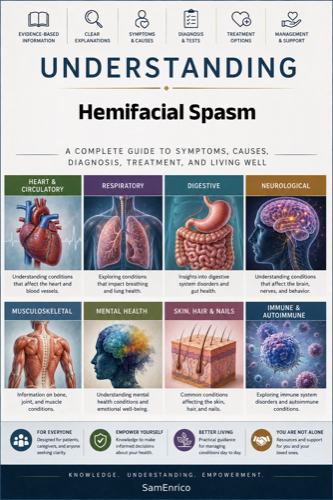 Understanding Hemifacial SpasmFortune Sparkle$11.99
You may also like
 Hong Kong Handover 1997Dunn Johnnie$11.99
 Zumba For Postnatal Recovery CourseNeal Christian$11.99
 Zumba for BeginnersLadner Nikia$11.99
 YouTube Comment Mining GuideHumes Pandora$12.99
 Worry Box MeditationCarlin Rudy$11.99
 Workplace Stress MeditationNguyen Lynn$11.99
 Workplace Stress and Sleep RepairHawley Ivory$11.99
 Workplace Perfectionism CureDelaney Jeffry$11.99
 Workplace Injustice Anger GuideWallen Isabelle$11.99
 Work Addiction and Burnout LinkGreenwood Ester$11.99
 Women in Yoga and WellnessBeattie Galina$11.99
 Women in Stand Up ComedyChun Evangeline$11.99