
Non-FictionSelf-HelpRemote Collaboration
Design Thinking Remote Teams eBook
Run virtual design sprints and workshops using thi
by Leung Delmar
Run virtual design sprints and workshops using this practical guide.
Formats
Free sample
Chapter 1: The Whiteboard Lie--–- It was 10:47 AM on a Tuesday when the Miro board froze. Thirty-two sticky notes, fourteen user personas, and one beautifully articulated "How Might We" statement vanished into the gray void of a spinning cursor. On the Zoom call, twelve faces stared back at me—some frozen mid-sentence, others blinking in slow motion, one person's cat walking across their keyboard. The Chief Product Officer, who had cleared her entire week for this "breakthrough" remote design sprint, mouthed something that looked like "I told you so" before her video dropped entirely.I had spent the previous six years facilitating design thinking workshops in person. I knew the rituals by heart.
I knew when to hand out the fat markers, when to ring the bell, when to lean against the whiteboard and say "there are no bad ideas." I had facilitated sprints at Google, at a Y Combinator startup that later sold for $400 million, and at a nonprofit where the "whiteboard" was actually a floor-to-ceiling window we wrote on with dry-erase markers. I was, by any reasonable metric, a competent facilitator.And I was failing. Spectacularly.That Tuesday morning sprint was not an anomaly. It was the third remote workshop I had run in two weeks, and the third that felt like pulling teeth through a Zoom connection. The energy was flat.
The ideas were safe. The loudest voices—the ones who always seemed to have perfect lighting and faster internet—dominated every conversation. And the introverts, the brilliant quiet ones who had always flourished during silent sticky-note exercises in person, sat mute with their cameras off, contributing exactly nothing.I had bought into the lie. The lie that remote work is just in-person work with worse coffee. The lie that you can take every technique from the design thinking canon—the empathy maps, the affinity clusters, the dot voting—drop them into a video call, and expect magic to happen.
The lie that the whiteboard is just a surface, not a sacred space.The whiteboard was never just a surface. It was a shared cognitive playground. It was a permission structure for half-baked ideas. It was a democratic canvas where the junior designer's squiggly arrow carried exactly the same visual weight as the CEO's bullet-point list. And when we moved remote, we didn't just change our tools.
We shattered the entire architecture of collaborative creativity.This book is the story of how I rebuilt that architecture from scratch. It is not a theory book. It is not a collection of "best practices" written by someone who hasn't run a remote workshop since 2021. It is a battle-tested, mistake-ridden, constantly revised playbook for running virtual design sprints and workshops that actually work. And it starts with a single, uncomfortable truth: the in-person workshop you're nostalgic for was never as good as you remember.The Nostalgia Trap Let me be provocative for a moment.
I want you to think back to the last in-person design workshop you attended. Really think about it. Not the highlight reel your brain has curated—the actual, messy, human experience.Was everyone truly engaged? Or were three people doing 70 percent of the talking while the rest nodded along, checked their phones, or mentally composed their to-do lists? Did the sticky notes on the wall actually lead to decisions?
Or did someone take a photo of the board at 4:45 PM, promise to "synthesize the outputs," and then never look at that photo again? Did the introverts speak up early and often? Or did they wait until the second day, after the extroverts had already framed the entire problem?I have asked these questions to over five hundred facilitators, product managers, and designers in the past two years. The answers are damning. The vast majority admit that in-person workshops were rife with the same problems we now blame on remote work: dominance hierarchies, lost documentation, surface-level ideas, and the dreaded "post-workshop vacuum" where nothing actually ships.But nostalgia is a powerful drug.
We remember the one brilliant moment—the breakthrough insight scrawled on a sticky note at 3:47 PM, the laughter over bad pizza, the feeling of collective energy in a room—and we forget the four hours of performative busywork that surrounded it. We blame remote work for killing the magic, when in reality, the magic was always intermittent, unpredictable, and highly dependent on factors we never controlled.This is what I call the Nostalgia Trap. It is the belief that the past was better than it actually was, and that the only way forward is backward. It is the enemy of innovation. And it is the first thing we must dismantle if we want to build a genuinely better way of working.Here is the truth that emerged from that frozen Miro board at 10:47 AM on that terrible Tuesday: remote work does not kill design thinking.
Remote work reveals its weaknesses. The absence of a physical room strips away the crutches we relied on—the social pressure to participate, the visual dominance of a well-placed sticky note, the ability to read a room by scanning body language. When those crutches disappear, you are left with the bare bones of the process. And if those bones are brittle, the whole thing collapses.But if those bones are strong? If the process is truly structured, truly inclusive, truly focused on outcomes rather than artifacts?
Then remote work is not a hindrance. It is an upgrade.Distance Is Not a Disability. It Is a Discipline.I want to introduce a phrase that will appear throughout this book, because it has become my north star as a facilitator. Say it out loud: Distance is not a disability. It is a discipline.What does this mean?
It means that the constraints of remote work—the lack of physical proximity, the asynchronous communication lags, the absence of spontaneous hallway conversations—are not problems to be solved. They are design parameters to be embraced. They force us to be more intentional about every single aspect of collaboration.When you cannot rely on someone "just noticing" a sticky note on the wall, you create a structured documentation system. When you cannot rely on a spontaneous sidebar to resolve a disagreement, you build a clear decision-making protocol. When you cannot rely on body language to tell you that someone is confused, you design a low-friction way for them to ask for help.These are not workarounds.
They are improvements.Consider the humble sticky note. In an in-person workshop, sticky notes are simultaneously magical and terrible. They are magical because they externalize thought, make ideas tangible, and create a shared visual language. They are terrible because they fall off walls, get photographed and forgotten, and privilege whoever has the neatest handwriting or the boldest marker. In a remote workshop, you cannot use physical sticky notes at all.
But in their place, you get digital sticky notes that are searchable, editable, exportable, and—most importantly—anonymous when you need them to be. The constraint forces an upgrade.Consider the raised hand. In an in-person workshop, raising your hand requires a certain amount of social courage. You have to physically extend your arm, interrupt the flow of conversation, and risk being…
This is the end of the free sample. Get the eBook to keep going. Buy now
About this book
Details
- Author
- Leung Delmar
- Publisher
- SamEnrico
- Language
- English
- Genre
- Non-Fiction, Self-Help, Remote Collaboration
- Released
- 2026-06-06
- Pages (approx.)
- 149
- Available as
- eBook, Audiobook

Read better in the ZLOADR app
Your eBooks on your phone or tablet. Sign in with your SamEnrico account and start reading.
More by Leung Delmar
 Loneliness Recovery at GymsLeung Delmar$11.99
 Caregiver Dependent CreditLeung Delmar$11.99
 Workplace Nutrition for StressLeung Delmar$11.99
 Lagos Affiliate MarketingLeung Delmar$11.99
 Morning Cold Plunge GuideLeung Delmar$11.99
 Idea Rating Made SimpleLeung Delmar$11.99
 Grit for HR ProfessionalsLeung Delmar$11.99
 The Winged Victory of Samothrace: A Masterpiece Frozen in TimeLeung Delmar$11.99
 The Serpent's Gambit: How the World Was StolenLeung Delmar$11.99
 How to Produce Lawn Mower BagsLeung Delmar$11.99
 How to Produce a Video RecorderLeung Delmar$11.99
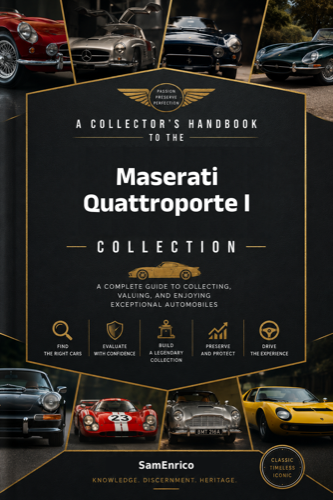 A Collector's Handbook to the Maserati Quattroporte ILeung Delmar$11.99
You may also like
 Hong Kong Handover 1997Dunn Johnnie$11.99
 Zumba For Postnatal Recovery CourseNeal Christian$11.99
 Zumba for BeginnersLadner Nikia$11.99
 YouTube Comment Mining GuideHumes Pandora$12.99
 Worry Box MeditationCarlin Rudy$11.99
 Workplace Stress MeditationNguyen Lynn$11.99
 Workplace Stress and Sleep RepairHawley Ivory$11.99
 Workplace Perfectionism CureDelaney Jeffry$11.99
 Workplace Injustice Anger GuideWallen Isabelle$11.99
 Work Addiction and Burnout LinkGreenwood Ester$11.99
 Women in Yoga and WellnessBeattie Galina$11.99
 Women in Stand Up ComedyChun Evangeline$11.99