
Non-FictionSelf-HelpSustainability
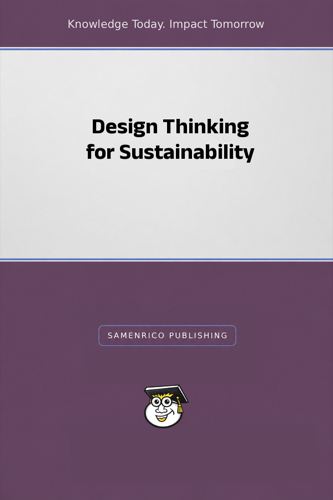
Design Thinking for Sustainability
Eco friendly problem solving.
by Hodge Oliva
Eco friendly problem solving.
Formats
About this book
Free sample
Chapter 1: The Lithium Paradox--–- The electric vehicle hummed silently as Sarah merged onto the highway, its dashboard displaying a cheerful zero-emissions badge. She felt good—virtuous, even. For the first time in years, she was driving past gas stations without a twinge of guilt. Her new EV was her contribution to the climate fight, a sleek metal testament to her values. Her children would inherit a less polluted world because she had made the responsible choice.
What Sarah did not know, as she accelerated past a pickup truck spewing diesel exhaust, was that her battery had already displaced its environmental damage to a place she would never see. The lithium inside her car had been mined from a salt flat in South America, a process that drained ancient aquifers, displaced Indigenous communities, and left behind a toxic wasteland. Her zero-emissions vehicle had a hundred-mile-long shadow, and she was driving directly into it.This is the paradox that greets every well-intentioned environmentalist in the twenty-first century. We buy bamboo toothbrushes shipped from China in plastic wrapping. We install solar panels manufactured with rare earth minerals mined by children in the Democratic Republic of Congo.
We recycle our yogurt containers into a system that actually downcycles most plastic into lower-grade products that inevitably end up in landfills or oceans. The more we try to help, the more we discover that our solutions have become problems somewhere else. This chapter is about why that happens, how to see it coming, and what to do about it.The term for this phenomenon is displaced impact—a single, unifying concept that will replace the scattered jargon you may have encountered elsewhere. Some call it telecoupling. Others call it burden shifting.
Still others refer to hidden flows or the rebound effect. These all describe the same underlying reality: solving a problem in one place, at one time, for one stakeholder, almost always creates a new problem in another place, another time, or for another stakeholder. The goal of this book—and specifically this chapter—is to train you to see displaced impact before you design, not after…
This is the end of the free sample. Get the eBook to keep going. Buy now
Contents
- Chapter 1
- Chapter 2
- Chapter 3
- Chapter 4
- Chapter 5
- Chapter 6
- Chapter 7
- Chapter 8
- Chapter 9
- Chapter 10
- Chapter 11
- Chapter 12
Details
- Author
- Hodge Oliva
- Publisher
- SamEnrico
- Language
- English
- Genre
- Non-Fiction, Self-Help, Sustainability
- Released
- 2026-06-05
- Pages (approx.)
- 158
- Available as
- eBook, Audiobook

Read better in the ZLOADR app
Your eBooks on your phone or tablet. Sign in with your SamEnrico account and start reading.
More by Hodge Oliva
 CSC Scholarship Application WalkthroughHodge Oliva$11.99
 Self Hypnosis for Tension Myositis SyndromeHodge Oliva$11.99
 Late Career Job Loss GuideHodge Oliva$11.99
 Collaborative Genius GuideHodge Oliva$11.99
 Rent Original CompanyHodge Oliva$11.99
 Self Esteem and MentorshipHodge Oliva$11.99
 Virtual Meeting Communication GuideHodge Oliva$11.99
 The Last Broadcast of the Lone Wolf: The Enigma of Harold HoltHodge Oliva$11.99
 Midnight in the Bronzeville UndergroundHodge Oliva$11.99
 How to Become a Material InspectorHodge Oliva$11.99
 A Collector's Handbook to the Steyr-puch 650 Tr IiHodge Oliva$11.99
 How to Produce Orchestral String Instrument StringsHodge Oliva$11.99
You may also like
 Hong Kong Handover 1997Dunn Johnnie$11.99
 Zumba For Postnatal Recovery CourseNeal Christian$11.99
 Zumba for BeginnersLadner Nikia$11.99
 YouTube Comment Mining GuideHumes Pandora$12.99
 Worry Box MeditationCarlin Rudy$11.99
 Workplace Stress MeditationNguyen Lynn$11.99
 Workplace Stress and Sleep RepairHawley Ivory$11.99
 Workplace Perfectionism CureDelaney Jeffry$11.99
 Workplace Injustice Anger GuideWallen Isabelle$11.99
 Work Addiction and Burnout LinkGreenwood Ester$11.99
 Women in Yoga and WellnessBeattie Galina$11.99
 Women in Stand Up ComedyChun Evangeline$11.99