
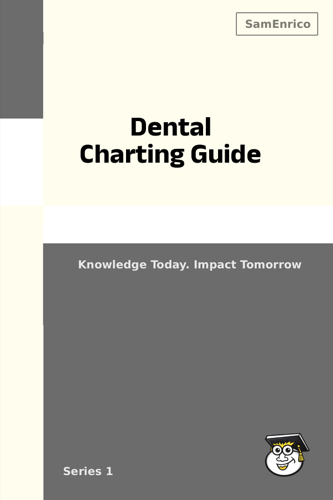
Free sample
Chapter 1: The $175,000 Mistake...--–- Dr. Elena Vasquez had been practicing general dentistry for nearly fifteen years when she lost a lawsuit that she should have won. The patient, a sixty-two-year-old retired teacher named Margaret Holloway, had presented with a small interproximal caries on tooth #19. Dr. Vasquez diagnosed it, filled it, and sent Mrs.
Holloway on her way. Eighteen months later, the tooth developed a recurrent caries that extended into the pulp, requiring root canal therapy and a crown. Mrs. Holloway sued, alleging that Dr. Vasquez had failed to diagnose the true depth of the original decay.The case should have been defensible.
Dr. Vasquez had clinical notes. She had radiographs. She had a signed treatment plan. But when the plaintiff’s attorney requested the complete dental record, something was missing: the periodontal chart from the initial visit.
Not because it hadn’t been performed—Dr. Vasquez’s hygienist distinctly remembered probing Mrs. Holloway’s dentition. But because the chart had been recorded on a loose sheet of paper that was later misplaced. The hygienist had written the six-point probing depths on a notepad, intending to transfer them to the permanent record “later.” Later never came.The jury never heard about the healthy 2mm and 3mm probing depths that would have supported Dr.
Vasquez’s argument that the tooth was otherwise sound. They never saw the baseline data that would have made the recurrent caries appear as a predictable complication rather than a negligent oversight. Instead, they saw an incomplete record. They saw a clinician who, in the words of the opposing counsel, “couldn’t be bothered to write things down.” The verdict: $175,000 in damages, plus legal fees that pushed the total past a quarter of a million dollars.The judge’s instructions to the jury included a phrase that Dr. Vasquez would later describe as “the most expensive sentence I ever heard”: “You may consider the absence of a record as evidence that the procedure or finding never occurred.”This is the Paper Trail Principle.
And it is the single most important concept in all of dental documentation.Why This Chapter Matters to You If you are reading this book, you likely fall into one of three categories. First, you are a dental student who has just realized that no one has ever actually taught you how to chart properly. Second, you are a practicing dentist, hygienist, or assistant who charts every day but secretly wonders if you are doing it right. Third, you are a seasoned clinician who has already experienced the sinking feeling of an incomplete record during an audit or a legal proceeding.Regardless of which category describes you, this chapter will change how you think about charting. It will not merely teach you mechanics—tooth numbers, symbols, abbreviations.
It will teach you philosophy: why charting matters, what purposes it serves, and how to approach it as a professional discipline rather than a clerical chore.By the end of this chapter, you will understand the legal weight of every mark you make. You will know the difference between a clinically useful chart and a legally defensible one. You will have a framework for evaluating your own charting habits. And you will never again write a finding on a sticky note.The Invisible Profession Dentistry occupies a peculiar space in the healthcare profession. A physician can order a laboratory test and receive a printed result.
A surgeon dictates an operative report that becomes a permanent document. A radiologist’s interpretation is captured in a typed narrative. But in dentistry, the primary diagnostic instrument is the human eye, and the primary recording instrument is the human hand—or, increasingly, the click of a mouse on a digital odontogram.The gap between what a dentist sees and what a dentist records is the single greatest source of legal exposure in the profession. Consider what happens during a typical new patient examination. The dentist looks at thirty-two teeth, each with five surfaces.
That is one hundred sixty surfaces. The dentist notes restorations, cracks, wear facets, discolorations, calculus deposits, gingival inflammation, mucosal lesions, occlusal interferences, and radiographic abnormalities. All of this occurs in a matter of minutes.The human brain is remarkably good at pattern recognition and clinical synthesis. But it is notoriously poor at long-term factual recall. A study published in the Journal of Dental Research found that clinicians forgot an average of 40 percent of clinical findings within twenty-four hours and nearly 70 percent within one week.
The chart is not merely a record. It is the only thing standing between accurate clinical memory and complete amnesia.Yet dental charting remains one of the most under-taught and overlooked skills in dental education. A survey of accredited dental schools in the United States found that the average student received fewer than six hours of formal instruction in charting techniques. Most of that instruction focused on tooth numbering and basic restoration symbols. Almost none of it addressed the legal weight of the chart as a document.
Almost none of it taught the difference between a clinically useful chart and a legally defensible one. Almost none of it prepared graduating dentists for the reality that their charts would one day be read not by colleagues, but by attorneys, insurance adjusters, and expert witnesses whose job is to find the gaps.This book exists to close that gap.Beyond the Tooth Diagram When most people think of dental charting, they imagine the familiar tooth diagram—two arches, thirty-two numbered circles or squares, a few symbols for fillings and crowns. That image is not wrong, but it is radically incomplete. A complete dental chart is not a drawing. It is a legal document, a clinical decision-support tool, a communication device, and a quality assurance instrument.
The tooth diagram is just the cover page.The complete dental record includes, at minimum:Demographic and contact information for the patient Medical history including allergies, medications, and systemic conditions Dental history including past treatments and patient-reported concerns Clinical examination findings including extraoral and intraoral soft tissue exams Periodontal charting with six-point probing depths, bleeding points, furcation involvements, and clinical attachment levels Restorative charting showing all existing restorations, prosthetics, and implants Radiographic findings with interpretations Caries classification with specific notation of lesion location and depth Endodontic findings including pulp test results and periapical status Occlusal findings including interferences, wear patterns, and joint sounds Treatment plans with phases, priorities, and alternatives Informed consent documentation Progress notes for each visit Correspondence with specialists, laboratories, and insurance carriers Financial records, which must be kept separate from clinical records Each of these components interacts with the others. A periodontal finding influences restorative planning. A medical history finding—bisphosphonate use, for example—changes the risk calculus for extractions. A radiographic finding validates or contradicts a clinical finding. The chart is a system, not a collection of isolated facts.This chapter introduces the foundational principles that govern all of these components.
Subsequent chapters will drill down into each specific area, but the principles here apply universally. Master these principles, and every chart you create will be clinically useful, legally defensible, and professionally valuable.The Four Pillars of Dental Charting Every mark on a dental chart serves one or…
This is the end of the free sample. Get the eBook to keep going. Buy now
About this book
Details
- Author
- Wester Demetrius
- Publisher
- SamEnrico
- Language
- English
- Genre
- Non-Fiction, True Crime / Charting
- Released
- 2026-06-06
- Pages (approx.)
- 153
- Available as
- eBook, Audiobook

Read better in the ZLOADR app
Your eBooks on your phone or tablet. Sign in with your SamEnrico account and start reading.
More by Wester Demetrius
 LBO Secondaries Market GuideWester Demetrius$11.99
 Customer Service EQ GuideWester Demetrius$11.99
 The Dubai Library GuideWester Demetrius$11.99
 Flossing Habit FormationWester Demetrius$11.99
 Pharmaceutical Deal MultiplesWester Demetrius$11.99
 Diabetic NeuropathyWester Demetrius$11.99
 Thai Massage StretchingWester Demetrius$11.99
 The Golden Vow: A Royal Love That Built an EmpireWester Demetrius$11.99
 How to Produce PET Waste BagsWester Demetrius$11.99
 How to Produce Deck Shuffleboard PucksWester Demetrius$11.99
 One Page Referral Program PrimerWester Demetrius$12.99
 Philippines Remote Hiring HandbookWester Demetrius$12.99
You may also like
 Hong Kong Handover 1997Dunn Johnnie$11.99
 Zumba For Postnatal Recovery CourseNeal Christian$11.99
 Zumba for BeginnersLadner Nikia$11.99
 YouTube Comment Mining GuideHumes Pandora$12.99
 Worry Box MeditationCarlin Rudy$11.99
 Workplace Stress MeditationNguyen Lynn$11.99
 Workplace Stress and Sleep RepairHawley Ivory$11.99
 Workplace Perfectionism CureDelaney Jeffry$11.99
 Workplace Injustice Anger GuideWallen Isabelle$11.99
 Work Addiction and Burnout LinkGreenwood Ester$11.99
 Women in Yoga and WellnessBeattie Galina$11.99
 Women in Stand Up ComedyChun Evangeline$11.99