
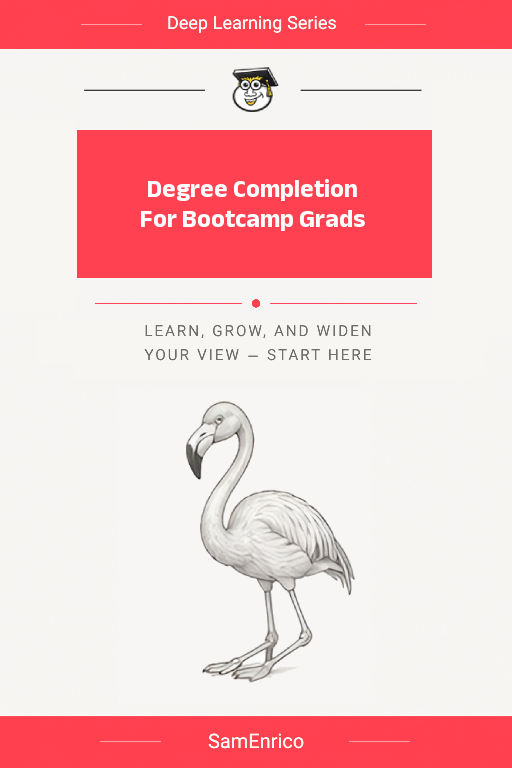
Non-FictionStudent's ShortcutCredit TransferDegree Pathways
Degree Completion For Bootcamp Grads eBook
Transfer bootcamp credits to university degree pro
by Looney Trent
Transfer bootcamp credits to university degree programs including accredited pathways and prior learning assessment.
Formats
Free sample
Chapter 1: The Paper Ceiling--The email arrived on a Tuesday afternoon, three weeks after you aced the technical interview. You remember the four-hour coding challenge, the system design whiteboard where you mapped out microservices like a veteran architect, the behavioral round where you described leading a team through a production outage at 3 AM. The hiring manager smiled. The senior engineer nodded. You walked out thinking, finally, someone who sees my skills instead of my résumé's missing line.Then the rejection landed.
Polite. Formulaic. Buried in the third paragraph: "While your technical skills are impressive, we have decided to move forward with candidates whose educational background more closely aligns with our requirements."No mention of your bootcamp's 94% graduation rate. No mention of the e-commerce platform you built from scratch that now handles 50,000 monthly users. No mention of the open-source contributions, the Stack Overflow reputation, the late nights spent mastering algorithms that most computer science graduates only glimpse in textbooks.Just a closed door.
A locked room. A ceiling you cannot see but can feel pressing down on your career.Welcome to the paper ceiling.The Invisible Barrier That Costs You Promotions, Visas, and Respect The paper ceiling is not a metaphor. It is a quantifiable, systemic barrier that separates workers with accredited degrees from those without—regardless of skill, experience, or performance. It operates silently in applicant tracking systems that filter out résumés missing a checkbox. It manifests in promotion committees that "prefer" candidates with degrees for senior roles.
It shows up in immigration lawyer's offices where bootcamp graduates discover that their certificates mean nothing to USCIS officers evaluating H-1B visa petitions.Let me be direct with you: if you graduated from a coding bootcamp between 2014 and 2024, you were sold a promise that the world was changing. "College is dying," the influencers said. "Portfolios matter more than diplomas," the bootcamp ads promised. "Employers care about what you can build, not where you learned it," the career coaches assured.They were not entirely wrong. But they were not entirely right either.The job market of 2025-2026 has shifted.
The early days of bootcamp hiring—when a three-month certificate could land you a junior role at a startup hungry for React developers—are over. Today, the same companies that once championed skills-based hiring have reinstated degree requirements, particularly for senior engineer roles, management tracks, and any position involving immigration sponsorship. According to labor market data from Lightcast (formerly Emsi Burning Glass), the percentage of software developer job postings explicitly requiring a bachelor's degree increased from 62% in 2019 to 78% in 2025. The percentage requiring a degree or equivalent experience dropped by half.The paper ceiling tightened. And you felt it.But here is what the bootcamp industry never told you, and what this book will reveal: the degree is not an enemy.
The degree is a lever. And you are closer to earning one than you have been led to believe.The Data That Bootcamps Don't Want You to See Let me share three numbers that changed how I think about bootcamp graduates and degrees.Number one: the salary gap. According to a 2025 analysis of self-reported salary data from over 8,000 bootcamp graduates, the median salary for bootcamp-only engineers with three years of experience was 92,000.Fordegree−holdingengineerswiththesameyearsofexperienceatthesametypesofcompanies?92,000. For degree-holding engineers with the same years of experience at the same types of companies? 92,000.Fordegree−holdingengineerswiththesameyearsofexperienceatthesametypesofcompanies?118,000.
A 26,000annualgapthatwidensto26,000 annual gap that widens to 26,000annualgapthatwidensto45,000 by year five. That is not a skills gap. That is a credential gap.Number two: the promotion gap. A longitudinal study of 1,200 engineers who entered the workforce between 2019 and 2020 found that bootcamp graduates were promoted to senior engineer at roughly half the rate of degree-holding peers, controlling for identical performance ratings. The reason cited by managers in follow-up interviews?
Not technical ability. "Client confidence," "leadership expectations," and "HR classification requirements" were the most common explanations. In plain English: companies use degrees as a shortcut for trustworthiness, even when performance data says otherwise.Number three: the visa wall. Among bootcamp graduates seeking H-1B sponsorship, the denial rate for initial petitions is nearly three times higher than for degree-holding applicants, according to 2024 USCIS data. The reason is simple: US immigration law has no category for "coding bootcamp certificate." The H-1B requires a bachelor's degree or twelve years of equivalent experience.
Twelve years. Most bootcamp graduates have two or three. The result? Brilliant engineers are denied work visas not because they lack skill, but because the law was written before bootcamps existed.These three numbers represent the paper ceiling in action. They are not your fault.
They are not a reflection of your abilities. They are structural barriers built by an educational system that moves slowly and an immigration system that moves slower.But here is what the data also shows: bootcamp graduates who complete accredited bachelor's degrees—using the strategies in this book—close every single one of these gaps within eighteen months of graduation. Their salaries match or exceed degree-holders. Their promotion rates equalize. Their visa approval rates align.The degree is not a four-year sentence.
It is a key that unlocks doors already open to others. And you can earn that key in months, not years.Why "College Is Dead" Was Always a Half-Truth Let me pause here and name something uncomfortable. The bootcamp industry has a complicated relationship with higher education. On one hand, bootcamps exist because colleges failed to teach practical web development skills for years. On the other hand, bootcamps marketed themselves as replacements for degrees—not supplements to them.That marketing worked.
It filled seats. It gave graduates confidence. But it also set expectations that the job market never fully validated.Consider the timeline. The first major coding bootcamps launched around 2012-2014. The job market was recovering from the 2008 recession.
Companies were desperate for developers. Degree programs were still teaching Java applets and PHP while the industry moved to React and Node. Bootcamp graduates filled a genuine gap. Hiring managers looked past degree requirements because there were not enough graduates to fill open roles.That era is over. Today, every major university offers web development, data science, and full-stack tracks.
Online master's programs in computer science have exploded (Georgia Tech's OMSCS alone has over 15,000 students). The supply of degree-holding developers has caught up to demand. And in that environment, companies have returned to the path of least resistance: filtering by degree.This is not a conspiracy against bootcamp graduates. It is a rational response to an oversupply of candidates. When a hiring manager receives 500 applications for a single role, they use filters.
GPA filters. Years of experience filters. And degree filters. Your bootcamp certificate does not show up in those filters. Your Git Hub does not either.The bootcamp industry's response to this shift has been mixed.
Some bootcamps have pursued accreditation. Others have partnered with universities to offer "pathway programs" that transfer credits. A few have been transparent about the limitations of a certificate alone. But many continue to market as if the 2015 hiring market never ended.This book exists because that marketing leaves you stranded. You deserve a map that reflects the actual terrain, not the optimistic projection from a bootcamp's admissions…
This is the end of the free sample. Get the eBook to keep going. Buy now
About this book
Details
- Author
- Looney Trent
- Publisher
- SamEnrico
- Language
- English
- Genre
- Non-Fiction, Student's Shortcut, Credit Transfer, Degree Pathways
- Released
- 2026-05-29
- Pages (approx.)
- 147
- Available as
- eBook, Audiobook

Read better in the ZLOADR app
Your eBooks on your phone or tablet. Sign in with your SamEnrico account and start reading.
More by Looney Trent
 The Gaming Disorder Recovery GuideLooney Trent$11.99
 Growth Hormone for Sleep ApneaLooney Trent$11.99
 Parental Anger and Chore BattlesLooney Trent$11.99
 Umayyad Mosque Damascus GuideLooney Trent$11.99
 The Parent Boundary WorkbookLooney Trent$11.99
 The Ghosts of Khe Sanh: Voices from the Valley of DeathLooney Trent$11.99
 Echoes of the Last Broadcast: The 1967 Radio Blackout That Never EndedLooney Trent$11.99
 How to Become a Scale Assembly Set-up WorkerLooney Trent$11.99
 Understanding Bronchiectasis OligospermiaLooney Trent$17.99
 Military LawLooney Trent$11.99
 Small Business Expense Categorization AILooney Trent$12.99
You may also like
 Hong Kong Handover 1997Dunn Johnnie$11.99
 Zumba For Postnatal Recovery CourseNeal Christian$11.99
 Zumba for BeginnersLadner Nikia$11.99
 YouTube Comment Mining GuideHumes Pandora$12.99
 Worry Box MeditationCarlin Rudy$11.99
 Workplace Stress MeditationNguyen Lynn$11.99
 Workplace Stress and Sleep RepairHawley Ivory$11.99
 Workplace Perfectionism CureDelaney Jeffry$11.99
 Workplace Injustice Anger GuideWallen Isabelle$11.99
 Work Addiction and Burnout LinkGreenwood Ester$11.99
 Women in Yoga and WellnessBeattie Galina$11.99
 Women in Stand Up ComedyChun Evangeline$11.99