
Non-FictionSelf-HelpPanic Disorder
DBT Skills For Panic Attacks eBook
Use TIPP, opposite action, and mindfulness to halt
Use TIPP, opposite action, and mindfulness to halt panic episodes quickly.
Formats
Free sample
Chapter 1: The Ambush Within--–- The first time it happened, Maria was standing in the checkout line at a grocery store, holding a carton of milk and a box of cereal. She remembers the fluorescent lights humming overhead, the beep of the scanner, the woman behind her tapping a credit card against her palm. Then, without warning, her heart slammed against her ribs like a fist against a door. The air turned thick and unusable. Her vision narrowed to a tunnel.
Her knees buckled slightly. She grabbed the edge of the conveyor belt, convinced she was about to die right there, in the express lane, with strangers watching. Ninety seconds later, she was sitting in her car in the parking lot, shaking, her mind racing through the same three questions: What was that? Is something wrong with my heart? Is it going to happen again?Maria had just experienced a panic attack.
And like nearly eight million adults in the United States who meet the criteria for panic disorder each year, she would spend the next several months trying to figure out what had ambushed her. She would visit her primary care doctor (normal EKG, normal blood work). She would stop going to the grocery store. She would avoid coffee, then exercise, then social plans. And every time she felt a skipped heartbeat or a wave of dizziness, she would brace herself for another ambush.This chapter is about understanding what that ambush actually is—not as a mysterious breakdown or a sign of weakness, but as a biological misfire.
By the time you finish reading, you will know exactly what happens inside your body during a panic attack, why it feels so terrifying, and why it cannot hurt you. You will also learn why most traditional approaches to anxiety fail during a panic attack and why the DBT skills in this book work differently. This is not a chapter about coping. It is a chapter about demystifying the enemy so that you can stop fighting blind.The Biology of a False Alarm Let us begin with a simple but crucial fact: panic attacks are not dangerous. They feel dangerous.
They feel like heart attacks, suffocation, strokes, or impending insanity. But they are none of those things. A panic attack is a false alarm—a survival response that has been triggered in the absence of any real threat.To understand why this happens, you need to know about two branches of your autonomic nervous system. The autonomic nervous system controls all the body functions you do not have to think about: heart rate, breathing, digestion, blood pressure, sweating, pupil dilation. It operates behind the scenes, like a silent operating system.
Within this system, there are two opposing teams.The first team is the sympathetic nervous system. This is your body’s accelerator pedal. Its job is to prepare you for danger—real danger, like a car veering into your lane or a large animal stepping onto the trail. When the sympathetic nervous system activates, it releases adrenaline and noradrenaline into your bloodstream. Your heart rate spikes.
Your breathing quickens. Your pupils dilate to let in more light. Blood rushes away from your digestive system (which is not a priority during an emergency) and toward your large muscles so you can run or fight. You may sweat to cool down. You may feel a jolt of energy or even aggression.
This collection of changes is often called the fight-or-flight response.The second team is the parasympathetic nervous system. This is your body’s brake pedal. Its job is to calm you down after a threat has passed. It slows your heart rate, lowers your blood pressure, constricts your pupils, and directs blood back to your digestive system. It is sometimes called the rest-and-digest system.
You feel it when you take a long exhale, when you lie down after a stressful day, when you yawn, or when you submerge your face in cold water (a skill we will explore in detail in Chapter 7).In a properly functioning nervous system, these two teams work in balance. Danger arrives → sympathetic activates → you survive → parasympathetic activates → you return to calm. The problem in panic disorder is not that the sympathetic nervous system is broken. It is that it fires at the wrong time—like a smoke alarm that goes off when you burn toast, not when there is an actual fire.Why Panic Feels Like Dying Here is what most people do not realize: the fight-or-flight response was designed for physical threats that last seconds or minutes. Being chased by a predator.
Fighting off an attacker. Grabbing a child who has wandered into the street. In those situations, the surge of adrenaline, the racing heart, the rapid breathing—these are life-saving. They give you the speed and strength you need.But when that same response happens while you are sitting at a desk, standing in a grocery line, or lying in bed, there is no physical threat to fight or flee. The adrenaline has nowhere to go.
Your heart pounds against a closed chest. Your breathing feels restricted because your lungs are trying to take in oxygen for a sprint, but you are standing still. You feel like you cannot get enough air, not because your lungs are failing, but because you are hyperventilating—breathing too fast for your current activity level. That hyperventilation lowers the carbon dioxide level in your blood, which causes dizziness, lightheadedness, tingling in your fingers and lips, and a sense of unreality called derealization.These sensations are deeply uncomfortable. But they are not dangerous.
Your heart can sustain a rate of 150 to 180 beats per minute for hours without damage—people in aerobic exercise do it regularly. Your breathing, even when rapid, is still delivering oxygen to your brain. You will not suffocate. You will not stop breathing. Your body has built-in mechanisms that will not allow you to hold your breath or hyperventilate to the point of losing consciousness without automatically resetting.The feeling of dying comes from the mismatch between the intensity of the physical sensations and the absence of an actual threat.
Your brain, sensing this massive sympathetic activation, searches desperately for a cause. If there is no bear, no attacker, no car veering toward you, the brain does the next best thing: it invents a cause. Heart attack. Stroke. Passing out.
Going crazy. These are not reasoned conclusions. They are emergency explanations generated by a panicked brain trying to make sense of a panicked body.The Panic Cycle: How One Sensation Becomes an Avalanche Now we come to the most important concept in this chapter: the panic cycle. Understanding this cycle is the single most powerful step you can take toward breaking free from panic attacks. The cycle has four stages, and each stage feeds the next.Stage One: A Sensation The cycle always begins with a physical sensation.
This sensation could be almost anything: a skipped heartbeat (called a premature ventricular contraction, which is harmless and common), a feeling of breathlessness after walking up stairs, a wave of dizziness from standing up too quickly, a tightness in the chest from indigestion or muscle tension, a sudden…
This is the end of the free sample. Get the eBook to keep going. Buy now
About this book
Details
- Author
- Vernon Hannelore
- Publisher
- SamEnrico
- Language
- English
- Genre
- Non-Fiction, Self-Help, Panic Disorder
- Released
- 2026-06-06
- Pages (approx.)
- 141
- Available as
- eBook, Audiobook

Read better in the ZLOADR app
Your eBooks on your phone or tablet. Sign in with your SamEnrico account and start reading.
More by Vernon Hannelore
 Talent Acquisition Research ReviewVernon Hannelore$11.99
 Napoleon's Polish Legions CourseVernon Hannelore$11.99
 The Assertive Text GuideVernon Hannelore$11.99
 The Divorce Recovery WorkbookVernon Hannelore$11.99
 Phantom Fleet: The Vanishing ArmadaVernon Hannelore$11.99
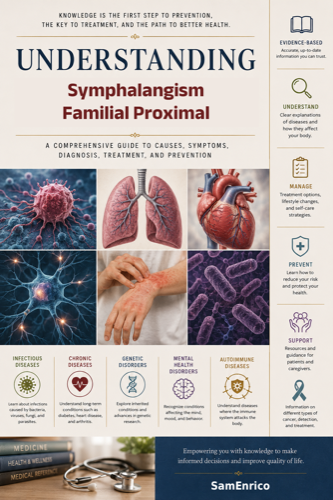 Understanding Symphalangism Familial ProximalVernon Hannelore$17.99
 Fauteuil CraftVernon Hannelore$11.99
 Blockchain IP ValuationVernon Hannelore$12.99
 Delivery Terms Chinese GuideVernon Hannelore$12.99
 How to Become a Stain ApplicatorVernon Hannelore$11.99
You may also like
 Hong Kong Handover 1997Dunn Johnnie$11.99
 Zumba For Postnatal Recovery CourseNeal Christian$11.99
 Zumba for BeginnersLadner Nikia$11.99
 YouTube Comment Mining GuideHumes Pandora$12.99
 Worry Box MeditationCarlin Rudy$11.99
 Workplace Stress MeditationNguyen Lynn$11.99
 Workplace Stress and Sleep RepairHawley Ivory$11.99
 Workplace Perfectionism CureDelaney Jeffry$11.99
 Workplace Injustice Anger GuideWallen Isabelle$11.99
 Work Addiction and Burnout LinkGreenwood Ester$11.99
 Women in Yoga and WellnessBeattie Galina$11.99
 Women in Stand Up ComedyChun Evangeline$11.99