
Non-FictionSelf-HelpDaily Habits
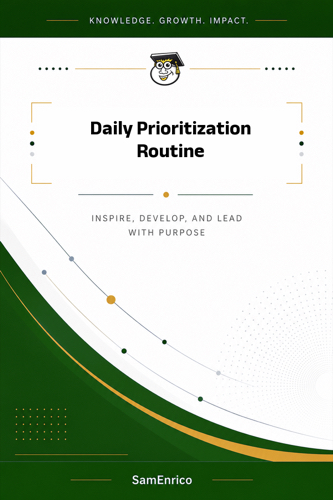
Daily Prioritization Routine eBook
Start each day sorting tasks into ABCDE categories
Start each day sorting tasks into ABCDE categories before execution.
Formats
Free sample
Chapter 1: Sorting Before Seeing--–- The alarm on your phone reads 6:47 a.m. You silence it, and before your feet touch the floor, your thumb has already opened your email. Forty-seven unread messages. A calendar notification for a meeting you forgot to prepare for. Three Slack pings from a colleague in a different time zone.
A news alert about something you probably don't need to know.By the time you've brushed your teeth, your brain has already made seventeen small decisions. Should I reply to that client email now or wait? Should I move the 10 a.m. meeting? Is that report due today or tomorrow?
Should I be worried about the Slack message? Each decision costs you a tiny fraction of your willpower. By 7:15 a.m., you are already depleted—and you haven't done a single thing that matters.This is the tyranny of the unsorted morning. And it is the single greatest productivity killer that no one talks about.Most people believe their problem is time. They say, "If only I had one more hour," or "I'm just too busy." But time is not the variable.
The executive with fourteen meetings and the freelancer with two deadlines both have the same twenty-four hours. The difference is not how much time they have. The difference is what they do with the first few minutes of it.This chapter will permanently separate you from the myth that scheduling is productivity. You will learn why sorting your tasks before you see them changes everything. You will understand the neuroscience of decision fatigue.
And you will meet a CEO who saved ten hours per week simply by presorting her tasks before 9 a.m.—no new software, no longer hours, just a different morning ritual.But first, we need to dismantle something you have probably believed for years. We need to talk about your calendar.The Great Scheduling Lie Open your calendar right now. Look at the next three days. What do you see?If you are like most professionals, you see a patchwork of thirty-minute and sixty-minute blocks. A meeting here.
A call there. "Focus time" blocked in bright green that you constantly ignore. A reminder to send an invoice. A recurring slot for "email catch-up" that never actually catches up.Your calendar is not a plan. It is a graveyard of good intentions.Here is the uncomfortable truth that no productivity app wants you to hear: Scheduling does not create priority.
It creates the illusion of priority. When you put a task on your calendar, your brain feels a small hit of relief. "It's scheduled," you tell yourself. "I'll get to it." But scheduling is not doing. And more importantly, scheduling without sorting is dangerous, because it gives equal visual weight to things that are not equal.Consider two tasks:Task A: Finish the quarterly report that your boss needs by noon, or the entire team misses the deadline.Task B: Organize your desktop folders because they are cluttered.If you put both on your calendar—Task A at 9 a.m., Task B at 10 a.m.—your calendar treats them as equals.
Two blocks. Two commitments. But they are not equals. One has life-or-death (career-wise) consequences. The other has no consequences whatsoever.
Your calendar cannot tell you this. Your calendar does not know the difference between fire and dust.This is why the most productive people in the world do not start with their calendars. They start with a blank sheet of paper and a sorting mechanism. They decide what matters before they decide when to do it. They sort before they schedule.The CEO we will meet later in this chapter learned this lesson the hard way.
She spent years building elaborate calendar systems. Color-coded blocks. Time zones synced. Automated reminders. And she was still drowning.
It was only when she stopped scheduling and started sorting that her life changed. Ten hours per week. Gone. Not saved—reclaimed.But before we get to her story, we need to understand why your brain fights you every morning.The Neuroscience of Decision Fatigue Every decision you make costs something. Not metaphorically.
Literally.The human brain runs on glucose. When you make a decision—even a tiny one like "Should I check email or get coffee first?"—your brain burns a small amount of this fuel. Make enough decisions, and your glucose levels drop. Your willpower erodes. Your ability to choose wisely diminishes.
This is called decision fatigue, and it is one of the most well-documented phenomena in cognitive neuroscience.In a famous study, researchers examined the parole decisions of judges in Israel. The judges reviewed parole applications throughout the day, with breaks for food. The researchers found something startling: at the beginning of the day, judges granted parole in approximately 65 percent of cases. As the morning wore on, the grant rate steadily dropped. By mid-morning, just before the first break, the grant rate had fallen to nearly zero percent.
After the break, it jumped back up. Then it fell again. The pattern repeated all day.What changed? Not the cases. Not the law.
The judges were suffering from decision fatigue. Each case required a decision. Each decision drained their glucose. And as their energy depleted, they defaulted to the easiest choice: deny parole, change nothing, maintain the status quo.You are not a judge, but you are making the same kind of decisions every morning. Should I open email first or my task list?
Should I reply to that message now or later? Should I prioritize the client request or the internal report? Each decision drains you. By the time you finally sit down to do your real work, you are already running on fumes.Here is the critical insight that changes everything: You can preserve your decision-making energy by moving all of your small decisions to a single moment before the day begins.Instead of deciding what to do next twenty times throughout the morning, you decide once. You sort all your tasks into categories.
You choose your priority. Then you execute without deciding again until the priority is complete.This is not a trick. This is not a mindset hack. This is neuroscience applied to your to-do list. And it is the foundation of everything that follows in this book.Sorting vs.
Sequencing: The Distinction That Changes Everything Let us define two words that most people confuse.Sequencing is putting tasks in order on a timeline. It answers the question "When will I do this?" Sequencing is what you do when you open your calendar and drag a task from 10 a.m. to 2 p.m. Sequencing is useful, but it is not the first step. Sequencing without sorting is like arranging deck chairs on the Titanic.
You are organizing chaos, not creating clarity.Sorting is assigning each task to a category based on its consequences. It answers the question "Does this matter at all?" Sorting is what you do when you look at a task and ask, "What happens if I don't do this?" Sorting is the foundation. It comes before sequencing. It comes before time-blocking. It comes before everything.Here is an example.
Imagine you have five tasks for the day:Finish the presentation for the 2 p.m. client meeting Reply to three non-urgent…
This is the end of the free sample. Get the eBook to keep going. Buy now
About this book
Details
- Author
- Coffin Christena
- Publisher
- SamEnrico
- Language
- English
- Genre
- Non-Fiction, Self-Help, Daily Habits
- Released
- 2026-06-09
- Pages (approx.)
- 133
- Available as
- eBook, Audiobook

Read better in the ZLOADR app
Your eBooks on your phone or tablet. Sign in with your SamEnrico account and start reading.
More by Coffin Christena
 Managing Remote ProcrastinationCoffin Christena$11.99
 Cloud Sky VisualizationCoffin Christena$11.99
 Validating Grief GuideCoffin Christena$11.99
 Detox Nausea and Vomiting ControlCoffin Christena$11.99
 DBT for Shame ReductionCoffin Christena$11.99
 Blue Zone Pet Ownership GuideCoffin Christena$11.99
 French Revolutionary Wars GuideCoffin Christena$11.99
 The 444-Day Silence: The Munich Massacre and the Forgotten NegotiationsCoffin Christena$11.99
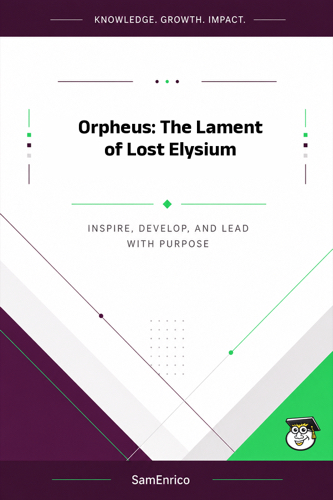 Orpheus: The Lament of Lost ElysiumCoffin Christena$11.99
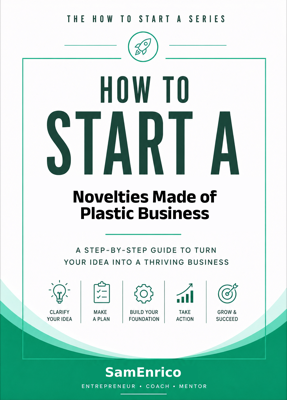 How to Start a Novelties Made of Plastic Business (Beginners Guide)Coffin Christena$11.99
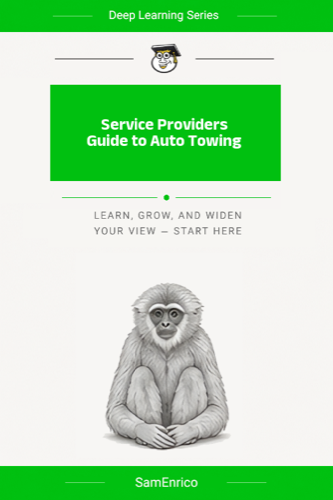 Service Providers Guide to Auto TowingCoffin Christena$11.99
 A Collector's Handbook to the Hillman 80Coffin Christena$11.99
You may also like
 Hong Kong Handover 1997Dunn Johnnie$11.99
 Zumba For Postnatal Recovery CourseNeal Christian$11.99
 Zumba for BeginnersLadner Nikia$11.99
 YouTube Comment Mining GuideHumes Pandora$12.99
 Worry Box MeditationCarlin Rudy$11.99
 Workplace Stress MeditationNguyen Lynn$11.99
 Workplace Stress and Sleep RepairHawley Ivory$11.99
 Workplace Perfectionism CureDelaney Jeffry$11.99
 Workplace Injustice Anger GuideWallen Isabelle$11.99
 Work Addiction and Burnout LinkGreenwood Ester$11.99
 Women in Yoga and WellnessBeattie Galina$11.99
 Women in Stand Up ComedyChun Evangeline$11.99