
Non-FictionForecast & OutlookCyber Economics
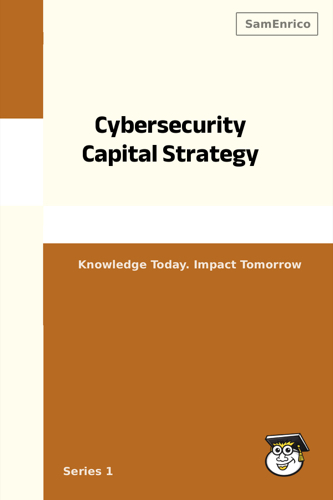
Cybersecurity Capital Strategy
Fund threat detection, zero trust architecture, an
Fund threat detection, zero trust architecture, and incident response.
Formats
About this book
Free sample
Chapter 1: The Trillion-Dollar Blindspot...--–- Every chief information security officer knows the feeling. It is the moment in the quarterly budget review when the chief financial officer looks up from the spreadsheet, pushes their glasses up the bridge of their nose, and asks the question that hangs in the air like a guillotine blade: “We spent twelve million dollars on cybersecurity last year. Nothing happened. Why should we spend thirteen million this year?”The question is perfectly logical. It is also perfectly wrong.Nothing did not happen.
You detected and blocked thousands of attacks. You prevented a half-dozen near-misses that would have cost the company millions. Your team worked weekends to patch critical vulnerabilities before threat actors could weaponize them. The fact that “nothing happened” is not evidence of overspending. It is evidence that your security program is working.
But try explaining that to a CFO who measures success in revenue growth and margin expansion, not in attacks that did not succeed.This disconnect is the trillion-dollar blindspot of modern cybersecurity. It is the reason that, despite record-breaking breach costs—projected to reach $10.5 trillion annually by the end of this year—security budgets remain stubbornly pegged to a percentage of IT spend rather than a percentage of risk. It is the reason that CISOs are still fighting for every dollar while ransomware gangs operate like Fortune 500 companies with their own HR departments, customer support lines, and quarterly earnings calls.The blindspot is not a lack of threat intelligence. It is not a shortage of talented analysts. It is a fundamental failure of capital strategy.
Most organizations treat cybersecurity as a fixed operational expense—something to be minimized, rationalized, and outsourced—rather than a strategic investment portfolio that requires the same rigorous capital allocation discipline as R&D, marketing, or new product development.This chapter exists to close that blindspot. We will show you why the traditional approach to security budgeting is mathematically guaranteed to fail. We will introduce the unified capital allocation model that replaces guesswork with discipline. And we will give you a simple one-page tool—the Cyber Capital Heat Map—that will transform…
This is the end of the free sample. Get the eBook to keep going. Buy now
Contents
- Chapter 1
- Chapter 2
- Chapter 3
- Chapter 4
- Chapter 5
- Chapter 6
- Chapter 7
- Chapter 8
- Chapter 9
- Chapter 10
- Chapter 11
- Chapter 12
Details
- Author
- Hackney Orpha
- Publisher
- SamEnrico
- Language
- English
- Genre
- Non-Fiction, Forecast & Outlook, Cyber Economics
- Released
- 2026-06-06
- Pages (approx.)
- 142
- Available as
- eBook, Audiobook

Read better in the ZLOADR app
Your eBooks on your phone or tablet. Sign in with your SamEnrico account and start reading.
More by Hackney Orpha
 Mastery Building DBT SkillsHackney Orpha$11.99
 Divorce After DeathHackney Orpha$11.99
 Body Image After ScarsHackney Orpha$11.99
 Travel Tips Sensory LossHackney Orpha$11.99
 Smoke Free Lungs ProtocolHackney Orpha$11.99
 Divorce Journal PromptsHackney Orpha$11.99
 Pauling DNA Race LossHackney Orpha$11.99
 The Sydney Underworld Wars: Blood, Betrayal, and the Rise of the APEX GangHackney Orpha$11.99
 The Poisoned Chalice: The Assassination of King Faisal I of IraqHackney Orpha$11.99
 A Collector's Handbook to the BMW 1500Hackney Orpha$11.99
 Middle Eastern Follow Up GuideHackney Orpha$12.99
 VAT Registration Number FormatHackney Orpha$12.99
You may also like
 Hong Kong Handover 1997Dunn Johnnie$11.99
 Zumba For Postnatal Recovery CourseNeal Christian$11.99
 Zumba for BeginnersLadner Nikia$11.99
 YouTube Comment Mining GuideHumes Pandora$12.99
 Worry Box MeditationCarlin Rudy$11.99
 Workplace Stress MeditationNguyen Lynn$11.99
 Workplace Stress and Sleep RepairHawley Ivory$11.99
 Workplace Perfectionism CureDelaney Jeffry$11.99
 Workplace Injustice Anger GuideWallen Isabelle$11.99
 Work Addiction and Burnout LinkGreenwood Ester$11.99
 Women in Yoga and WellnessBeattie Galina$11.99
 Women in Stand Up ComedyChun Evangeline$11.99