
Non-FictionInformativeEducational
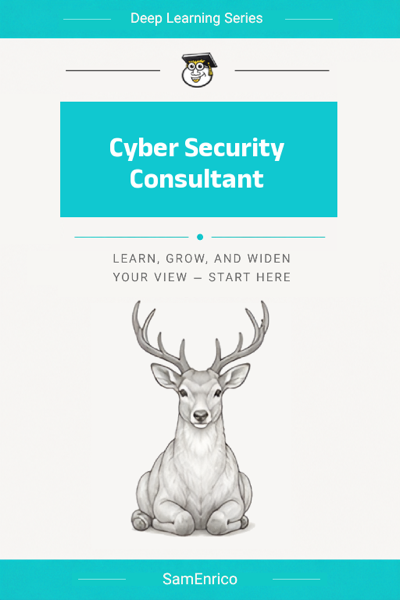
Cyber Security Consultant eBook
A Coursebook on Cyber Security Consultant
by Swenson Miss
A Coursebook on Cyber Security Consultant
Formats
Free sample
Chapter 1: The Scanner’s Lie--–- The first time I ran a vulnerability scanner against a live bank, I nearly shut down their entire ATM network. I was twenty-four, newly certified, and convinced that more findings meant better consulting. I was wrong. That near-miss cost me a client, almost got me sued, and taught me the single most important lesson of my career: technical skill without business judgment is not consulting. It’s just hacking with a contract.Let me tell you why this matters to you.
You’re reading this book because you want to become a cyber security consultant—or you already are one, and you’ve realized that running tools isn’t enough. You’ve probably studied penetration testing. You might hold an OSCP or a Security+. You can map a network, crack a hash, and write a half-decent report. But when you walk into a client’s boardroom, something shifts.
The CFO asks, “What does this actually cost us?” The CEO says, “Should I lose sleep over this?” And you freeze. Because no one taught you how to translate a buffer overflow into a P&L statement.That ends now.This chapter strips away the most dangerous myth in cyber security consulting: that technical skill is the primary driver of success. It’s not. Technical skill is table stakes—the minimum cost of entry. The real differentiator is your ability to translate technical risk into business decisions, manage ethical and legal boundaries, navigate the consulting lifecycle, and adapt to different consulting archetypes.
Master these, and you’ll never freeze in a boardroom again.The Myth of the Technical Hero Every aspiring consultant falls into the same trap. You believe that if you just learn more exploits, master more tools, earn more certifications, you’ll become indispensable. This is the Scanner’s Lie—the false belief that technical findings are the product you sell.They’re not.The product you sell is confidence. Clients hire you because they’re afraid. They’ve read about ransomware.
They’ve heard about their competitors getting breached. They have compliance auditors breathing down their necks. But they don’t know what to do about any of it. Your job is not to hand them a list of CVEs. Your job is to turn their fear into action.Let me give you an example.
Two consultants run the exact same Nessus scan against the exact same network. Consultant A delivers a 200-page report with every finding sorted by CVSS score. Consultant B delivers a one-page executive summary with a heatmap, three urgent fixes, and an estimate of financial loss if those fixes are ignored. Which consultant gets rehired? Consultant B, every time.
The technical work was identical. The business value was not.This is the core argument of this chapter: technical hacking skills are necessary but insufficient. Your primary value is translating technical risk into business decisions. Everything else—every tool, every exploit, every certification—serves that single goal.You Are Not Internal Security Before we go further, let’s clarify who you are and who you are not. This distinction will save you from countless misunderstandings with clients.Internal security teams maintain ongoing operations.
They monitor alerts, patch systems, respond to incidents, and deal with organizational politics. They have deep context about the business but limited objectivity. They’ve been there for years and will be there after you leave.Managed Security Service Providers (MSSPs) provide 24/7 monitoring and management. They see alerts across hundreds of clients. They have scale but often lack deep client context.You—the external consultant—are different.
You deliver time-bound, objective assessments without organizational politics. You parachute in, do your work, and leave. Your independence is your greatest asset because you can say things internal teams cannot. You can tell the CEO that their pet project is a security disaster. You can tell the CFO that their compliance checkbox doesn’t actually make them secure.
Internal teams fear retaliation. You fear nothing except your next contract.But this independence comes with a price. You must earn trust quickly—often within hours—and leave behind actionable clarity. You don’t have the luxury of building relationships over years. Your report is your reputation.Ethical and Legal Boundaries You Cannot Cross The laws governing unauthorized access do not care about your good intentions.
In the United States, the Computer Fraud and Abuse Act (CFAA) makes it a federal crime to access a computer “without authorization.” In the United Kingdom, the Computer Misuse Act carries similar penalties. Even if a client asks you to “hack anything you can find” over a beer, that verbal permission is worthless in court.This is why your Statement of Work (So W) is your most important legal document. We’ll cover So Ws in depth in Chapter 2, but here’s what you need to know now: your So W must explicitly define every system you are permitted to test, every technique you are permitted to use, and every type of data you are permitted to access or exfiltrate. Anything not in the So W is off limits.Here’s where new consultants get into trouble. A client says, “While you’re here, could you also check this other server?
It’ll only take five minutes.” That’s scope creep. That five-minute check is outside your So W. If something breaks on that server, your liability insurance may not cover you because you were working without authorization. If you find something embarrassing on that server, you can’t legally report it because you weren’t authorized to look. The only professional response is, “I’d be happy to help once we process a change order.” Never work outside scope.
Ever.Non-disclosure agreements (NDAs) protect client data from you. You will sign these before every engagement. They’re not optional. Similarly, liability clauses in your contract limit your exposure from missed findings. No consultant finds every vulnerability.
Your contract should make clear that you provide reasonable professional effort, not guarantees.The Consulting Lifecycle: Five Phases to Every Engagement Every consulting engagement follows the same five-phase lifecycle. Internalize this structure. It will become the skeleton of every project you ever run.Phase 1: Discovery Discovery is where you learn the client’s business, assets, threats, and constraints. You’re not testing anything yet. You’re asking questions.
What does this company do? What would put them out of business? What regulations apply to them? What are their most critical assets? What’s their budget?
Their timeline?Discovery often happens in a kickoff meeting. You’ll meet with stakeholders from security, IT, legal, and sometimes the business itself. Take detailed notes. Ask dumb questions. Your goal is to understand what success looks like to them—not to you.Phase 2: Assessment Assessment is the technical work you probably think of as consulting.
You run scans. You test exploits. You analyze configurations. You interview staff. You review policies.
This is where your technical skills come to bear.But note: assessment is only one of five phases. Many consultants spend 90% of their time here and wonder why their clients are unhappy. The answer is that assessment without the other four phases is…
This is the end of the free sample. Get the eBook to keep going. Buy now
About this book
Details
- Author
- Swenson Miss
- Publisher
- SamEnrico
- Language
- English
- Genre
- Non-Fiction, Informative, Educational
- Released
- 2026-05-07
- Pages (approx.)
- 125
- Available as
- eBook, Audiobook

Read better in the ZLOADR app
Your eBooks on your phone or tablet. Sign in with your SamEnrico account and start reading.
More by Swenson Miss
 Parental Anger Time Out GuideSwenson Miss$11.99
 Student Study PrioritizationSwenson Miss$11.99
 Carb Cycling Tracking GuideSwenson Miss$11.99
 Addiction and Attachment PrimerSwenson Miss$11.99
 Franchising Your Local Brand Across Borders Joint VenturesSwenson Miss$11.99
 Summit of Shadows: The Untold Story of Arlene Blum and the First All-Women's Ascent of AnnapurnaSwenson Miss$11.99
 Empress of the Purple: Theodora’s Rise from the ShadowsSwenson Miss$11.99
 Understanding D Ercole SyndromeSwenson Miss$17.99
 How to Start a Hobby in Making PaperSwenson Miss$11.99
 Green Tariff Energy GuideSwenson Miss$12.99
 Testing Plan One PageSwenson Miss$12.99
You may also like
 Hong Kong Handover 1997Dunn Johnnie$11.99
 Zumba For Postnatal Recovery CourseNeal Christian$11.99
 Zumba for BeginnersLadner Nikia$11.99
 YouTube Comment Mining GuideHumes Pandora$12.99
 Worry Box MeditationCarlin Rudy$11.99
 Workplace Stress MeditationNguyen Lynn$11.99
 Workplace Stress and Sleep RepairHawley Ivory$11.99
 Workplace Perfectionism CureDelaney Jeffry$11.99
 Workplace Injustice Anger GuideWallen Isabelle$11.99
 Work Addiction and Burnout LinkGreenwood Ester$11.99
 Women in Yoga and WellnessBeattie Galina$11.99
 Women in Stand Up ComedyChun Evangeline$11.99