
Non-FictionBusiness BriefCustoms Penalties
Customs Penalty Mitigation Guide eBook
Reduce fines for import violations using this prac
Reduce fines for import violations using this practical penalty mitigation handbook.
Formats
Free sample
Chapter 1: The $42 Million Typo...-- The email arrived at 4:47 PM on a Tuesday, three days before Thanksgiving. Sarah Chen, compliance manager for a mid-sized family-owned footwear importer, almost deleted it. The subject line was innocuous: "CBP Form 28 Request for Information – Entry 123-4567890." She had seen CF 28s before—routine document requests, usually resolved with a quick email to their customs broker. She opened it while packing her bag to leave for the day.The letter was seven pages long. Page one stated that CBP was reviewing entries from the past five years.
Page two identified a specific Harmonized Tariff Schedule (HTS) code for waterproof hiking boots. Page three contained a table: 847 entries, dating back 63 months, with a preliminary calculation of unpaid duties totaling $1.2 million. Page four contained the words that would keep her awake for the next six months: "Based on the pattern of misclassification, CBP has preliminarily determined that the violations may constitute gross negligence under 19 USC §1592. Proposed penalties are estimated at $4.8 million, exclusive of interest and attorney's fees."Sarah did the math in her head. $4.8 million was more than the company's annual profit.
The owner, a 68-year-old man who had built the business from a single retail store, would lose everything. She called her broker, who said, "I don't know what to tell you. Talk to a lawyer." She called her lawyer, who said, "I don't do customs. You need a trade attorney." She found one at 8:00 PM. The attorney's first question was: "Have you received a CF 28 that specifically identifies the violation?""Yes," Sarah said."Then the Prior Disclosure window has closed.
You cannot self-report your way out of this. We're going to war."That war lasted fourteen months. The final settlement: $1.1 million in back duties, $320,000 in penalties, and $180,000 in legal fees. The company survived, barely. The owner took out a second mortgage on his home.
Sarah was fired six months later, scapegoated for a misclassification that had been in place for a decade before she was hired.This book exists because of Sarah—and thousands of importers like her who discover too late that the rules have changed, that the old ways of "wait and see" no longer work, and that a single typo on a customs form can destroy a lifetime of work.This chapter is about why 2025–2026 is different. Why the enforcement environment has shifted from reactive to proactive, from manual to AI-driven, and from forgiving to aggressive. And most importantly, why the old excuse of "I didn't know" will not save you.The Perfect Storm: Three Forces Reshaping Import Enforcement To understand where we are, we must understand how we got here. For most of the past fifty years, U.S. Customs and Border Protection (CBP) operated on a simple model: audit a small percentage of entries, catch obvious fraud, issue penalties to the worst offenders, and leave the rest alone.
The agency was understaffed, underfunded, and focused primarily on drug interdiction and counter-terrorism. Trade compliance was a backwater.That era is over. Three distinct forces have converged to create an enforcement environment unlike anything in the history of American import regulation.Force One: The Tariff Explosion of 2018–2025Between 2018 and 2025, the United States imposed more new tariffs than in the previous fifty years combined. Section 301 tariffs on Chinese goods covered over $350 billion in annual imports, with rates ranging from 7.5% to 25%. Section 232 tariffs on steel and aluminum added 25% and 10% respectively.
The de minimis threshold (Section 321), which had allowed packages under $800 to enter duty-free, came under sustained attack from both parties, with proposed reductions to $200 or even $50.What does this have to do with penalties? Everything. When tariff rates are low, misclassification is a minor accounting error. When tariff rates are high, misclassification becomes a significant source of revenue loss for the government—and a significant source of penalty exposure for importers.Consider a simple example. Before 2018, a pair of hiking boots from China might face a 6% duty.
A misclassification that resulted in 0% duty cost the government $6 on a $100 pair of boots. CBP didn't care enough to investigate. After 2018, the same boots might face a 25% Section 301 tariff plus a 6% baseline duty—31% total. A misclassification to 0% now costs the government $31 on that same pair. Multiply by 10,000 pairs, and you have $310,000 in lost duties.
Multiply by 100,000 pairs, and you have $3.1 million. CBP cares about $3.1 million.The tariff explosion transformed classification errors from rounding errors into material financial risks. And CBP's enforcement budget grew accordingly. Between 2019 and 2024, funding for CBP's trade enforcement activities increased by over 40%, with specific appropriations for "combating evasion of Section 301 tariffs."Force Two: The AI Revolution in the Automated Commercial Environment The Automated Commercial Environment (ACE) is CBP's single window for all import and export data. Launched in 2016, ACE processes over $2.5 trillion in goods annually across more than 30 million entries.
For the first several years, ACE was primarily a data repository—a place to store information for later manual review. That changed in 2022, when CBP began deploying artificial intelligence and machine learning algorithms to analyze ACE data in real time.Today, ACE's AI does what no team of human auditors could ever do: it compares every entry against every other entry from the same importer, the same supplier, the same broker, and the same HTS category. It identifies anomalies—a sudden shift in declared value, a classification that seems too favorable, a country of origin that changes without explanation—and flags them for review. It does this not for a sample of entries but for every single entry, every single day, going back five years.The AI is not perfect. It generates false positives.
But it learns. Each time a human auditor confirms or rejects a flag, the AI improves. By 2025, CBP's internal assessments claimed that the AI correctly identified 94% of material misclassifications within six months of the first erroneous entry.This means that the old strategy of "wait and see if CBP notices" is dead. CBP will notice. Not because a human auditor randomly selected your entry for review, but because an algorithm specifically targeted your pattern of behavior.
And when the AI flags you, it flags every entry going back to the statute of limitations—typically five years for negligence cases, unlimited for fraud.Force Three: The Whistleblower Gold Rush The False Claims Act (FCA) was passed during the Civil War to combat fraud by defense contractors. It allows private citizens—known as relators—to file lawsuits on behalf of the government and collect a percentage of any recovery. For most of its history, the FCA was used against healthcare and defense contractors. Then, in the 2010s, lawyers discovered import fraud.The math is seductive. If a relator helps the government recover $10 million in unpaid duties and penalties, the relator can collect 15-30%—$1.5 to $3 million.
The relator does not need to be a whistleblower in the traditional sense; they can be a former employee, a current employee, a competitor, a disgruntled supplier, or even a completely unrelated party who happened to notice something suspicious.Between 2019 and 2024, FCA filings related to import fraud increased by over 300%. Some of these cases involved genuine fraud—deliberate undervaluation, false country of origin claims,走私. But many involved simple errors—a compliance manager who knew about a misclassification…
This is the end of the free sample. Get the eBook to keep going. Buy now
About this book
Details
- Author
- Escamilla Meri
- Publisher
- SamEnrico
- Language
- English
- Genre
- Non-Fiction, Business Brief, Customs Penalties
- Released
- 2026-06-06
- Pages (approx.)
- 149
- Available as
- eBook, Audiobook

Read better in the ZLOADR app
Your eBooks on your phone or tablet. Sign in with your SamEnrico account and start reading.
More by Escamilla Meri
 Async Retrospective Process GuideEscamilla Meri$11.99
 Aromatherapy for AnxietyEscamilla Meri$11.99
 Self Hypnosis Bone PainEscamilla Meri$11.99
 Meth Craving Survival Kit ManualEscamilla Meri$11.99
 Silent Storm: The Untold Battle of the 1918 Influenza Pandemic in the TrenchesEscamilla Meri$11.99
 The Silent Deep: William Beebe and the Birth of Deep-Sea Exploration (1930s)Escamilla Meri$11.99
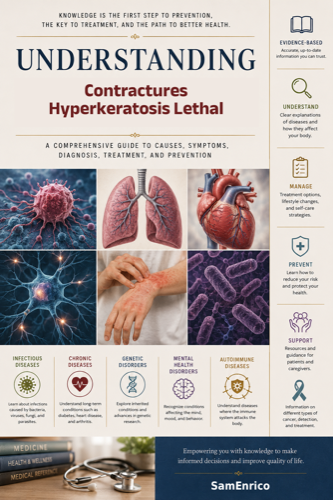 Understanding Contractures Hyperkeratosis LethalEscamilla Meri$17.99
 How to Become a Mottler-machine FeederEscamilla Meri$11.99
 Angel Investor Lead GuideEscamilla Meri$12.99
 Meta Attribution Window ChangeEscamilla Meri$12.99
 Accounting ProfessorEscamilla Meri$11.99
You may also like
 Hong Kong Handover 1997Dunn Johnnie$11.99
 Zumba For Postnatal Recovery CourseNeal Christian$11.99
 Zumba for BeginnersLadner Nikia$11.99
 YouTube Comment Mining GuideHumes Pandora$12.99
 Worry Box MeditationCarlin Rudy$11.99
 Workplace Stress MeditationNguyen Lynn$11.99
 Workplace Stress and Sleep RepairHawley Ivory$11.99
 Workplace Perfectionism CureDelaney Jeffry$11.99
 Workplace Injustice Anger GuideWallen Isabelle$11.99
 Work Addiction and Burnout LinkGreenwood Ester$11.99
 Women in Yoga and WellnessBeattie Galina$11.99
 Women in Stand Up ComedyChun Evangeline$11.99